For small business owners who want to boost their online sales, creating compelling copy is a must, since great writing increases customer engagement and guarantees higher conversions. To achieve these results, you need to learn the best practices for copywriting for small businesses and start using them at once.
In this article, I provide actionable steps to elevate your copywriting practices by teaching you the essentials for writing copy that consistently converts.
You’ll also discover how to create a content calendar and write copy for various digital platforms.
Let’s get started.
Copywriting essentials for small businesses
What comes to mind when you think of copywriting for your small business? Is it clever words spun by a wordsmith? On the contrary, great copywriting only requires simple words that resonate with your target audience.
Using words they understand, you must prove to your customers that you have the best solution to their problems.
This fact is supported by a study conducted by Daniel Oppenheimer, in which students wrote complex texts to create an impression of intelligence. He found that overly complex, long words have a negative impact on the reader’s perception of your intelligence. Although the study was conducted in an academic setting, I believe it holds true even with small business copywriting.
The following basic copywriting principles will ensure your copy is always effective.
Know your audience
Before writing a single word, you should first know who you’re talking to. This includes identifying:
Demographics: Age, gender, income level, occupation, etc.
Psychographics: Interests, values, lifestyle, behavior, etc.
Use this information to create buyer personas to guide your messaging. These are fictional characters who represent your ideal customers, making it easier to speak directly to them.
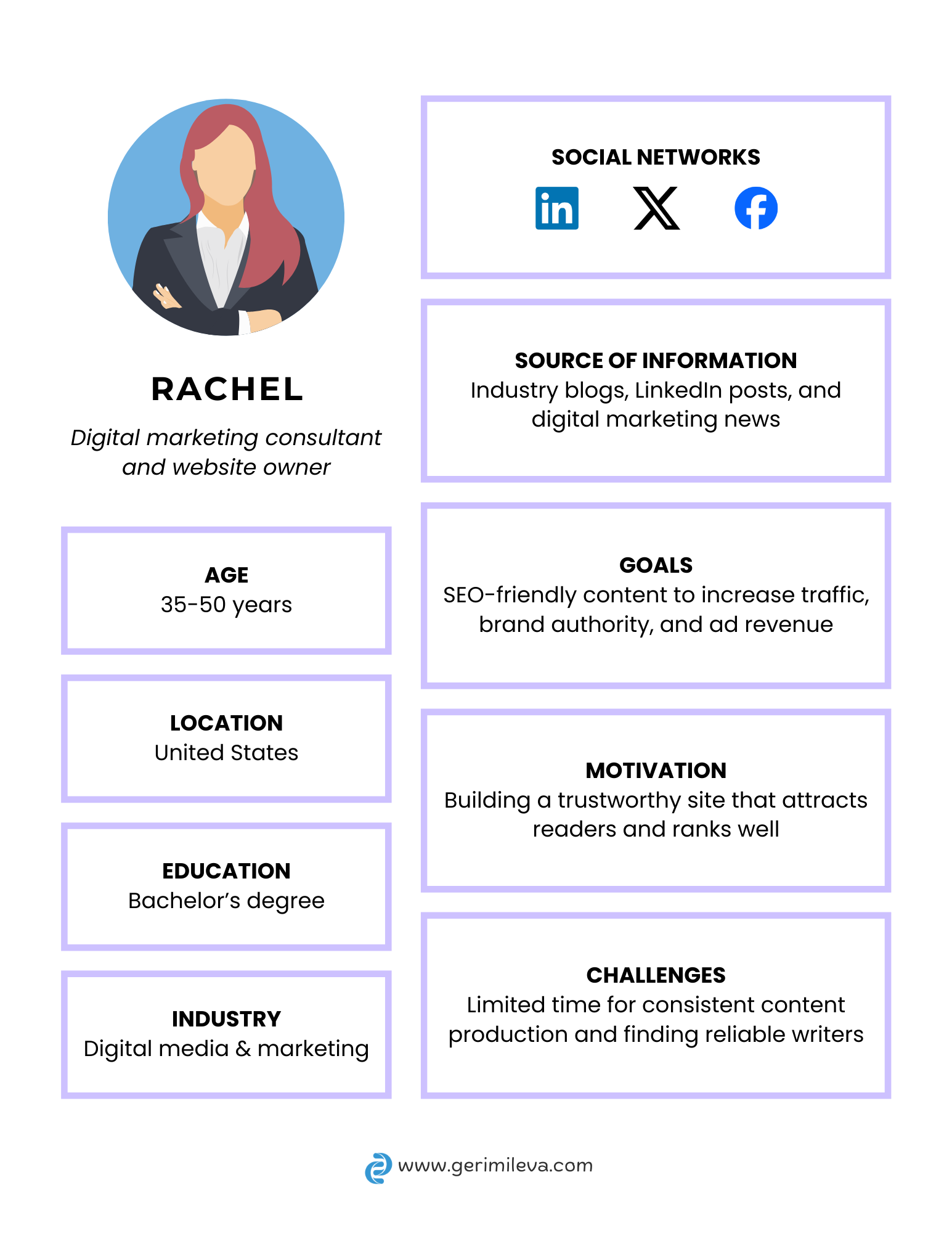
Sample buyer persona – Digital marketing consultant
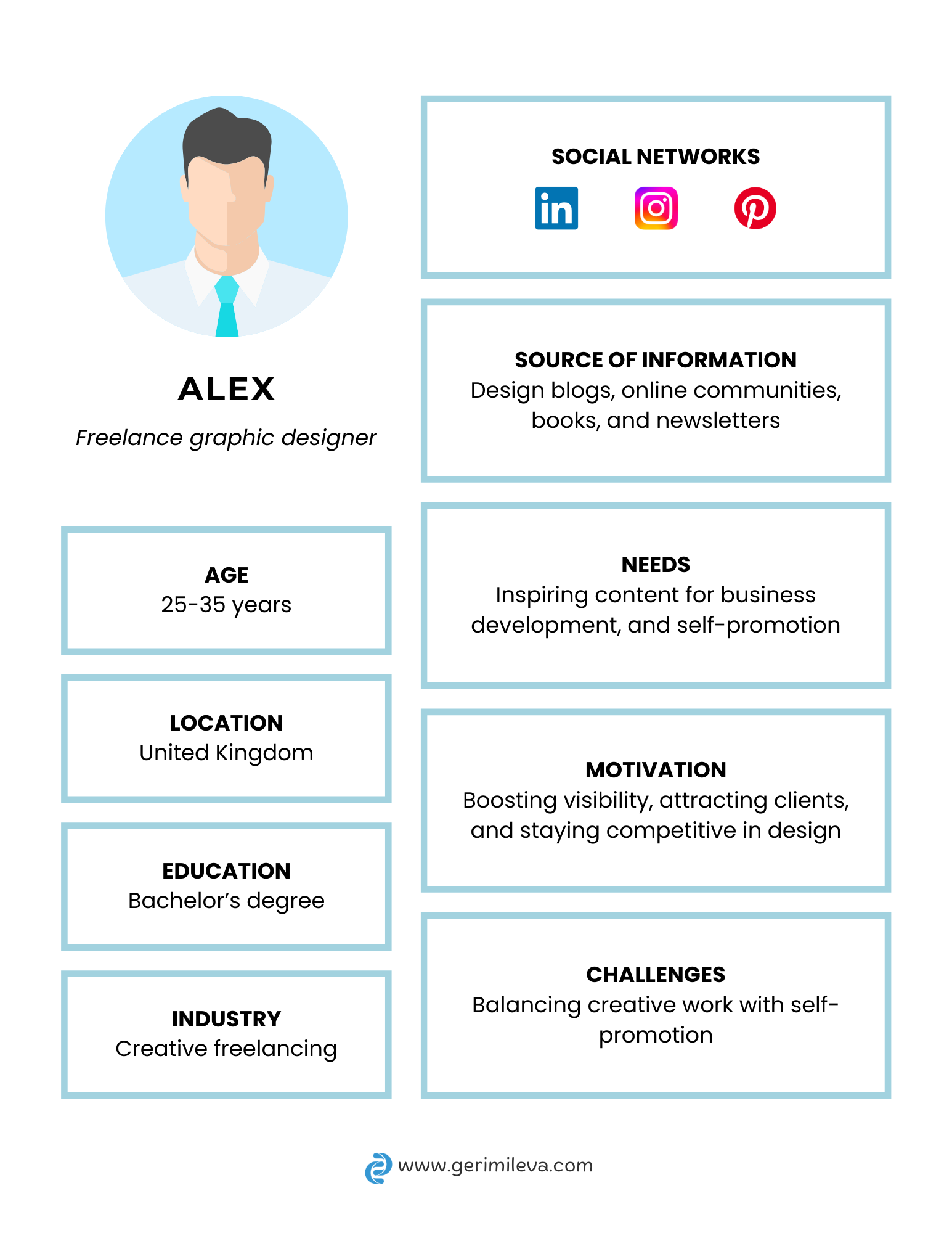
Sample buyer persona – Freelance graphic designer
Knowing your audience also involves understanding their pain points or challenges. This helps you write compelling copy that addresses their needs and positions you as a helpful expert. It also makes them trust your brand more.
Here are actionable strategies you can implement even on a tight budget to know your customers better. Most of these are free and only take a few minutes of your time. I’ll discuss them in greater detail in the next section.
- Interview current and prospective customers, asking them direct questions about their needs and desires.
- Analyze social media comments using social listening tools.
- Ask for customer feedback after every encounter.
- Read customer reviews on different review sites.
- Walk in your customers’ shoes and go through the buying process, checking on each customer touchpoint.
- Run surveys to gather qualitative and quantitative data about your customers’ experiences.
- Use online quizzes tailored to gather the specific insights you want.
- Study your competition and how they’re attracting your potential customers.
Remember, your customer is the foundation of your business. Knowing them is the first step to building a lasting relationship.
2. Highlight benefits over features
It’s tempting for small business owners to parade what makes their products superior to others. For example, when you’re writing a product description page, you’ll go over the product features and what makes your item remarkable.
However, customers are more interested in how a product can benefit them than what a product can do. Features are the technical aspects of your product while benefits are the advantages they offer to your customer.
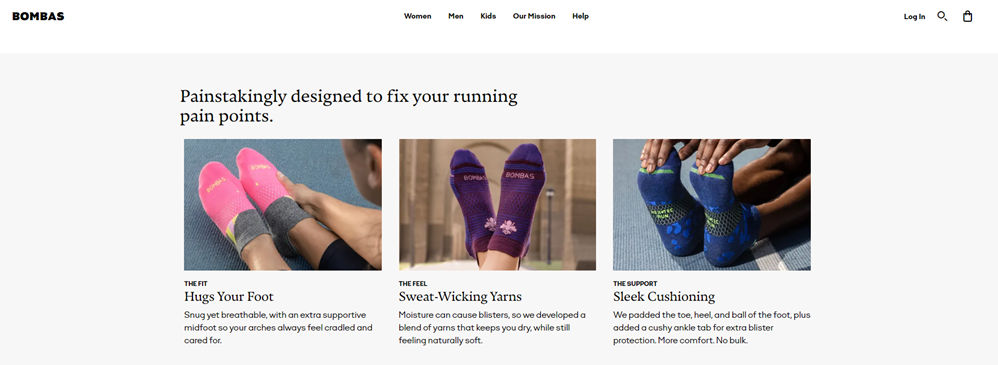
Source: bombas.com
Bombas sells socks for men, women, and children. Their website showcases excellent copywriting by highlighting the benefits of their products for customers. In the above example, they’re selling women’s running ankle socks.
Instead of highlighting technical features like fabric type, ankle support, and airflow vents, the brand writes how their socks address women’s running pain points.
Talking about benefits can form a psychological link with your buyers and stir their emotional desire to purchase your offer. After all, most of our buying decisions are based on emotions.
Here are some examples:
| Feature | Benefit-focused Copy |
| Restaurant using organic, farm-to-table ingredients | Savor fresh and healthy meals sourced directly from local farms |
| Body lotion with anti-aging skincare formula | Reveal younger, more radiant-looking skin |
| Fitness app with over 200 workouts | Achieve your fitness goals faster with personalized workouts that fit your busy schedule |
| Cloud storage with 1TB of space | Never worry about running out of storage space again |
| Car with advanced safety features | Drive with confidence knowing you and your loved ones are protected |
People always want to read about interesting things that will benefit them. They’d rather read about how energy-efficient windows will enhance their lives than learn about the cutting-edge technology used in the actual window.
By focusing on the benefits, you create relatable and engaging content that encourages readers to take action on your offer.
3. Use clear and compelling language
The best copy is clear and straight to the point. Each word is carefully selected to achieve the desired impact.
To achieve this, copywriters use several techniques.
Concise and compelling headlines
Semrush discovered in a recent study that headlines containing 10-13 words performed better than shorter or longer ones. Of course, these headlines followed core principles such as accurately describing the text body.
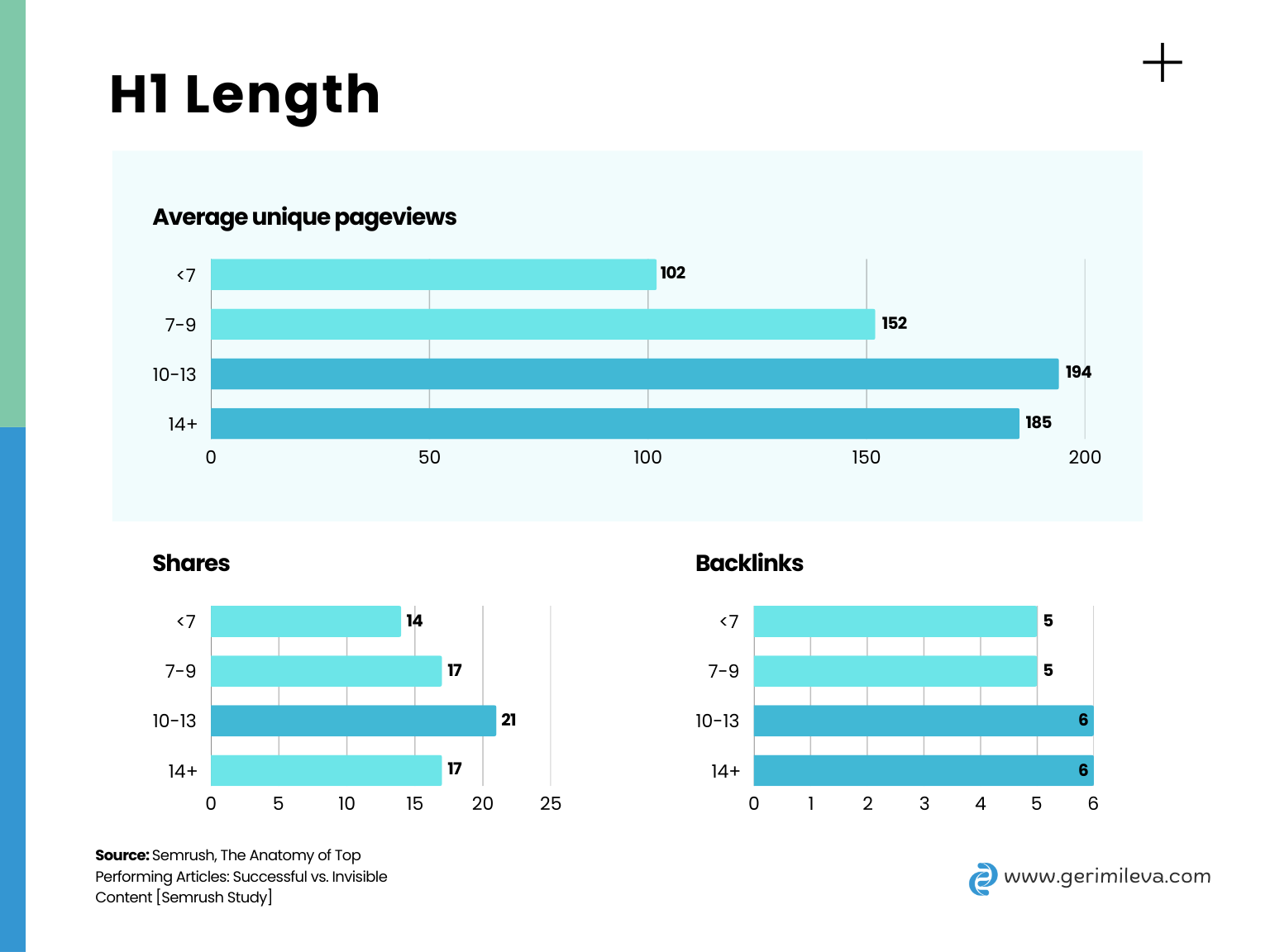
Customers are attracted to headlines that speak directly to their needs and promise a solution. Your headline is the first thing customers read, and it should be compelling enough to make them read the rest of your copy.
To create compelling headlines, you should:
- Use powerful words that capture your audience’s attention.
Powerful words help your headlines rise above the digital clutter, while setting the tone for the rest of your copy. Here are common examples:
| Action Words | Emotional Words | Persuasive Words | Urgency Words | Value Words |
| Discover Unlock Transform Achieve Boost Create Explore Master | Unforgettable Remarkable Incredible Extraordinary Love Inspire Passionate | Proven Guaranteed Exclusive Limited Best Secret Free Effortless | Now Today Hurry Instant Quick Fast Last Chance | Save Bonus Free Bargain Affordable Deal |
- Be specific and mention the key benefits of your offer.
Using the words above, here are several powerful headline examples that clearly outline the key benefits to the customer:
- Unlock the Secrets to Effortless Weight Loss
- Discover the Best Way to Save Money Instantly
- Boost Your Productivity With These Proven Techniques
Want to see these techniques in action? Check out these amazing real-life examples:
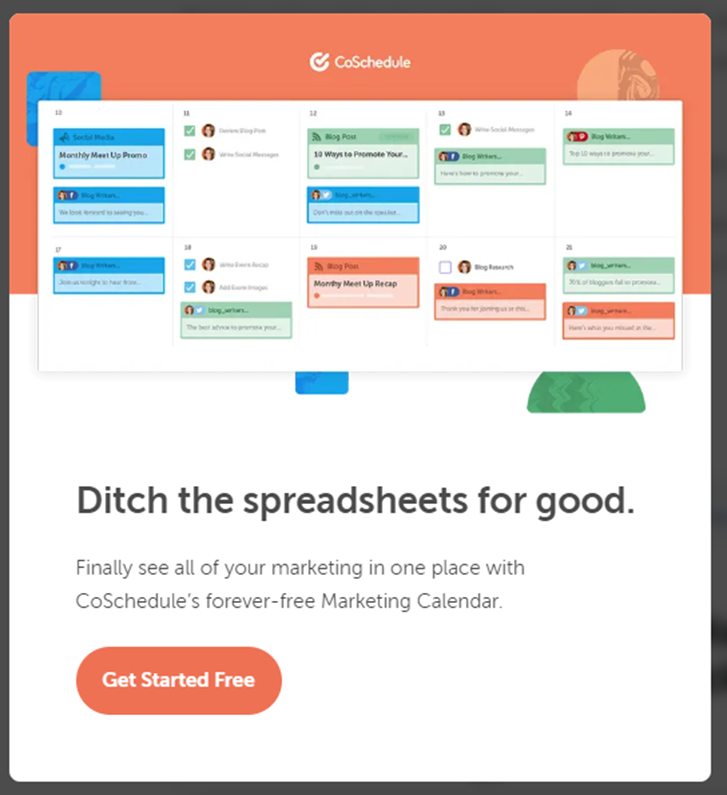
Source: coschedule.com
This headline addresses a pain point and promises an instant resolution.
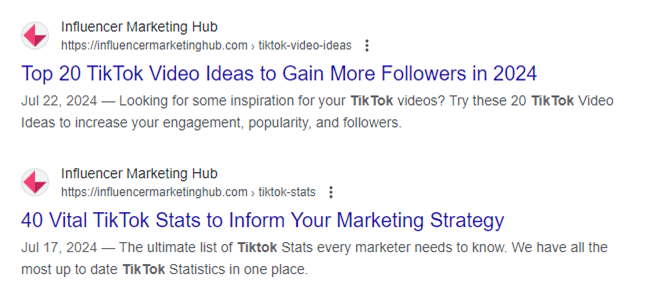
Source: Google search
These are some of the headlines for blog posts I’ve written. Notice how each headline shows the reader how the list benefits them.
- Follow up with a great lead that reinforces the main headline.
Leads are the words below the headline that introduce a thought-provoking idea related to your product or service. It often contains the biggest benefit that you can offer to your prospect.

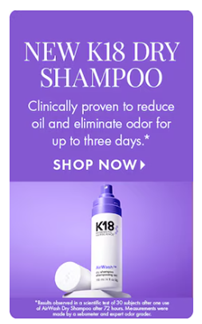

Source: sephora.com
These are promotional ads on Sephora’s website that show how each headline is supported by copy that clearly reinforces what the headline is all about. It contains enough details without overwhelming the reader and encourages them to take the next step.
Scannable and easy-to-read copy
People scan on the internet because it’s easier and, let’s admit it, we all have short attention spans. As quickly as possible, your customers want to know your offer and if it’s relevant to them.
If your copy contains huge chunks of text, readers will bounce away even if they’re attracted to your headline.
In 2006, the NNGroup discovered that people followed an F-pattern when they read a web page. Over 10 years later, the group conducted a similar study using eye-tracking software and discovered that people haven’t changed their habits.
Readers still scan websites using an F-pattern. Some readers even read with a spotted pattern, where they only pick out specific information, or a layer-cake pattern, where they only read subheadings.
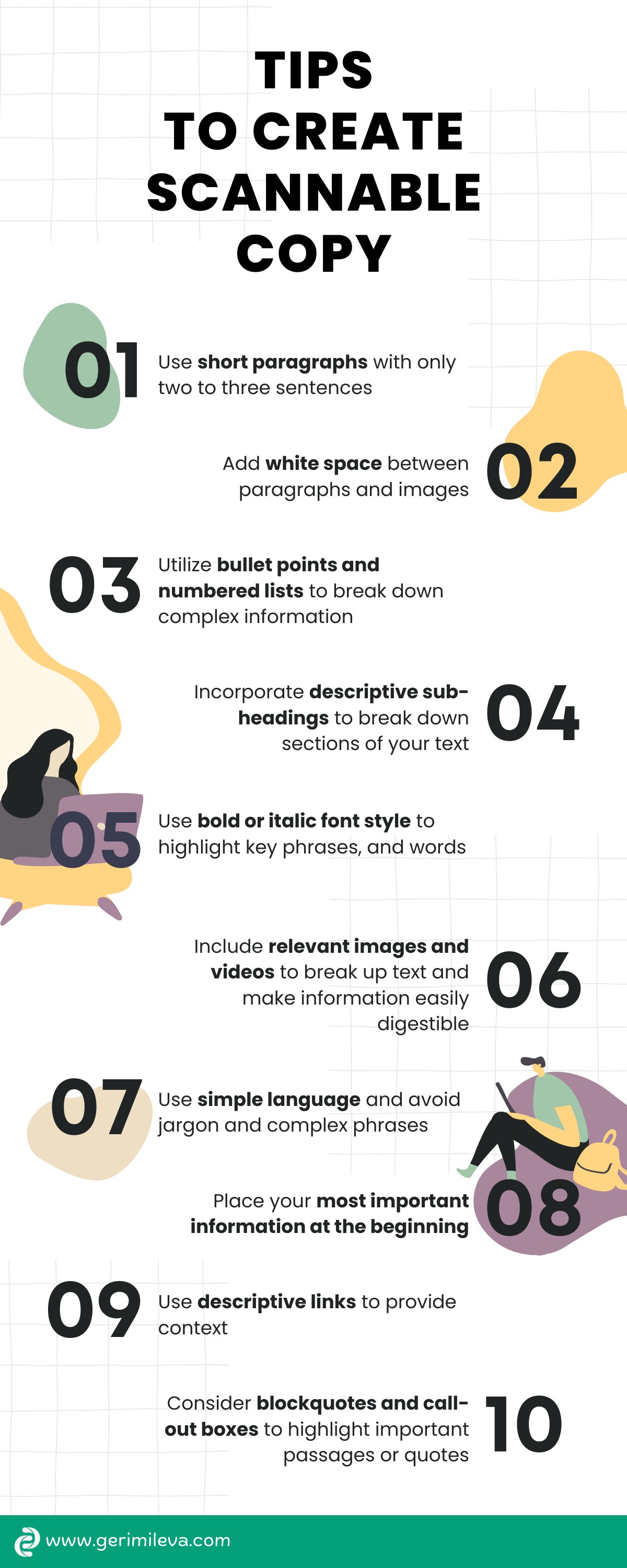
To create scannable copy, follow these tips:
- Use short paragraphs with only two to three sentences.
- Add white space between paragraphs and images.
- Utilize bullet points and numbered lists to break down complex information.
- Incorporate descriptive sub-headings to break down sections of your text.
- Use bold or italic font style to highlight key phrases, and words.
- Include relevant images and videos to break up text and make information easily digestible.
- Use simple language and avoid jargon and complex phrases.
- Place your most important information at the beginning.
- Use descriptive links to provide context.
- Consider blockquotes and call-out boxes to highlight important passages or quotes.
Personalized messaging
People are not impressed by big words or fancy prose. Instead, they resonate with words you’d naturally use when you’re talking to them face-to-face.
Readers should always feel as if the copy was written exactly for them. Great copy feels personal and sincere, not “salesy” or sophisticated.
These tips will help personalize your copy:
- Use a conversational and friendly tone to sound warm and create an image of a friend offering helpful information.
- Match your audience’s language. For example, use professional words to address business professionals, and informal language to talk to mothers.
- Address the reader directly by using their names when possible and writing in the second person.
In an upcoming section, I’ll discuss in greater detail several techniques for personalized copywriting for small businesses.
4. Create a strong call-to-action (CTA)
Every time customers read your copy, they should feel compelled to take immediate action. Examples of these actions can be to click a link, purchase a product, book a free consultation, or answer a quiz.
A strong call-to-action should be clear and state exactly what you want readers to do.
Here are some tips for writing strong CTAs:
- Use a powerful verb to get your point across. Example: Secure Your Data with Unlimited Storage
- Build urgency to encourage readers to take action immediately. Example: Get a Free Quote Today
- Be straightforward and leave no ambiguity about the next step. Example: Upgrade Your Home – Contact Us Now
- Highlight a benefit or desirable outcome. Example: Look Younger Today – Order Now
- Keep it short and simple. Example: Try It Free for 30 Days
You should also give readers enough information about what happens once they take action. For example, most pieces of sales copy include a Frequently Asked Questions (FAQ) section answering concerns on post-sales expectations such as shipping, use or care instructions, bonus products, and customer support.
The majority of CTAs are found at the bottom of the copy so it’s the last thing your readers read on the page. However, you can also include CTAs strategically across your copy as long as it makes sense for readers to click on them.
Here’s an example where I’ve inserted CTA boxes in the middle and sidebar of a blog post. This helps my client increase conversions, particularly because the article is a full-length blog where readers can be compelled to take action in various areas.
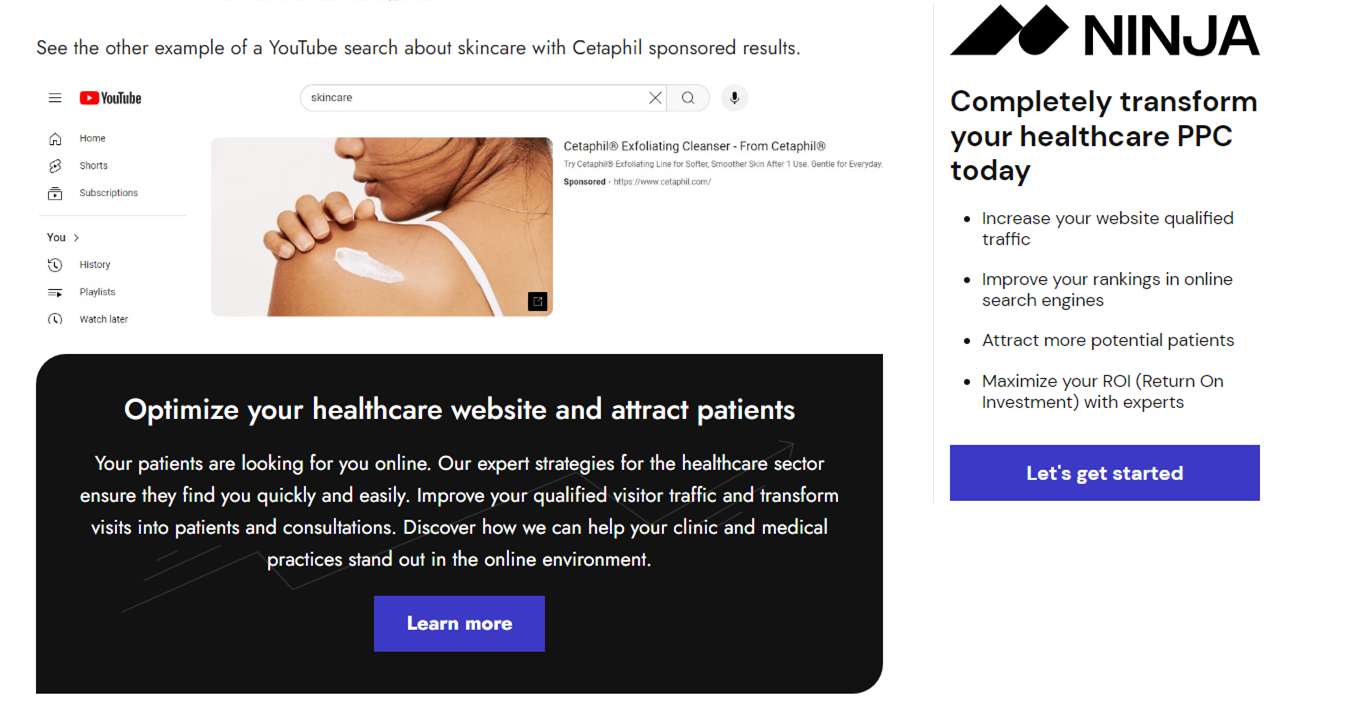
Source: https://ninjapromo.io/healthcare-ppc
5. Test and revise as needed
Small business copywriting doesn’t end when the copy is published. It’s crucial to measure and analyze your copy’s performance to determine if it’s achieving its goals.
Knowing your copy’s performance will help you improve it so you’ll consistently achieve the results you want.
Here are several techniques to optimize your copy:
- A/B Testing, which involves creating two versions of the same copy and testing them against each other
- Analyze web analytics metrics such as page views, bounce rates, and average time on page
- Gather user feedback by asking users directly what they find was most helpful or what’s missing
- Track email and social media metrics such as open rates, click-through rates, likes, and engagement
- Use heatmaps to identify which parts of the copy attract attention
There are also several free tools available to small business owners that you can use to measure your copy’s performance. You can check out:
- Google Analytics to measure web analytics metrics
- SurveyMonkey or Google Forms to gather user feedback
- Hotjar or Crazy Egg for heat mapping
Since market trends are rapidly changing, you should always stay informed about changing audience preferences to ensure your copy remains relevant.
In a later section, I’ll discuss the techniques for measuring copywriting performance in greater detail.
Defining Your Audience
Your audience is the most crucial element for effective copywriting for small businesses. You write copy for them, so it’s important to define who they are.
The best way to know your audience is through market research.
You might protest that market research is only reserved for big enterprises. After all, most market research strategies involve running massive surveys and multiple focus groups.
However, you shouldn’t let the lack of resources stop you. There are plenty of market research tools available to small business owners. With a little creativity, you can use these techniques and tools to gain crucial insights into your target audience.
| Strategies | Helpful Tools |
| Interview current and prospective customers | Phone calls In-person Meetings Virtual meetings using Zoom or Google Meet |
| Analyze social media comments | Free Tools: Google Alerts, Social media analytics pages Budget Tools: Mentionlytics, Awario, Mention, Cyfe, Iconosquare, AgoraPulse, HootSuite |
| Ask for customer feedback right after the purchase | Google Forms QR Codes Personalized notes |
| Read customer reviews | Google Business Profile Yelp Tripadvisor Capterra G2 |
| Run surveys and online quizzes | Google Forms SurveyMonkey Typeform Jotform Survey Planet |
| Walk in your customer’s shoes | Customer journey templates |
| Study the competition | SimilarWeb Google Trends Semrush Buzzsumo |
| Review your website and social media analytics | Google Analytics Facebook Analytics Instagram Insights YouTube Analytics TikTok Analytics |
Strategy 1: Interview current and prospective customers
Your customers are your primary data source because they can give you valuable insights into their preferences and pain points, and give you honest feedback about your products and services. You simply have to ask them and listen.
Here’s a step-by-step plan you can implement with little to zero cost:
- Identify your most active customers and create a short list of your initial interviewees. These can be the ones who recently purchased from your business or have made multiple purchases in the past year.
- Prepare a questionnaire of the things you want to ask. Sample questions can be:
- What’s your reason for buying [product] or [service]?
- Are you satisfied with your purchase?
- Is there anything you’d like to change or improve with the product/service?
- Would you recommend the product/service to your friends?
- Was the buying process easy or complicated?
- Choose your interview method. Some cost-effective options can be:
- Phone calls to their local or mobile number
- In-person meetings, where you can invite them to your office or store
- Virtual meetings using free video conferencing tools like Google Meet or Zoom
- Email interview, where you’ll send them the questions via email and wait for their response
- Form-based interview, where you’ll send an interview link via email or chat and use the form to collect responses. Google Forms is a free and effective tool for this purpose.
- Send out interview requests. If you’re using phone calls, in-person meetings, or virtual meetings, you should schedule your interviews to give enough time for each respondent. Ideally, you can use a combination of the different interview methods to cater to different customer preferences.
- Conduct the interview and gather the results. You can record the interview so you can review it later, but make sure to ask for your customer’s permission.
- Analyze the results and draft your action plan. Once the interviews are over, it’s time to summarize your findings and devise a strategy to implement what you’ve discovered.
Pro Tip: Encourage customers to accept the interview requests by offering incentives for sharing their time and experience. This can be discount vouchers for future purchases, or thoughtful gifts they’d appreciate.
Interviews may take time and preparation, but they are the most direct and effective means to learn about your customers.
Strategy 2: Analyze social media comments
Social media is a gold mine of valuable customer insights because people share almost everything on these platforms and you can leverage free social listening tools to efficiently gather information.
While advanced social listening tools are often expensive, there are several free and low-cost options you can check out. Some of these tools also offer comprehensive social media management features such as post-scheduling, cross-posting, and competitor tracking.
- Hootsuite – popular social media management platform with AI-powered social listening and sentiment analysis feature; offers a free 30-day trial with paid plans starting at $99/user/month
- Iconosquare – dedicated Instagram and Facebook social listening tool with social media management features available for Facebook, Instagram, LinkedIn, X, and TikTok; offers a free 14-day trial with plans starting at $59/month for 1 user.
- AgoraPulse – offers a limited free plan that you can use to schedule 10 posts. Its social listening feature costs $40/search/month and is available starting at the Standard Plan ($69/user/month). Comes with a free 30-day trial.
- Cyfe by Traject – lets you create dashboards such as a social media dashboard where you can monitor all of your social media analytics, including comments, from various profiles. Offers a free 14-day trial with paid plans starting at $19/month for 2 dashboards.
- Mention – social listening tool that lets you crawl blogs, forums, and news sites along with popular social media platforms. Pricing starts at $49/month for 1 user and 5,000 mentions. Offers a free 14-day trial.
- Awario – web and social media monitoring software that offers real-time social insights starting at $49/month for 30,000 mentions. Offers a free trial.
- Mentionlytics – social listening tool that includes social media publishing and scheduling starting at $49/month for 5,000 mentions. Offers a free trial.
- Google Alerts – free tool where you can set up unlimited alerts to monitor brand mention across the web, including social media channels.
If budget is a huge constraint, you can also opt to manually monitor social media comments. All social media platforms have dedicated analytics dashboards where you can view different social media metrics including comments.
Strategy 3: Ask for customer feedback with post-purchase surveys
Customers who’ve recently made a purchase are the best people to ask about your brand since their experience is fresh, and they’re more likely to give accurate feedback. You can gather their feedback either right after the purchase or within a predetermined after-sales time window.
Depending on the technique, you can also automate this process using free tools.
Technique 1: Send a follow-up email.
A quick way to collect feedback is to send an email to your customers. This works if you’re able to collect customer emails for every purchase.
- Create a simple survey using Google Forms.
- Ask for demographic details like name, gender, and age. Make this optional.
- Request purchase details like items bought, date of purchase, and store location.
- Ask about their buying experience. You can use simple questions like:
- Where did you hear about our brand?
- What did you like/dislike about the product you purchased?
- How would you rate your overall buying experience?
- Is there anything we could do to improve?
- Draft an email and insert the link to the Google Form.
- Send it to your customer.
Pro Tip 1: You can easily automate this process if you are running an online store. Most eCommerce platforms have a feature to automatically send post-purchase emails to buyers.
Pro Tip 2: Offer an incentive to encourage your customers prompt and honest response. This can be a discount voucher for future purchases or a complimentary gift.
Technique 2: Embed the survey to your website.
If you run an online store, you can redirect customers to a page asking for feedback as soon as they complete their purchase. You can also use strategically timed pop-up surveys to catch customers at the exact moment when they’re most likely to give honest responses.
I’ll cover free and affordable website survey tools in an upcoming strategy. For now, here are several best practices to observe when conducting post-purchase surveys:
- Use a mix of open-ended and closed-ended questions. For example:
- Close-ended: On a scale of 1 to 5, how satisfied are you with your purchase?
- Open-ended: Please share suggestions to improve our product or service.
- Keep the survey short. Ideally, customers shouldn’t take more than 5 minutes to complete it.
- Create device-responsive surveys that work well on both mobile and desktop.
- Personalize post-purchase surveys by segmenting customers into new buyers and repeat customers.
- Use conditional survey logic to tailor the survey based on the customer’s order. For example, you can ask customers to input the products they bought or their order numbers and use the information to show specific questions related to their purchase.
- Ensure the survey is placed properly on the website to gather the most feedback. You can choose from a full-page pop-up form, a slider pop-up, or a simple banner requesting feedback.
Technique 3: Send a personalized thank you note.
Everyone likes to feel appreciated, and sending your customers a thank you note shows them that you value their business. To get their feedback, you can include a survey link along with the note.
Here are several practical ways you can implement this right away:
- Send a personalized thank you email right after the purchase.
- Include a printed thank you note when you pack your customers’ orders.
- Send a quick thank you text message to your customers’ phone numbers.
- Send a direct message to your customers on social media.
- Print a thank you note on the invoice.
- Redirect customers to a personalized thank you page after their purchase.
- Mail a postcard with your message and the printed survey link.
The Drinks List, a boutique e-commerce business selling wine, includes a handwritten note with each purchase.
If handwritten notes are too time-consuming, mass-printed discount vouchers, such as the one below, can also work wonders.

Mass-printed discount voucher example
Pro Tip: Keep your messages short and send the notes as soon as the purchase is complete. Here’s a sample template:
“Hi [Customer Name], thank you for your recent purchase! We appreciate your support and hope you enjoy [Product]. Could you spare a few minutes to share your feedback? Here’s the link: [LINK]. Thank you, and have a great day! [Brand]”
Technique 4: Make a follow-up phone call.
Customers who make high-value purchases or buy complex products or services will benefit from receiving a follow-up call asking about their experience. Phone calls are also ideal if you offer bespoke services or cater to B2B clients.
When making phone calls, you should remember to:
- Arrange a convenient time for the customer to take the call.
- Ask short and to-the-point questions to respect the customer’s time.
- Use the customer’s name and reference their purchase to personalize the call.
- Pay attention to the customer’s responses and show genuine interest.
- Take detailed notes to ensure valuable insights are captured.
- Offer prompt follow-up and resolution if the customer raises any issues or concerns.
Here’s a sample script you can use:
Opening: “Hi [Customer], this is [Your Name] from [Company Name]. I hope I’m not interrupting you. I just wanted to thank you for your recent purchase of [Product/Service] and see if you have a few minutes to share your feedback.”
Questions:
- How satisfied are you with your purchase so far?
- Was the product/service what you expected?
- Is there anything you think we could improve?
- Would you recommend our product/service to a friend or colleague?
- Do you have any additional comments or suggestions for us?
Closing: “Thank you so much for your time and feedback, [Customer]. We really appreciate it. If you have any further questions or need assistance, please don’t hesitate to reach out. Have a great day!”
Technique 5: Use QR Codes.
Survey links can be hard to remember, especially if they’re printed. QR codes solve this dilemma by offering a convenient option to send customers directly to your post-purchase survey. Customers only need to scan the code with their phones, and they can instantly share their feedback.

QR Code on a restaurant receipt
Here are ideal places to insert a QR Code:
- Delivery and Invoice receipts
- Product packaging
- Attached to dine-in tables (e.g., restaurants)
- Visual display at points of purchase, such as cashier check-out counters
- As a replacement for actual survey links in emails and thank you pages

QR Code on a retail display
There are plenty of QR code generators, and you can choose from one of the free options below:
- Canva – allows you to easily insert generated QR codes into various marketing designs and templates.
- Adobe – enables you to customize the look of your QR codes and use them with the Adobe Express Suite.
- Bit.ly – lets you create multiple QR codes and analyze detailed scan data so you can learn more about your customers.
Pro Tip: Include a short but engaging message explaining what happens when customers scan the QR code. Here’s an example:
“Scan the QR Code to answer our survey and receive a discount on your next purchase.”
Strategy 4: Read customer reviews
Most customers aren’t shy about leaving detailed reviews of products and services they’ve tried on review sites across the internet because they view these sites as unbiased. As a small business owner, you should regularly read these reviews to gain valuable insights into your customers’ needs.
As a bonus, you can also use these sites to check on your competitors (more on that later).
List of the best review sites for small businesses
- Google Business Profile – a free tool that lets you manage your visibility in Google Search, Google Maps, and Google Shopping. Best for local businesses with physical locations.
- Yelp – initially intended for restaurants, now a popular destination for consumer reviews in almost any industry. Best for restaurants and other service-based businesses.
- Tripadvisor – a review site catering to travelers looking for restaurants, destinations, and accommodations. Best for hospitality-based businesses.
- OpenTable – a restaurant-specific business directory that includes customer reviews based on food, ambiance, service, and value. It offers options to include your menu, pricing, and accept reservations.
- G2 – an online review platform dedicated to software businesses and used by B2B buyers. If you’re a small business offering an app or software, you’ll benefit from the in-depth reviews on this website.
- Capterra – another popular review platform for software businesses. It offers a pay-per-click option to have your listing show higher for certain keywords.
- TrustRadius – a business software review site with an integrated business directory, blog, and vendor profiles. Best for SaaS businesses.
- Angi (formerly Angie’s List) – focuses on local businesses offering home services such as cleaning, plumbing, roofing, home security, etc.
- Home Advisor – another review site focusing on home services for residential customers. It gets millions of monthly visitors and offers options to promote your business on its platform. Best for local small businesses offering home services.
- Judy’s Book – a searchable database showcasing information for small businesses in a wide range of industries. It also contains customer reviews and brands itself as a SocialSearch tool. Best for US-based small businesses.
- Manta – an online directory for small local businesses such as restaurants, clinics, real estate firms, trucking companies, and home services. Best for US-based small businesses.
Depending on your industry, there may be other industry-specific review sites where customers leave feedback. By reading customer reviews, you have the opportunity to discover where your business is falling short of customer needs and how to resolve these issues.
Tips for managing reviews on third-party sites
- Claim your business profile on relevant review sites and manage your listing. Ensure there’s accurate business information, such as opening hours and contact information.
- Ask satisfied customers to leave reviews on these sites to boost your listing.
- Engage with your reviewers by responding to both positive and negative reviews.
- Monitor these sites regularly and keep an eye on new ratings and reviews to stay updated with customer perceptions.
- Use negative feedback as an opportunity to improve your products or services.
Strategy 5: Run surveys and online quizzes
Surveys and online quizzes are direct methods for gathering information you want to learn about your customers. All you have to do is ask the right questions and use a reliable survey tool to gather responses.
List of free survey tools
- Google Forms – all you need is a Google account. You can collect responses via short or long-form text, multiple-choice, numerical grading, dropdown selections, and more.
- Typeform – known for its user-friendly and conversational style surveys. It offers a free plan with basic features.
- SurveyMonkey – there’s a free plan with basic survey features and up to 10 questions per survey with 25 responses per survey.
- Jotform – free plan allows for 5 forms with 100 monthly submissions and 1,000 monthly form views
- Survey Planet – offers unlimited surveys, survey questions, and responses for free
Survey best practices
- Ask short, clear, and unbiased questions. Avoid any leading questions that can influence your respondent’s answers.
- Observe data privacy measures. Assure respondents that their information and responses will be treated confidentially. As much as possible, only ask for pertinent personal details.
- Balance open-ended and closed-ended questions. Ask follow-up questions to understand customer’s sentiments and reasons behind their ratings.
- Avoid double-barreled questions, which are multiple questions asked in a single question. Instead, break down questions into separate and focused items.
- Optimize the survey for different devices. Most survey tools are responsive but you should still double-check.
- Use visual aids like images and charts so respondents can better understand your questions.
- Send surveys only when necessary. Limit the survey frequency to avoid customer survey fatigue which will decrease responses.
- Test your survey. Complete it yourself and check that the questions are clear and they progress smoothly.
Strategy 6: Walk in your customers’ shoes
You can understand your customers better when you’ve experienced what they’re going through. And the best way to accomplish that is through a buyer and customer journey mapping process, a free exercise that any small business can do internally. All you need is a brainstorming session with your team.
Buyer journey vs. Customer journey
While they sound synonymous, the buyer journey is different from the customer journey.
| Buyer journey | Customer journey |
| How to acquire customers | How to retain customers |
| Actions leading to a purchase | Actions after the first purchase |
| Turn prospects into customers | Turn customers into lifelong buyers |
Mapping both journeys gives you a comprehensive picture of how your customers discover and interact with your brand.
Stages of the buyer/customer journey
Customers go through five stages in their buyer/customer journey. To address each one, you should create content that meets their needs for each specific stage.
| Stage | Characteristic | Sample Content Type |
| Awareness | Customer becomes aware of their problem and starts looking for a solution | How-to guides Educational content |
| Consideration | Customer already shows interest in several products or services | Comparison guides Product-specific content |
| Decision | Customer purchases the product/service that will address their problem | Product sign-up pages Sales pages |
| Loyalty | Customer makes a repeat purchase from the same brand or business | Email newsletter Knowledge bases |
| Retention | Customer becomes a brand advocate and tells others about the brand or business | Exclusive content |
How to create a customer journey map
The following steps can be accomplished in a day or half-day brainstorming session depending on the availability of your data. It’s best if you have gathered all the information you need before your meeting.
- Gather your resources such as customer survey results, purchase data, website analytics, etc.
- Create target personas for your customers, identifying each one’s:
- Demographic information
- Psychographic information
- Behavioral information
- Identify all the touchpoints where your customers can encounter your brand for each stage. Consider the customer’s potential experience, emotion, or needs as they go through each touchpoint. Example touchpoints include:
- An ad they see on social media
- The results of a specific keyword search
- A brochure or calling card
- Document the results in your buyer/customer journey map.
- Test each stage by going through the journey’s touchpoints.
Your buyer/customer journey map is a powerful tool that you can also use to align your marketing strategies. It’s a live document that changes over time so be sure to revisit it regularly.
Strategy 7: Study the competition
You can learn a lot about your customers by studying your competitors’ strategies. In business language, this is called competitive analysis, a process that helps you discover customer needs that the competition isn’t addressing.
Studying the competition may sound complex but it isn’t. The following simple tips will help you gain insights quickly and without spending too much resources:
- Analyze your competitor’s offers and review their features. This will help you identify what customers value the most.
- Read product reviews of your competitor’s products and services. Look for areas of improvement that you can address with your offer.
- Analyze your competitor’s pricing strategies to know how much your customers are willing to pay for similar products and services.
- Study your competitor’s marketing tactics including their messaging to understand what strategies resonate with your audience.
- Stay informed about industry trends and innovations to ensure your offers remain relevant and competitive.
- Observe how your competitors engage with their audience and the channels and platforms they use.
To guide you in doing competitor research, you can use any of the following free and affordable tools:
- SimilarWeb – gives an overview of a competitor’s website traffic including the audience demographics. It’s a paid tool but it has a free version that offers useful (although limited) insights.
- Ubersuggest – gives insights into your competitor’s top-performing keywords and content. The free version has limited daily searches which is enough for doing basic research.
- BuzzSumo – analyzes the performance of social media and web content so you can identify which content is doing well for your competitors. You can also use it to identify influencers in your industry. It’s a paid tool with a limited free version.
- Google Trends – a free tool that lets you compare the popularity of search terms over time and regions. You can use it to track industry trends and how competitors are performing in search.
- Semrush – offers a range of SEO and competitive research tools like keyword analysis and traffic insights. It has a free version with limited data enough for initial research.
- Facebook Ad Library – provides transparency on the ads being run on Facebook and Instagram. You can use it to see your competitor’s ads and their messaging, engagement, and graphics.
Pro Tip: Once you’re done with your buyer journey map, try to go through the journey using your competitor’s resources. It will give you a new perspective on what the competition is doing properly and where they’re lacking when it comes to addressing your customers’ needs.
Strategy 8: Review your website and social media analytics
Your website and social media channels gather a vast amount of customer data that is readily available for you to understand your audience. All you need to do is to access them and analyze the information.
Here’s a list of free tools and the information you can learn from them:
| Tool | Information |
| Google Analytics | Customer Demographics like age, gender, location, and language Behavioral Data like new vs. returning visitors, session duration, pages per session, and bounce rate Customer Interests like in-market segments and affinity categories Technology Used like device, browser, and operating system Traffic Sources like referral sources, search engines, social media, and direct traffic Conversion Data like goals and e-commerce tracking Engagement like user flow and events (specific actions like downloads, video plays, etc.) Any other custom dimensions and metrics that you can tailor to your needs |
| Facebook Insights / Instagram Insights | Audience Demographics like age, gender, location, and language which can be broken down per post Engagement like post and page engagement and reactions Post Performance which includes when your audience is most active and what types of posts (photos, videos, or links) they like most Promotion Insights which shows which ads resonate with your audience |
| LinkedIn Insights | Visitor / Follower Demographics like job function, seniority, industry, company size, and location Content Insights like post impressions, engagement metrics, content performance, and engagement rate Competitor Insights like industry trends and benchmarking against competitor pages Ad Insights such as ad performance, conversions, audience segmentation, lead quality, and campaign performance |
| YouTube Analytics | Audience Insights like age, gender, geography, and language Viewer Behavior like watch time, average view duration, new vs. returning viewers Video Performance including engagement, audience retention, and traffic sources Device and Platform Insights like devices, operating systems, and playback locations |
| TikTok Insights | Audience Insights like gender and location of your followers Follower Activity such as their active times Content Insights like video performance, engagement rate, and traffic sources Trending Metrics like popular sounds, trending challenges, and hashtag engagement |
The tools mentioned above are already available once you’ve signed up for the corresponding social media account or you’ve launched a website. You don’t need to pay extra to access them so take advantage of the opportunity and use it extensively to learn about your audience.
Personalization in copywriting
Small business copywriting offers a unique opportunity to reach customers because owners tend to know their customers better and can tailor their messages accordingly. It’s easy to differentiate your offer by writing personalized copy that eventually builds strong and loyal customer relationships.
Once you’ve gathered sufficient customer data and learned what your customers like, it’s time to personalize your copy to their specific tastes. Here are actionable techniques you can follow:
Segment your audience
Using the customer data you’ve gathered, divide your audience into various segments:
| Demographic segmentation | Behavioral segmentation | Psychographic segmentation |
| Age, gender, location, language, and other demographic factors | Past purchase behavior, browsing history, and engagement levels | Interests, values, and lifestyle of different customer groups |
Identify user groups within these segments and use their characteristics as a guide in writing your copy. For example, you can use location data to guide site visitors to country or state specific websites with references to their local community.
Consider the detailed buyer personas you’ve identified previously and create content that addresses the stages of their customer journey. In a later section, I’ll give detailed examples of how you can craft personalized content for each customer stage.
Benefits of audience segmentation
- Create targeted messaging for specific user groups leading to highly relevant and engaging communication
- Focus your marketing resources on high-potential segments, reducing waste and improving ROI
- Enjoy higher engagement rates since content resonates with each segment
- Increase conversions since customers see exactly what they need via optimized sales funnels and customized offers
- Improve user experience which can lead to higher customer satisfaction and loyalty
- Gain deeper insights into customer behavior and preferences which helps you predict future trends and customer behavior
- Stand out from competitors and position your brand more effectively
Use natural language that fits your brand
When speaking to your audience, cut out the jargon and use conversational language. Small business copywriting must be relatable and easy to absorb. One technique I’ve proven works is to use the same words customers speak. This shows that you’re genuine and care about them.
Remember, you are talking to real people even if all you see is a digital screen.
Here’s how I achieve a natural, conversational tone when writing:
- Write like you speak and use the same phrases you’d use in a casual conversation.
- Use simple words and sentences and avoid any complex vocabulary or long, convoluted sentences. Always aim for clarity and ease of understanding.
- Use the active voice to make your writing more direct and lively. Example: “We offer free shipping” vs “Free shipping is offered by us.”
- Use contractions to make your writing sound relaxed and natural.
- Use personal pronouns like “I”, “you”, “we” and “they” to make your writing more personal and engaging. Example: “You’ll love our new features” vs “The new features are impressive.”
- Use rhetorical questions and exclamatory sentences to mimic natural speech patterns. Example: “Looking for the perfect gift? We’ve got you covered!”
- Vary sentence length to create a natural rhythm. Short sentences can add emphasis while longer ones can provide detailed explanations.
- After writing, read your copy out loud. This will help you catch awkward phrasing.
Of course, your choice of words and tone must fit your brand. For example, you can inject humor and be funny when you’re a Gen Z consumer brand. But if you’re a legal business, you may consider a more serious approach.
In the next section, I’ll discuss in detail how to develop your brand voice so you balance authenticity and customer engagement.
Localize content whenever possible
As a small business, you have the advantage of a local presence over global brands. Use this to your advantage whenever you can. Localism is a growing trend where customers prefer buying goods and services from their own country.
Why? Because customers feel good when they’re supporting small and medium enterprises in local communities. They believe it creates a stronger economy and they’re doing their part for the planet.
In fact, a recent survey in Europe revealed that 68% of consumers purchase goods from local shops. This figure is even higher for countries like Germany, where 80% prefer to shop local.
Here’s how you can use content localization to your advantage:
- Highlight local events and holidays in your content to show that you are in tune with the community’s activities and traditions.
- Incorporate references and stories about local landmarks and cultural practices.
- Feature testimonials from local customers to add credibility and relatability.
- Partner with local influencers who have a strong following in your community.
- Tailor your offers and promotions to the local community’s tastes, preferences, and seasonal demands.
- Use visuals that reflect the local environment and culture.
- Optimize your content for local search terms.
Dom’s Sausage Company, a small business in Boston selling marinated meats uses the local community to its advantage. Their Instagram feed is filled with local events promotions, holiday posts, and local influencer content alongside magnificent visuals of their products.
Pro Tip: Share your content with local social media groups and forums. Consistently engage with the local community and you’ll see an uptick in your loyal customers.
Personalize the entire experience
Personalization in copywriting goes beyond using your customer’s name and starting your emails with “Dear John.” While email marketing is the most common application of personalized marketing, true personalization involves the entire customer journey.
A McKinsey study discovered that 71% of customers expect personalization and 76% are frustrated when they don’t get it.
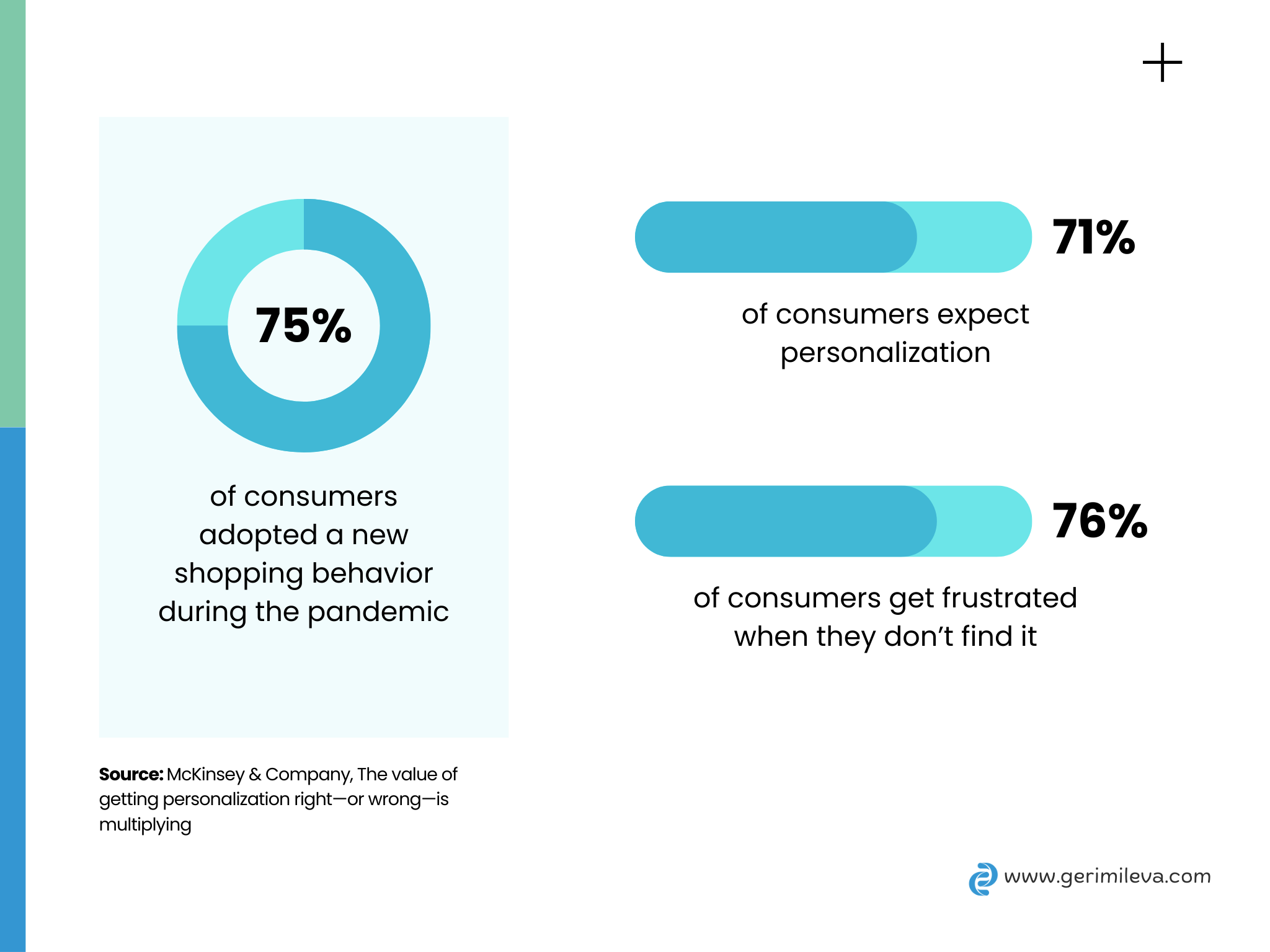
Throughout the customer journey, there are multiple touchpoints where you can wow your customers with personalized experiences.
Here are several examples:
- Website personalization: Send website visitors to dedicated landing pages based on their browsing behavior, location, season, and other trackable data.
For example, you can give a special offer to first-time visitors like free shipping, Buy One Get One (BOGO) discount, or a 10% discount on their first purchase.
If you’re not in the e-commerce business, you can create exclusive content like an e-book or guide that first time visitors can download in exchange for their email address.
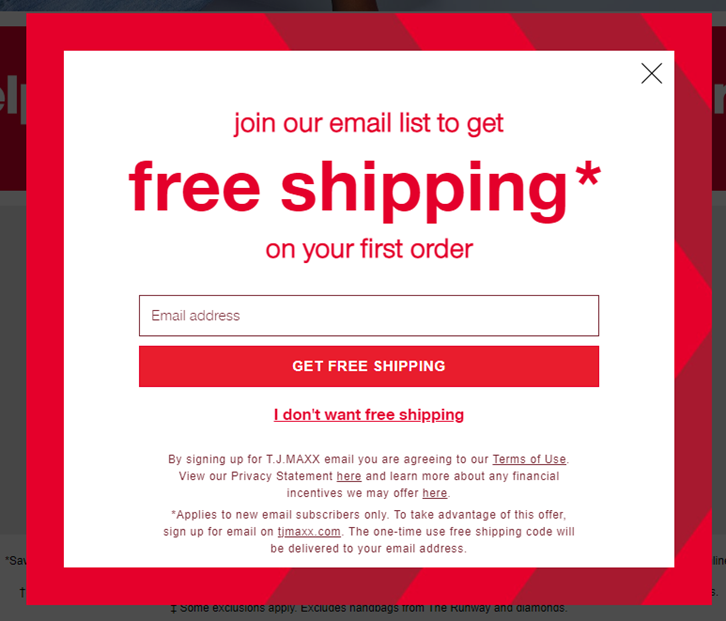
Source: tjmaxx.tjx.com
T.J. Maxx, an affordable retail e-commerce shop, captures first time visitors with a pop-up offering free shipping in exchange for signing up to the newsletter. The pop-up appears as you near the bottom of the page. This is a great tactic to ensure you can reach the customer even if they decided not to purchase today.


Source: justfab.com
JustFab, a popular women’s shoes and accessories retailer, makes it even more exciting by offering first-time visitors a chance to choose their welcome gift.
Meanwhile, returning customers can be offered a loyalty discount or a complimentary gift with their order. You can also offer them a discount on their next purchase or an incentive for making a referral.
- Live chat: Use automated chatbots to detect visitor intent and proactively offer customers what they need.
For example, if a visitor has been browsing a particular product category multiple times, the chatbot can offer a limited-time discount on those products or suggest popular items within that category.
Take advantage of automated chat features offered by social media platforms. Show customers that you’re there for them when they need real-time support.
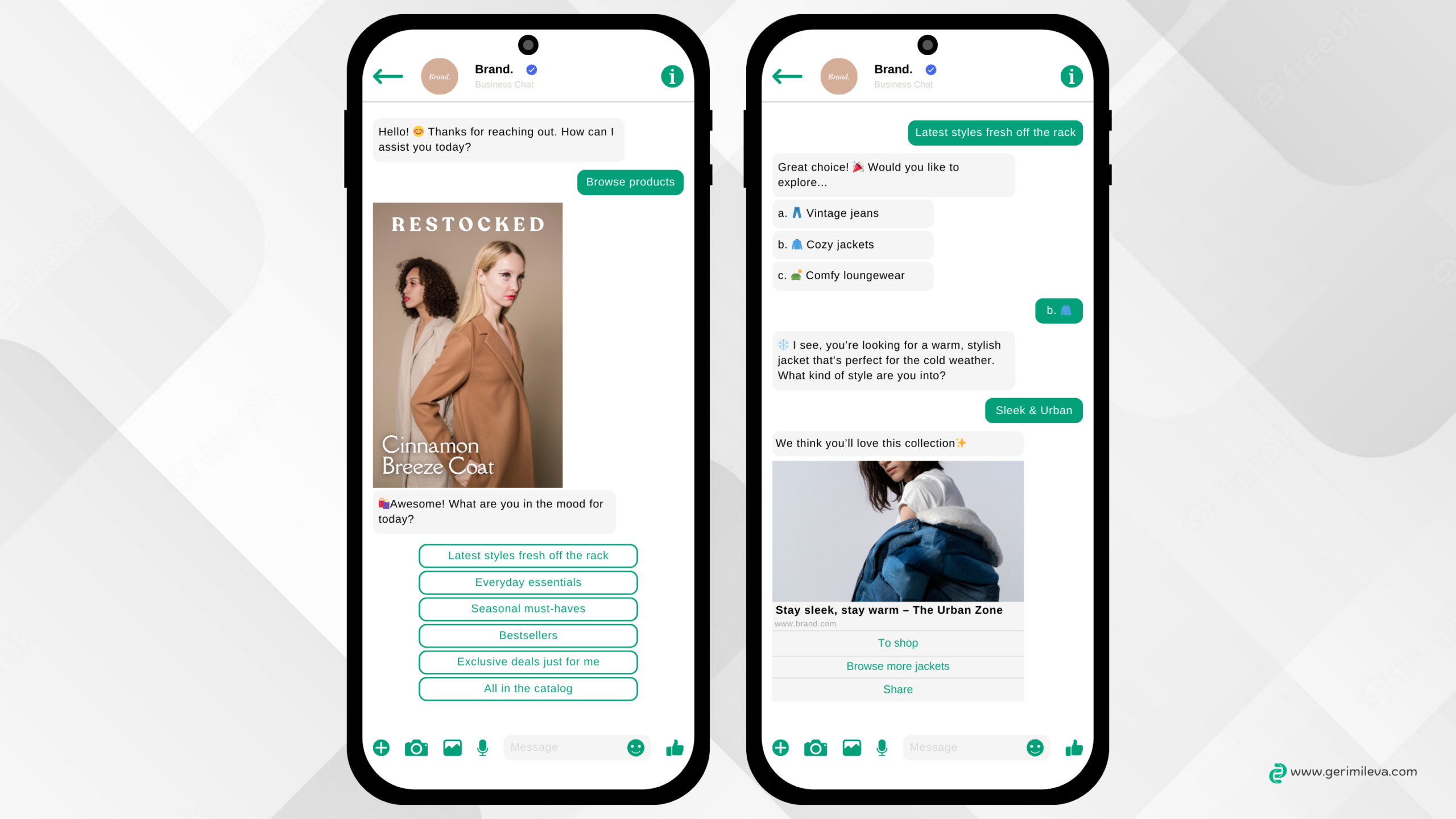
Example of automated chatbots
An example of a company using automated chatbots shows how they can help customers find the right products they need. Notice that the messaging can be tailored to reflect the company’s unique personality.
- Video personalization: A study by DecisionLabs showed that 70% of sellers who used custom recorded videos in their emails received higher opens, clicks, and conversions than those who used purely text-based emails.
Personalized videos can be as simple as sending a recording of yourself, introducing your solution to a prospect. Another idea is to send a screen share recording demonstrating your product.
This is a great strategy for service-based businesses where you go through several sales stages like prospecting, demo, and follow-ups.
For example, after a demo call, you can send a personalized video recapping the key points discussed, addressing specific concerns, and outlining the next steps.
- Push notification: Online and location-based businesses can both enjoy the benefits of using push notifications to capture customers at the exact moment when they’ll most likely perform the desired action.
For instance, location-based businesses can employ geofencing where you use a customer’s GPS location to send location-specific alerts and deals. Meanwhile, e-commerce stores can send push notifications to remind customers of abandoned carts.
You can even use push notifications to greet your customers a Happy Birthday and send them a promotional discount.
Many brands use location targeting to show relevant deals and promotions to customers within a specific radius of their stores. They achieve this by developing apps that request permission to track users’ locations.
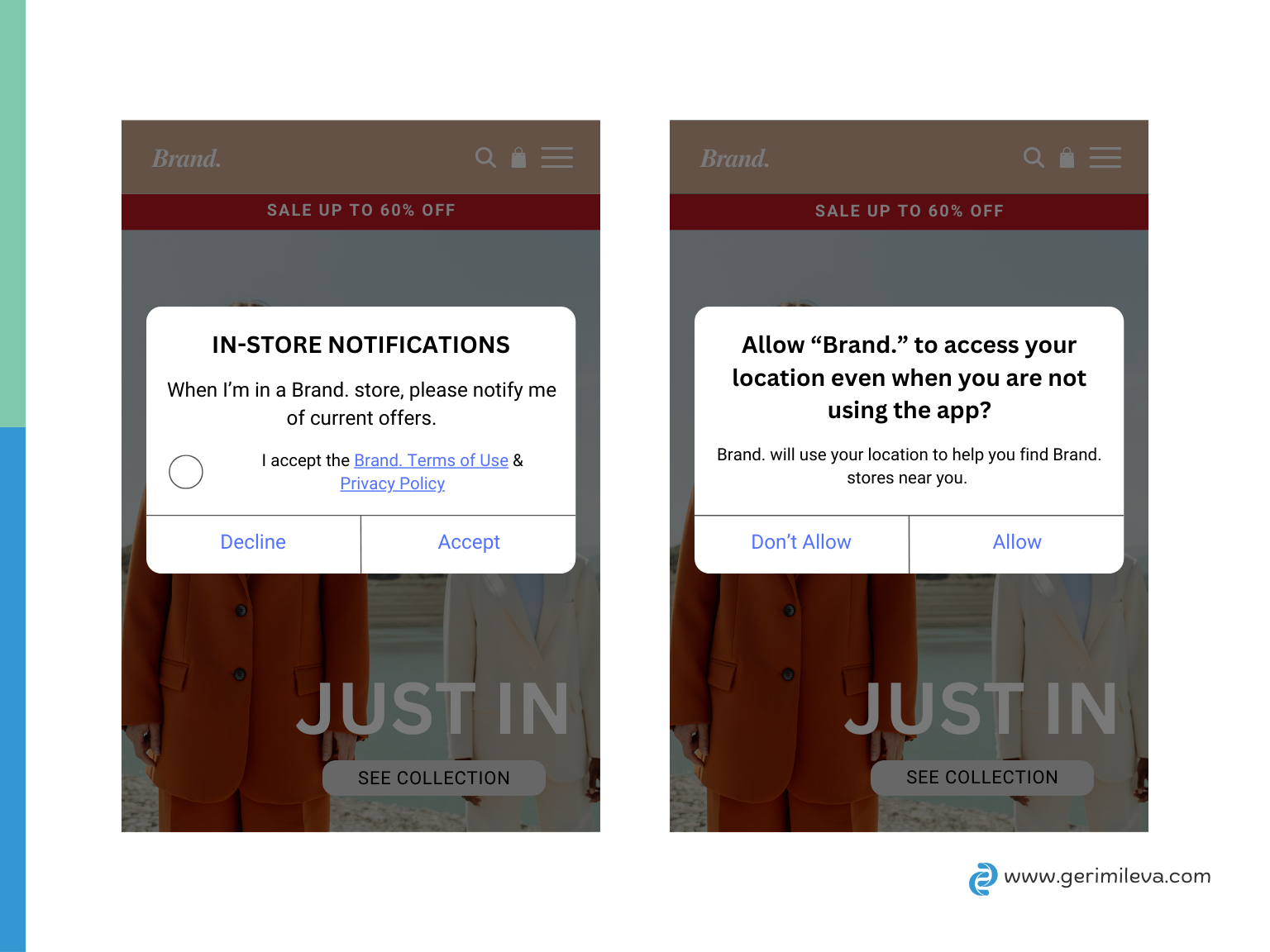
Example of push notification
- Email marketing: Sending personalized emails is a great way to build loyal followers. There are also plenty of automation and personalization tools incorporated in email marketing platforms.
Check out the Effective email marketing for small enterprises section to discover how you can personalize emails to customers.
Pro Tip: Data privacy is a serious concern today so assure customers that whatever data you collect will be treated confidentially. Demonstrate your commitment to security, like us so they’ll trust you in giving their personal information.
Leverage content personalization tools
Depending on your content strategy, there are multiple personalization tools that you can use. Most of these are paid tools but you can start with a free limited plan and scale up as your needs grow.
| Strategy | Tool | Features to Look For |
| Email Marketing |
|
|
| Website Personalization |
|
|
| Social Media Content |
|
|
| Live Chat |
|
|
| Video Personalization |
|
|
| Push Notification |
|
|
Pro Tip: Map out your content strategy first before deciding on a tool. Then, maximize a tool’s free trial to gauge its impact on your strategy and make a data-driven decision.
Developing Your Brand Voice
A survey by Adzooma revealed that 57% of customers are more likely to buy from brands with strong personalities. Additionally, 35% of respondents prefer a friendly and conversational brand, while 21% favor a blend of professional, friendly, quirky, and sarcastic tones.
Developing your brand voice equates to knowing your brand’s unique personality. This is your guide for consistent messaging across platforms so your customers will know who they’re talking to. Getting the right personality is crucial, especially since the same survey revealed that 55% of respondents unfollowed a brand because of how it communicates online.
Reasons to create a brand voice
Your brand voice significantly impacts your ability to connect with audiences and build trust. If you haven’t created one yet, here’s why you need to develop one now:
- Achieve consistency across channels which helps customers quickly recognize and relate to your brand on social media, emails, website content, and ads.
- Establish trust and credibility so customers know what to expect from the brand.
- Stand out in a crowded marketplace and create a memorable and recognizable presence that helps solidify customer loyalty.
- Create an emotional connection with your customers, making them feel understood and valued.
- Humanize the brand and give it a personality. You can use the brand voice to support your storytelling efforts in communicating the brand’s values, mission, and vision.
- Ensure efficient collaboration across team members and reduce the chances of miscommunication and content that deviates from the brand’s persona.
- Provide reassurance and manage the brand’s reputation during crises, maintaining trust and loyalty even in difficult times.
Brand voice vs. brand tone
They may sound the same but the brand voice is different from the brand tone. Both are equally important when developing your brand messaging.
| Brand voice | Brand tone |
| Personality and style of your brand’s communication | Emotional inflection applied to your brand voice to ensure it’s appropriate for the situation and audience |
| Permanent It doesn’t change regardless of the situation and remains consistent across all communication channels. | Variable Changes depending on the context, audience, or communication channel but remains true to the brand voice |
| Provides a consistent foundation across all communications | Offers the adaptability to meet specific needs and expectations of different contexts |
| Example: Friendly and approachable Playful and fun Professional and authoritative | Example: Reassuring and emphatic Excited and enthusiastic Calm and informative |
Together, the brand voice and brand tone ensure your copy is recognizable and relatable regardless of the situation and audience.
Pro Tip: When you develop your brand voice, create tone guidelines that illustrate how to adapt the brand voice for various scenarios.
How to craft your brand voice
Your brand voice reflects your unique value proposition. It should highlight your strengths in a relatable communication style for your brand. Here’s how you can develop your brand voice:
1. Understand your brand identity
Imagine your brand as a person. What is its personality? Is it fun and playful? Bold and adventurous? Or formal and serious? You can look at your mission and purpose to align your brand identity.
Review your company’s core values and use them as the foundation for your brand voice. For example, if you value inclusivity and warmth, then your voice should be casual and welcoming.
You should also have a strategic vision for your company which can be the basis of your mission, core values, and voice.

Nike is a prime example of a brand whose voice is consistent across channels. The brand inspires people to push their limits and achieve greatness, often using powerful and concise language. Its brand voice is motivational, empowering, and bold.
Pro Tip: Be yourself and don’t be pressured to think of a crazy identity just to stand out from the competition.
2. Take inspiration from your audience
You can’t go wrong by following your client’s voice. Because you’re developing a voice that will resonate with your audience, it makes sense to listen to them and use their organic language.
You can build word clouds based on key themes and repeated phrases. You can use your client surveys and tap your deep understanding of your buyer persona for this exercise.
Patagonia knows that its customers aren’t just outdoor persons but also advocates for environmental conservation and sustainable practices. They capture this personality by using a brand voice that’s passionate, environmentally conscious, and activist.
Pro Tip: Make your voice memorable by crafting one that delivers a “wow” experience for your customers. Your brand voice permeates the overall customer experience, from their initial interaction to customer service.
3. Audit your existing content
If you already have existing content, examine them and look for the ones that delivered the most engagement. This can be a viral social media post or a high-traffic blog article.
The voice you used in your performing copy is most likely the one that customers already resonate with. You can build on what’s working and further improve it.
For any underperforming content, consider scrapping or redoing it to fit the brand voice. You can also research some of the best content formats in your industry and consider how you can adapt them for your brand.
Pro Tip: Use analytics tools like Google Analytics or social media analytics to discover top-performing content. Decide what metrics you’d use to measure content performance and set benchmarks to evaluate future content.
4. Determine the do’s and don’ts of your brand voice
Another aspect of determining your brand voice is asking what you want (or don’t want) your brand to be. This requires an introspective process where you ask yourself and your team what the brand means to you.
You can begin by listing the qualities you don’t want your brand to be. Then you can write the antithesis to these statements. For example:
| Don’t | Do |
| Don’t be too formal | Be friendly |
| Don’t be too serious | Be casual |
| Don’t be vague | Be informative |
| Don’t be generic | Be forward-thinking |
| Don’t be impersonal | Be approachable |
Apple emphasizes creativity, simplicity, and the groundbreaking nature of its products. It uses simple yet powerful words to convey its brand voice of being innovative, sleek, and inspirational.
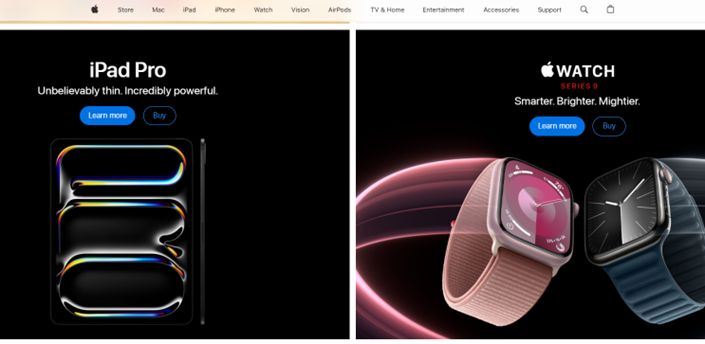
Source: apple.com
Pro Tip: Don’t be afraid to take bold risks. The best way to stand out is by being bold which includes taking risks with what you want your brand to become.
5. Check the competition
Your competition will always be a great source of information when brainstorming ideas for your brand. Check out how they communicate with their customers and determine the things you like and don’t like.
List down what they’re doing well and identify areas for improvement. Check where their voice overlaps with your intended communication strategies and determine how you can differentiate yourself.
This process will spark ideas on how you want to talk to your customers and you can use it as a springboard for crafting your brand voice.
Here are some guide questions you can ask:
- What type of language are they using?
- What emotions does their copy generate?
- Do you see a connection with their mission or vision and their brand voice?
- Are there common themes among your competitors’ brand voices?
Pro Tip: To expedite your brainstorming process, assign one or two competitors for each team member to research and have them present the results during your session.
6. Isolate category truths from brand truths
Be careful of falling for category truths that are broad and expected within your industry. Rather, push yourself to come up with brand truths that are unique to your products and services.
Here are some examples:
| Category truth | Brand truth | |
| Eco-friendly cleaning products | Eco-friendly products are safe for the environment. | Our products use biodegradable formulas and offer refillable containers to minimize waste. |
| Organic food | Organic foods are free from pesticides. | Our brand partners with local farmers to provide the freshest organic produce. |
| Yoga wear | Yoga wear should be flexible and comfortable. | Our brand offers eco-friendly yoga wear with ultra-flexible fabrics and chic designs that move with you. |
Pro Tip: Avoid common language by focusing on your unique value propositions and using them as guides for developing your brand voice.
7. Document your output with a style guide
Once you’ve determined your brand voice characteristics, it’s time to document them in a style guide that will be your team’s reference when writing a copy.
Your brand voice guidelines should include the following:
- Between three to five characteristics describing your brand
- Description of each characteristic and how they might sound in a copy
- Actionable tips on how to demonstrate the characteristic
You can either create a detailed document or a table summary like the one below to capture your brand voice.
| Voice characteristic | Description | Guidelines |
| Trustworthy | Reliable and honest, building credibility with the audience. | ✅ Use transparent and fact-based communication. Provide sources and real examples. ❌ Don’t exaggerate claims or use misleading language. Avoid overpromising. |
| Helpful | Supportive and informative, guiding the audience toward solutions. | ✅ Provide clear, actionable advice. Use a friendly and encouraging tone. ❌ Don’t overwhelm with excessive details or use jargon that confuses readers. |
| Professional | Polished, knowledgeable, and authoritative. Establishes credibility while being approachable. | ✅ Use precise language and industry-relevant terminology where necessary. Maintain a respectful tone. ❌ Don’t sound robotic, overly formal, or cold. Avoid complex jargon unless your audience expects it. |
| Conversational | Engaging and friendly, like a natural dialogue with the reader. | ✅ Write as if speaking to a person, using contractions and everyday language. ❌ Don’t use overly complex sentences or stiff phrasing. Avoid excessive slang. |
| Inspirational | Motivational and uplifting, encouraging the audience to take action. | ✅ Use positive, aspirational language and real-life success stories. ❌ Avoid vague statements without substance. Don’t be overly preachy. |
| Bold | Confident and assertive, making a strong impression. | ✅ Be direct and persuasive. Use strong, decisive language. ❌ Don’t be aggressive, confrontational, or overly pushy. |
| Empathetic | Understanding and compassionate, making the audience feel heard. | ✅ Show genuine care by acknowledging challenges and offering solutions. ❌ Don’t dismiss concerns or use a detached tone. Avoid sounding overly dramatic. |
| Innovative | Forward-thinking and cutting-edge, reflecting modern trends and ideas. | ✅ Highlight new ideas, trends, and fresh perspectives. Use dynamic and visionary language. ❌ Don’t rely on clichés or outdated concepts. Avoid making empty claims without backing them up. |
Communicate your style guide to anyone who creates copy for the company. This includes both internal and external partners. Revisit it regularly and audit your copy against it to ensure you maintain consistency across platforms and throughout time.
Pro Tip: Involve your employees and empower them to be the voice of the company. Create a company culture that embodies your brand voice. Your employees must internalize the brand promise and articulate it not just in words but through their actions.
Crafting a copywriting strategy
Now that you understand your audience and your brand voice, it’s time to gather them and formulate your copywriting strategy. Small business copywriting is different from copywriting done by large businesses because you need to be more flexible and versatile in your approach while maximizing limited resources.
Small business copywriting also focuses on niche markets while emphasizing customer relationships. As a small business owner, you have the advantage of adding a personal touch and local flavor to your copy.
Understanding these advantages and limitations will help you formulate a winning copywriting strategy.
Step 1: Strategic planning
When creating a strategy, you need to have sufficient information to make data-driven plans. You can’t just copy the best-performing strategies of your closest competitor. Your copywriting strategy might be vastly different from theirs depending on your customer, offer, and situation.
Here’s a checklist of what you need before you outline a copywriting strategy:
- Your business objectives
- Latest audience research data, including detailed buyer personas
- Latest competitive analysis results
- Your unique value proposition
- Your brand voice style guide
Pro Tip: Implement the techniques mentioned in the previous sections to define your audience and brand voice. You can also use the tips provided to create a comprehensive competitive analysis.
Once you’ve completed the checklist, gather your team for another brainstorming session to outline your copywriting strategy.
- Check your business objectives and identify your copywriting goals. Here are some common examples:
- Increasing brand awareness
- Generating leads
- Boosting sales
- Retaining customers
Your copywriting goals must support the overall business objectives. Remember to make it SMART (Specific, Measurable, Attainable, Realistic, and Timebound).
- Decide on the content types and platforms you’ll use to achieve your goals. For example, you can work on an educational article series (content type) published in LinkedIn (content platform) to increase brand awareness (goal).
You can use the information you’ve gathered about your audience and competitors to complete this step. Focus on the channels your audiences regularly use and the relevant content type for their buyer stages.
Pro Tip: Prioritize 2 to 3 channels to distribute your content. Master them first before adding a new platform. Don’t overwhelm your team by trying to be in multiple channels at once.
- Create a content calendar to plan and schedule your content, ensuring consistent and regular communication with your audience. It will also guide your team in planning their tasks to ensure they meet the deadlines.
In a later section, I’ll provide a detailed step-by-step guide for creating a content calendar.
- Identify relevant keywords and phrases your audience uses to search for information related to your products and services. This involves performing keyword research and optimizing your copy to include them.
- Establish performance indicators to measure the success of your copywriting efforts. Examples include:
- Conversion rates
- Click-through rates
- Engagement metrics
- ROI
You should set attainable but ambitious numbers for these metrics and track them using analytics tools. There are plenty of free tools, like Google Analytics and the insights provided by social media platforms, that will help you accomplish this task.
In a further section, I’ll expound on the different copywriting performance metrics small business owners can use to evaluate their copy.
A huge chunk of your planning session will be spent on deciding the content type and distribution platforms you’d use. Again, it might be tempting to try to achieve everything but focus on a few key and impactful initiatives first and master them.
This will help you get started quickly, learn fast, and achieve better results. It also ensures you don’t overstretch your team while maximizing your available resources.
Step 2: Resource allocation
Small business owners have limited resources and too often, everyone wears several hats to keep the business going. While everyone recognizes that copywriting is essential, you might be wondering if it’s more efficient and economical to outsource copywriting or tap internal resources.
| In-house copywriting | Outsourced copywriting |
| Tapping your internal marketing team or hiring copywriters to produce all of your online and offline copy | Working with a freelance copywriter or an external marketing agency for all or parts of your marketing copy |
Pros:
| Pros:
|
Choose if:
| Choose if:
|
Pro Tip: Aim for a hybrid approach instead of sticking only to either an in-house or outsourced copywriter. Your internal marketing team can work on core content needs that require deep product knowledge and confidentiality. Then, you can outsource specialized projects and overflow work to external professional copywriting services.
This approach gives you the best of both worlds, balancing costs, expertise, and efficiency.
Adapting to market trends
Your copywriting strategy should be dynamic and flexible so it’s constantly relevant, engaging, and effective. Here are several steps to create an adaptive copywriting strategy:
- Stay informed on trends by reading industry blogs, attending webinars, and following thought leaders. You can use tools like Google Trends and social media listening tools to identify popular topics and emerging trends.
- Evaluate how current trends align with your audience’s interests. Assess their impact on your business objectives and decide either to adapt or forsake them.
- Incorporate relevant trending topics into your content calendar. Your content strategy must allow for quick adjustments based on emerging trends.
- Produce trend-based content that aligns with the trending platform’s content types. Release it on time so it remains relevant.
- Be ready to pivot with a moment’s notice since trends can rapidly change. Develop a process to rapidly respond to new trends and incorporate them into your copywriting strategy.
Pro Tip: Align trend-based content with your brand values and core message to maintain authenticity. You should ensure that while adapting to trends, your content remains consistent with your brand voice.
Copywriting for different stages of the customer journey
Stage 1: Awareness
At this stage, your customers are oblivious to their actual needs or problems. It’s up to you to help them realize their unmet needs and that you can solve them. Since your readers aren’t looking to buy anything, you must educate them so they’ll ultimately make a purchase decision.
- Writing style: Storytelling
- Purpose: Educate, build trust, and establish the brand as an expert
- Tone: Friendly, informal, conversational
- Key strategy: Provide valuable information that addresses common questions and pain points
- Ideal content formats: How-to blogs, infographics, podcasts, social media post

Source: https://piktochart.com/blog/project-plan-templates/
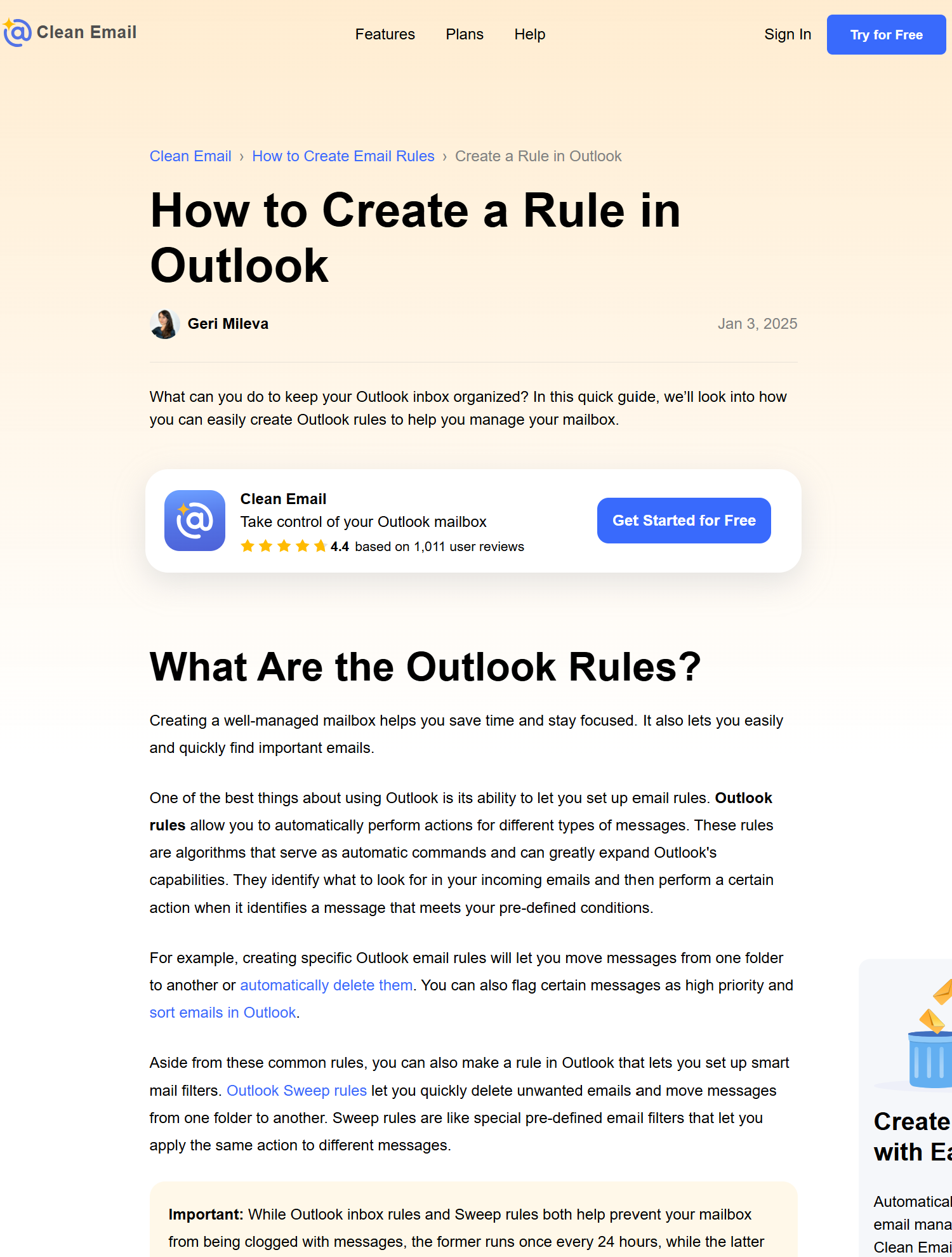
Source: https://clean.email/create-email-rules/outlook-rules
Pro Tip: Write copy that’s solution-focused, not product-focused. Give as much knowledge and advice as possible to help readers resolve their situation without asking for anything in return. This will establish your reputation as an authentic and trustworthy source.
Stage 2: Consideration
Once your target customer realizes their need, they’ll start to look for a solution. This is the consideration stage where they place all their options on the table and compare them. As an expert, you should help them make an informed decision by showing the best solution.
- Writing style: Expert
- Purpose: Provide in-depth information and showcase your value proposition
- Tone: Honest, authoritative, direct
- Key strategy: Create content that compares your products and services to competitors.
- Ideal content formats: case studies, comparison blog posts, customer testimonials
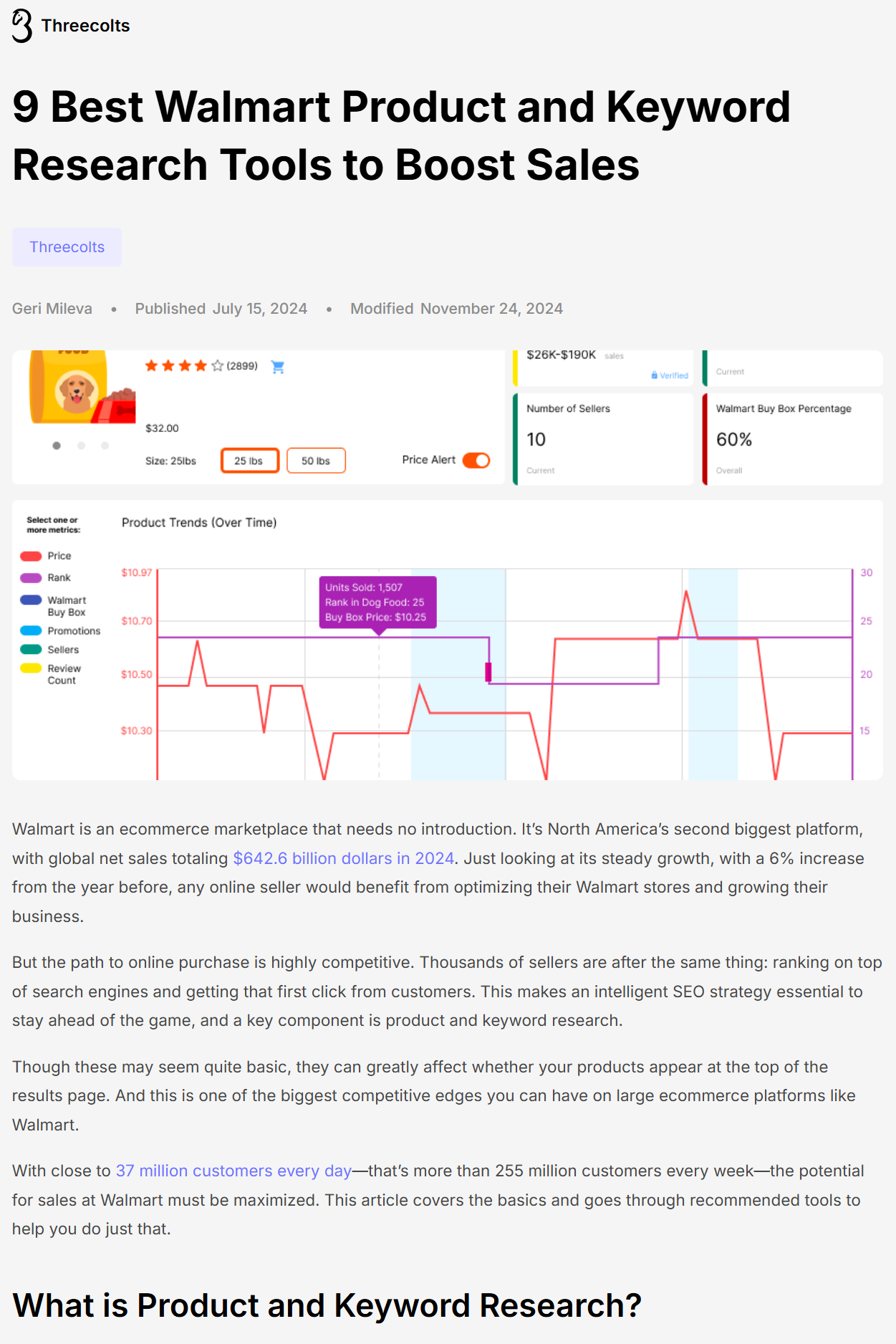
Source: https://www.threecolts.com/blog-articles/best-walmart-product-keyword-research-tools
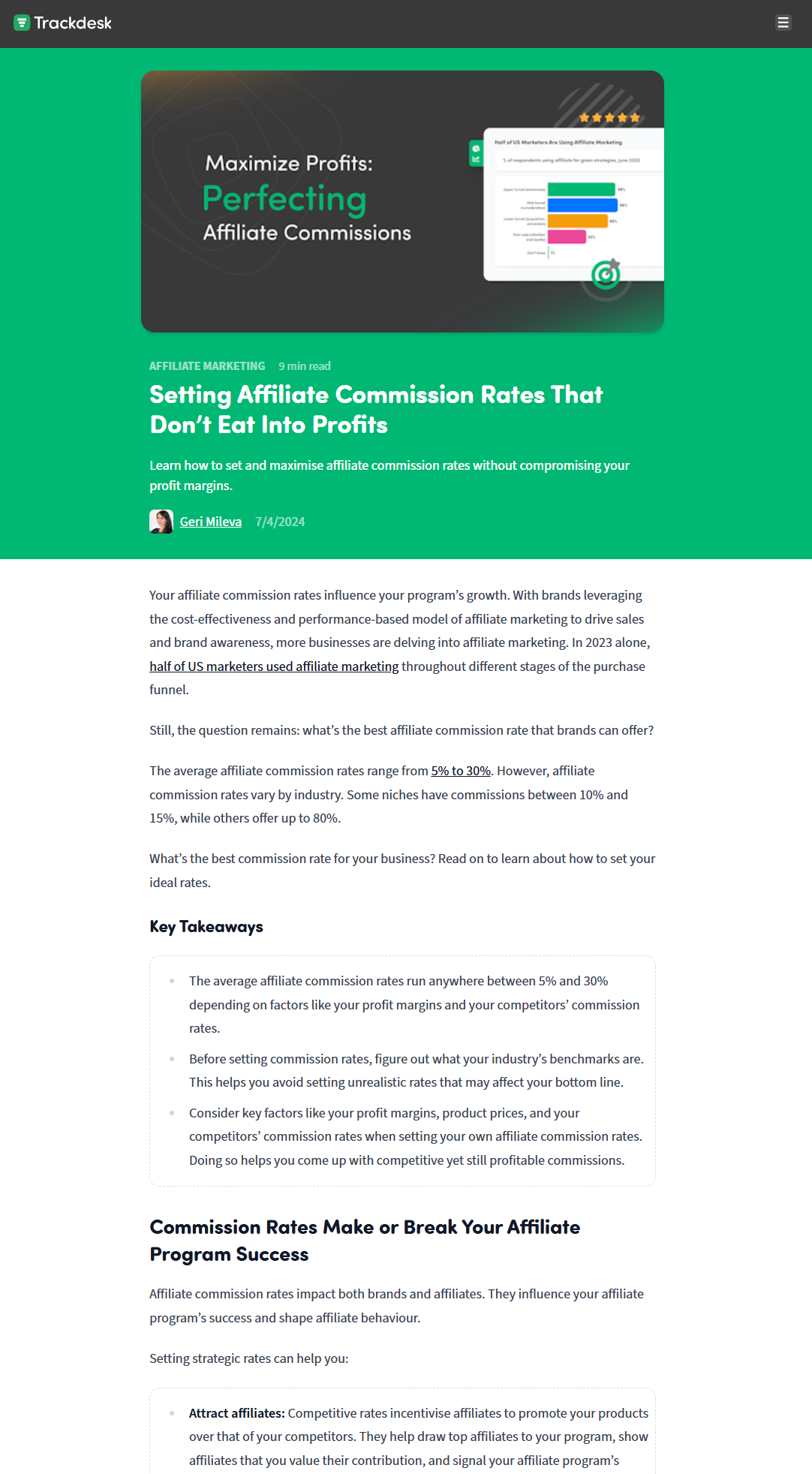
Source: https://trackdesk.com/blog/how-set-affiliate-commission-rate-guide
Pro Tip: Use data to portray your offer in an objective light. Be careful of making superfluous claims that can sound biased, especially when writing comparison posts. Stick to facts when presenting features and differentiators so you won’t sound pushy or exaggerated.
Stage 3: Decision
Finally, your customer is ready to buy. They’ve compared their options and they’re at the brink of making a decision. They just need a final push and that’s where your persuasive copy comes in. Copywriting for the decision stage is different from the previous two stages. Purchases are emotionally driven so instead of sounding logical, you’ll have to be more emotional.
- Writing style: Closer
- Purpose: Convince the customer to choose your product or service
- Tone: Persuasive, emotional, urgent
- Key strategy: Use clear language with action-oriented CTAs
- Ideal content formats: sales letter, landing page, customer stories
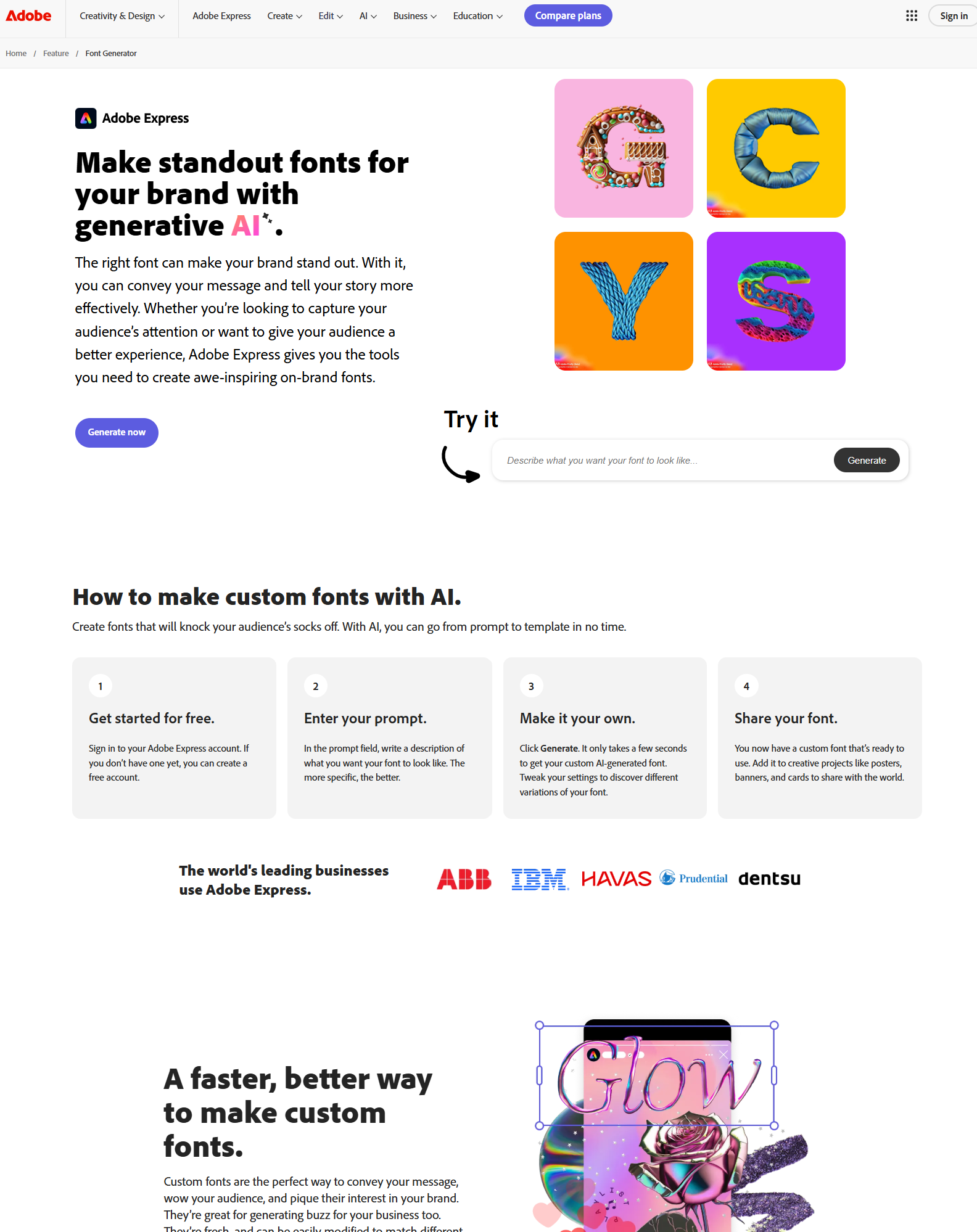
Source: https://www.adobe.com/express/feature/ai/design/font-generator
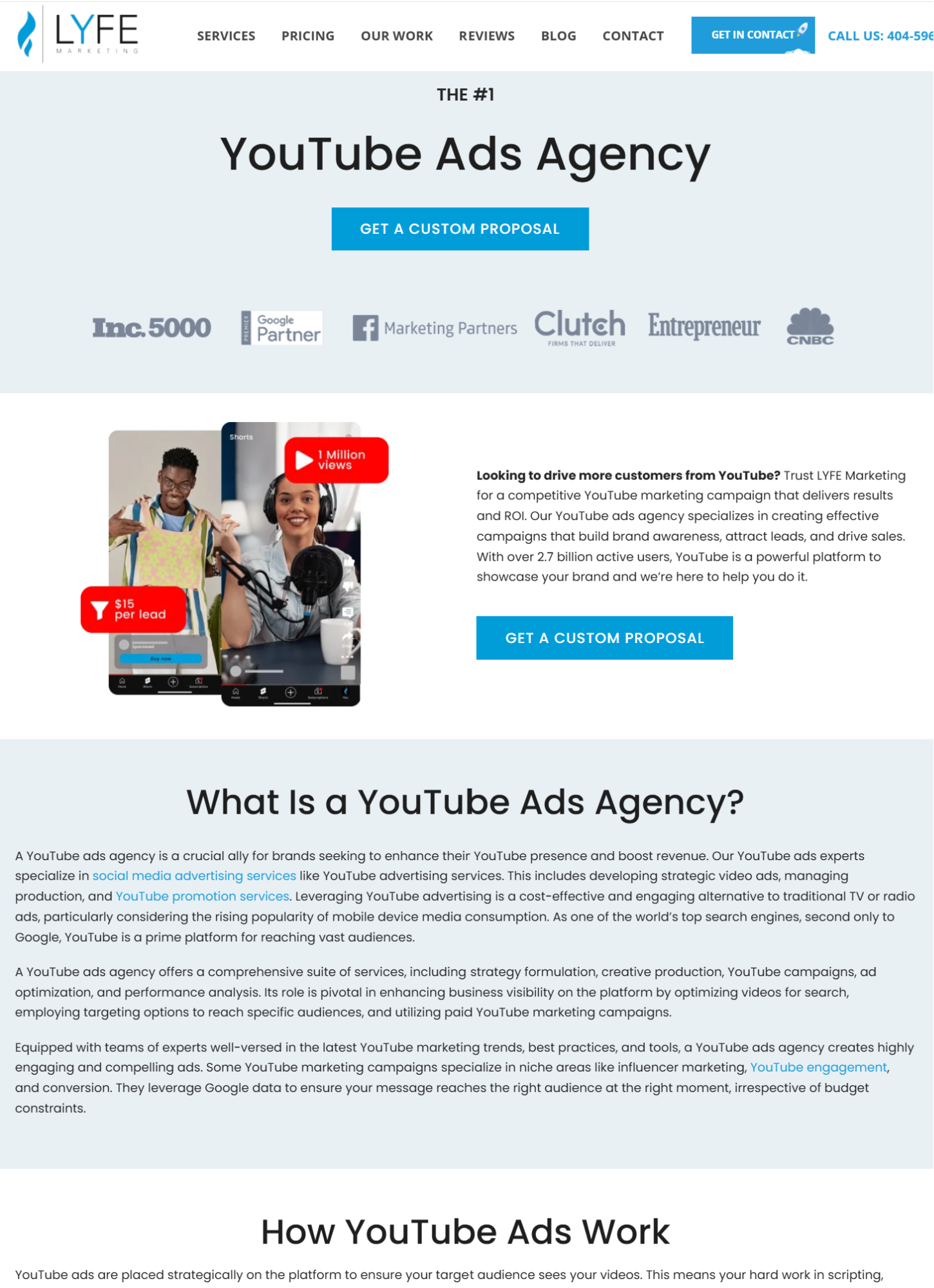
Source: https://www.lyfemarketing.com/services/youtube-ads-agency/
Pro Tip: Accomplish your goal with as few words as possible. You can lose your customers with long-winded sales copy. Instead, stick to benefits-driven copy that emphasizes your offer’s advantages and relevance to your customer.
Stage 4: Retention
The customer journey doesn’t stop when they’ve bought your product or service. Successful small businesses understand the value of retaining customers by promoting repeat purchases. When your customer is delighted with their initial purchase, they’ll go back for another round.
You can delight your customers by offering exceptional after-sales support. This includes guides on how to use your products, helpful suggestions on the best way they can use your solution, and other similar content types.
- Writing style: Helper
- Purpose: Keep customers engaged and encourage repeat business
- Tone: Direct, helpful, informative
- Key strategy: Create a help center where customers can find answers to their questions
- Ideal content formats: follow-up email, how-to guides, troubleshooting articles, FAQs
Pro Tip: Explain what customers can achieve with your products and services using real-world examples and imagery. Ensure your support guides are easily accessible and comprehensive.
Stage 5: Advocacy
Turning customers to brand advocates is the pinnacle of the customer journey. Unfortunately, not all customers reach this stage unless you create compelling copy that encourages them to spread the word about your business.
At this stage, you should have built strong relationships with your customer so they’ll become loyal to your brand even if a new shiny competitor comes to the picture.
- Writing style: Evangelist
- Purpose: Turn satisfied customers into brand advocates
- Tone: Enthusiastic, positive, appreciative
- Key strategy: Encourage customers to refer friends and families
- Ideal content formats: referral program emails, testimonials, customer spotlight, social media campaigns
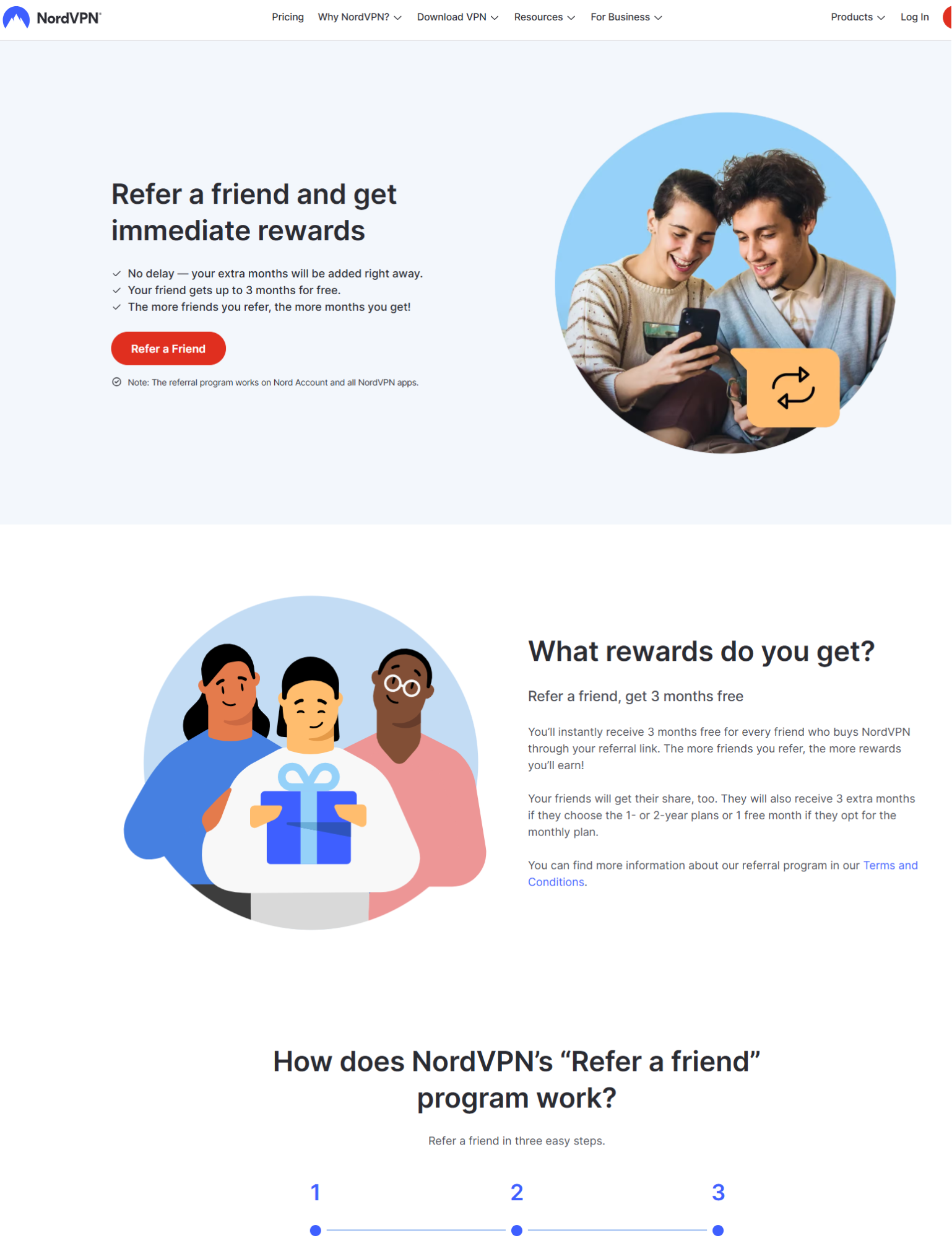
Source: https://nordvpn.com/refer-a-friend/
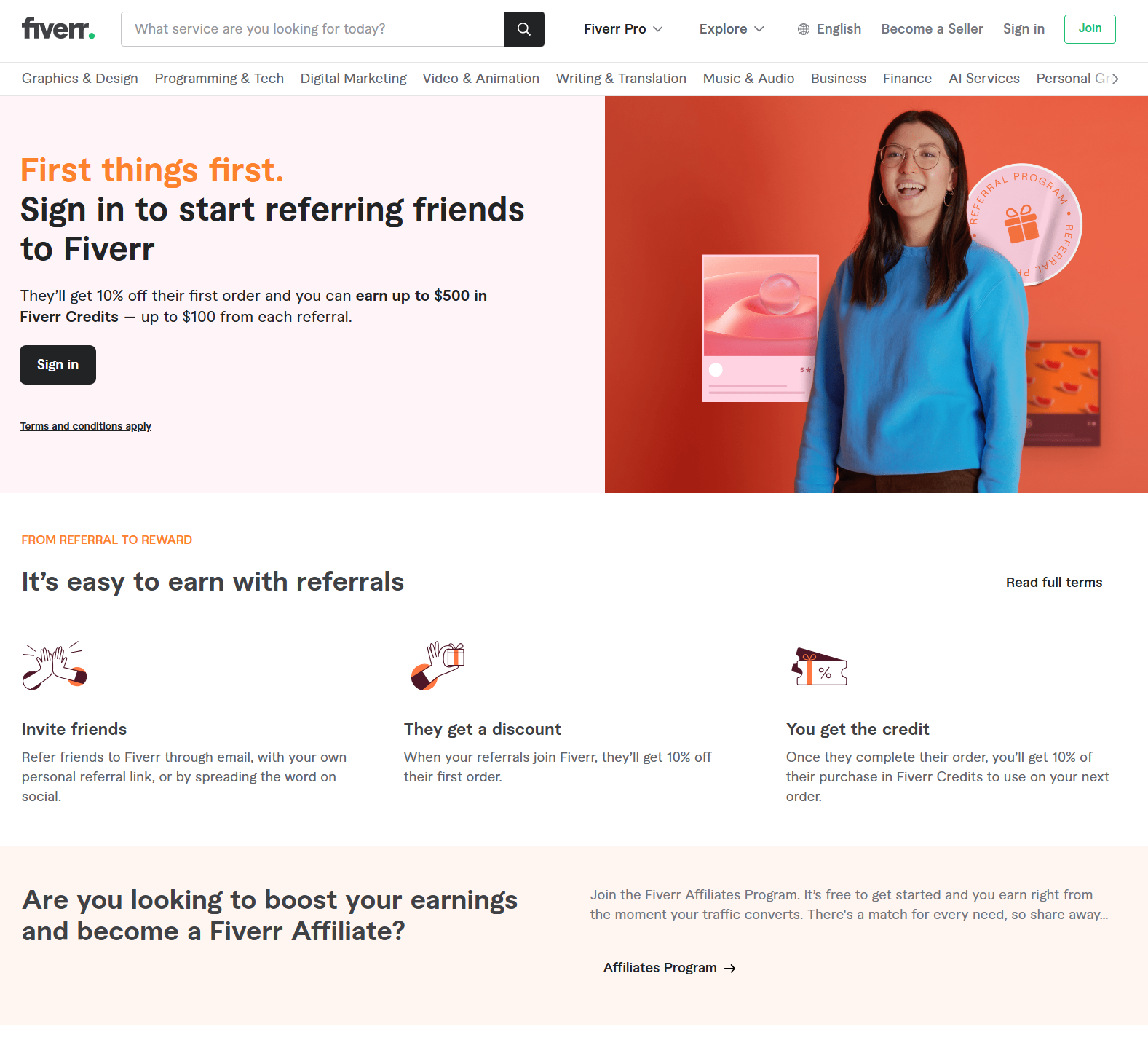
Source: https://www.fiverr.com/referral_program
Pro Tip: Make it easy for customers to share your content by including share buttons. You can also give sample templates for referral posts that they can copy-paste to their network.
Helpful tips to maximize limited resources
As a small business owner, creating content for each customer journey stage can be overwhelming especially when faced with limited resources. But the tips below will help you achieve the same results despite any limitations.
- Repurpose content by reusing and adapting existing ones across different channels and stages. A product troubleshooting guide meant for the Retention stage can be repurposed as a generic guide for the awareness stage.
- Use automation tools to streamline content distribution. Take advantage of free and affordable email marketing and social media automation tools.
- Focus on high-impact content by prioritizing content that addresses the most critical touchpoints in the customer journey. Don’t pressure yourself to create everything and distribute it everywhere all at once.
- Leverage customer feedback and use testimonials and reviews to create authentic, persuasive content.
- Motivate customers to share their stories by showing genuine gratitude and appreciation. This will also help foster a sense of belonging and community among your customers.
Harnessing the power of customer testimonials and reviews
Customers love a good story, and reading testimonials and reviews about your product helps them see it in a relatable, personal light. This is the psychology of social proof which suggests that people are more likely to engage in a product because they see others do the same.
Reviews are part of every modern day consumer’s purchase journey, with 98% of shoppers saying reviews are essential in their purchasing decisions. In fact, 74% of respondents in a U.S. survey by PowerReviews revealed that they learned about new products through reviews.
Social proof builds trust and credibility. It reassures your customers that they are making the right decision in buying your solutions. Incorporating customer testimonials when you write copy will make your content more engaging and powerful, leading to higher conversions.
How to collect customer testimonials
While customers will naturally leave positive feedback for a great product or a job well done, it can’t hurt to solicit this feedback and guarantee you get a great one suitable for your copy. Effective copywriting must include specific feedback beyond words like “brilliant product” or “great service.”
You should be able to encourage customers to share exactly how a product has solved their challenge. Here’s how you can ask customers for direct feedback:
- Identify customers who had a positive experience with your brand. This can be people who received their shipment on time, customers who left a five-star rating, shoppers who are excited with their purchase, or diners who recently concluded a great meal.
- Ask for feedback at the right time. Request testimonials right after the customer had a positive experience. Their experience will be fresh in their mind and they can give a more substantial review.
- Personalize your request. Use the customer’s name when requesting feedback and specify the experience or purchase that you want them to review.
- Make it easy to give specific feedback. Provide a simple form or link where they can leave their review. Ask multiple guide questions to guide them on the specific feedback you want. You can also give multiple-choice answers so they can easily choose a rating for specific portions of your business.
- Get permission to use their name and relevant details. Since you plan on using their testimonial for copywriting, you should get their approval to use their name, company, or location. Try to avoid using anonymous testimonials because this makes readers skeptical of the review.
- Incentivize your reviewers. You can offer a discount for future purchases, a small gift, or free service in exchange for their time and feedback.
- Follow-up but don’t be pushy. Don’t hesitate to follow up if you don’t receive an initial response. However, balance it by properly timing your follow-ups so you don’t come across as pushy. If the customer doesn’t respond after several attempts, then you can leave it as it is.
Here’s a sample template you can email to your customers to ask their feedback:
Subject: We’d love your feedback!
Hi [Customer’s Name],
Thank you for choosing [Your Business Name]! We hope you’re enjoying [Product/Service Name]. Your opinion matters to us, and we would love to hear your feedback.
Would you mind taking a few minutes to share your experience with us? Your testimonial will help us improve and also assist other customers in making their decisions.
[Link to Testimonial Form]
As a token of our appreciation, we’re offering you [discount/freebie] on your next purchase.
Thank you for your time and support!
Best regards,
[Your Name]
[Your Position]
[Your Business Name]
Aside from directly asking customers for feedback, you should also make it easy for them to leave reviews at their convenience. You can:
- Encourage customers to leave reviews on your social media profiles.
- Direct customers to leave reviews on review sites like Google, Yelp, or any industry-specific platforms.
- Create a dedicated testimonial page on your website where customers can easily leave their feedback.
- Use pop-up forms on your website to prompt visitors to leave a testimonial. (Note: Ensure these are properly timed pop-ups so they don’t become annoying.)
- Include a survey link to your transactional emails such as order confirmation, shipping confirmation, and online invoice.
- Train your customer support team to ask for testimonials, especially after positive interactions.
- Use your live chat tools to request feedback.
Leveraging User-Generated Content
UGC (User-Generated Content) is the next level of product reviews because customers don’t just say how a product helps them—they actually demonstrate it. User-generated content refers to any digital content produced by a real person who isn’t a paid influencer or part of an advertising agency.
This content can be texts, videos, or photos showing how people use and enjoy your products and services. Common examples include:
- Unboxing videos revealing how an item is packaged and assembled
- Tutorial videos showcasing how the customer uses your product
- Video testimonials where customers share their experiences with your products
- Photos and videos posted on personal social media accounts of customers using your products
- Customers answering questions about your products on forums related to your industry
Entribe’s recent survey revealed that 84% of respondents are more likely to trust brands that incorporate UGC in their marketing materials. UGC builds your brand’s authenticity and credibility, so you must include it in your copywriting process.
How to encourage customers to create UGC
Gathering UGC is really simple and we can take inspiration from how big brands do it. With a little imagination and extra creativity, we can turn their marketing success into our own. Here’s how:
- Make your brand findable on social media. Use identifiable handles and profile names that echo your brand name and if possible, your main offer. This helps customers easily tag your brand in their social media posts.
- Use branded hashtags and encourage customers to use them in their posts. You can print these hashtags on branded packaging inserts so customers are reminded of them when they open or use your products.
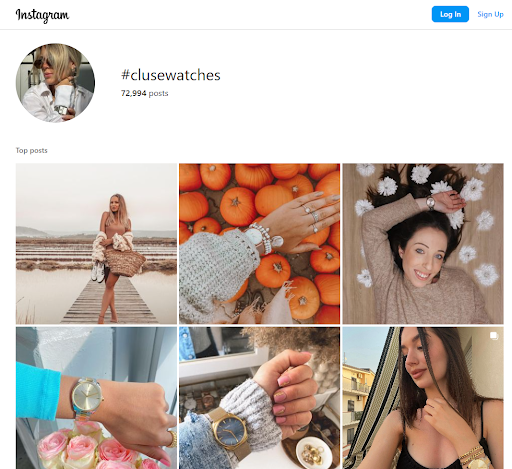
Source: https://www.instagram.com/explore/tags/clusewatches/
Cluse, an Amsterdam-based company selling women’s watches launched a #CLUSEwatches campaign on Instagram, Facebook, and X to encourage its customer base to share their beautiful timepieces. For the brand, it’s a great way to collect UGC content they can feature on their platforms.
- Run social media contests where you encourage customers to post photos and videos in exchange for a prize. Ask them to tag your brand and use a branded hashtag.
- Launch creative challenges that encourage customers to use your product in creative ways. Ask them to share their creations on social media and offer incentives such as a gift or a feature in your social media feed.
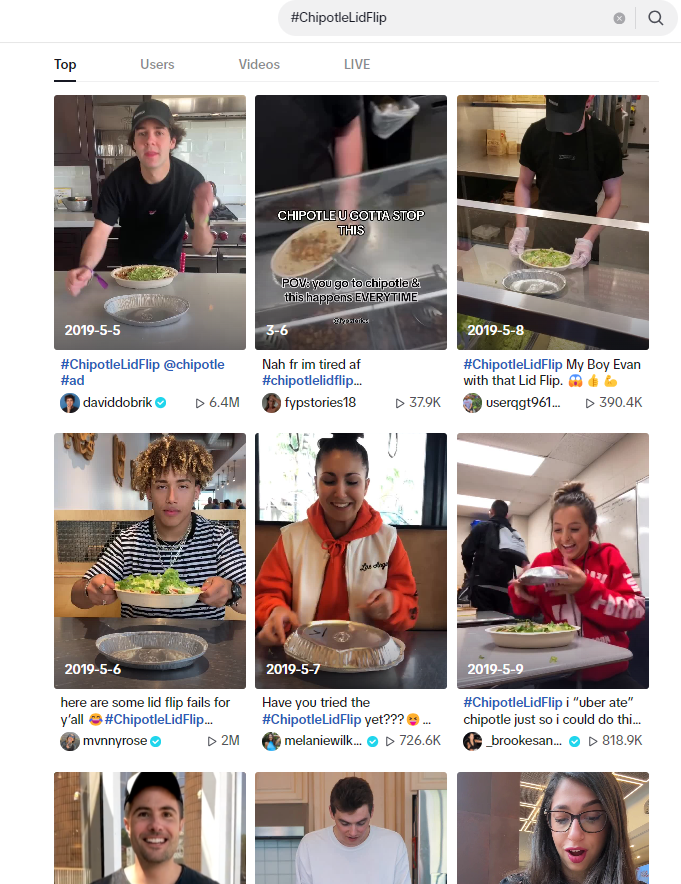
Source: https://www.tiktok.com/
Chipotle started a Lid Flip challenge on TikTok which got influencers and customers excited to share their attempts at the challenge. With thousands of creators participating, there were over 100,000 videos recorded within the first six days resulting in record breaking sales.
- Ask for customer submissions and regularly feature them on your socials or website. Customers feel seen and heard when brands showcase their creations. You can create a dedicated page on your website for UGC or have a regular posting schedule dedicated to UGC on your social media.
Reminder: Always ask for permission to re-post your customers’ content. Don’t assume that just because your brand was used in a customer’s post, you can grab it and repost it on your own feeds. Always credit the original creator otherwise you might face backlash if they decide to take legal action.
How to incorporate UGC in small business copywriting
Once you’ve collected enough UGC, here’s how you can incorporate it when you write copy for your small business.
- Feature them on your home page to immediately build trust with new site visitors
- Include customer photos and videos on product pages to showcase real-life usage
- Add customer stories to your About Us page to demonstrate your brand’s impact to the community
- Regularly highlight customer experiences in Instagram stories, reels, and other social media platforms
- Incorporate customer testimonials in promotional emails
- Write detailed case studies highlighting how customers used your products and services to solve their problems
- Include customer quotes on your packaging, brochures, and ads
Farrow and Ball sells handcrafted wallpapers and 100% water based paints. They extensively use UGC to showcase the impact of their products to their audience. Customers are also ready to share their creations for a chance to be featured in the brand’s social media pages and website.
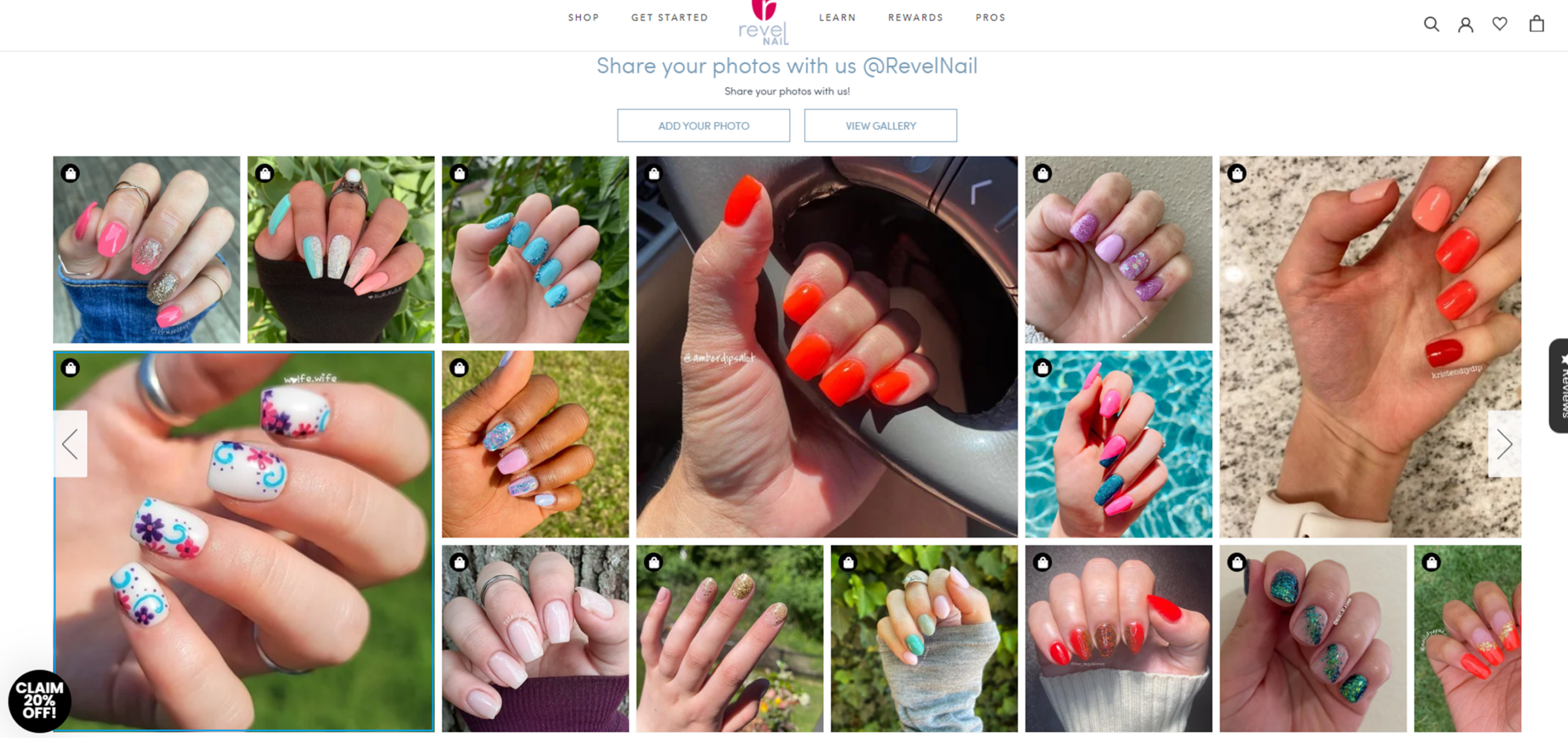
Source: https://www.revelnail.com/
Revel Nail encourages customers to upload photos of their well-manicured nails using the brand’s various nail polish. These photos are posted on product pages so shoppers can see actual results from other satisfied customers. This increases conversions since it helps shoppers picture the products and discover the possibilities with the different colors.
Digital copywriting techniques
Evaluating competitor content strategies
Looking at your competitors is a great way to be inspired and aware of the caliber your copywriting needs to be. Remember, you’re not the only business your customers can go to. The one who can grab their attention first and deliver the promise best will be the preferred brand.
According to Sprout Social’s 2023 Social Media Report, 92% of business leaders believe that social media data and insights improve competitive positioning. These leaders believe that looking at social media data will give them invaluable information about their customers and competitors alike.
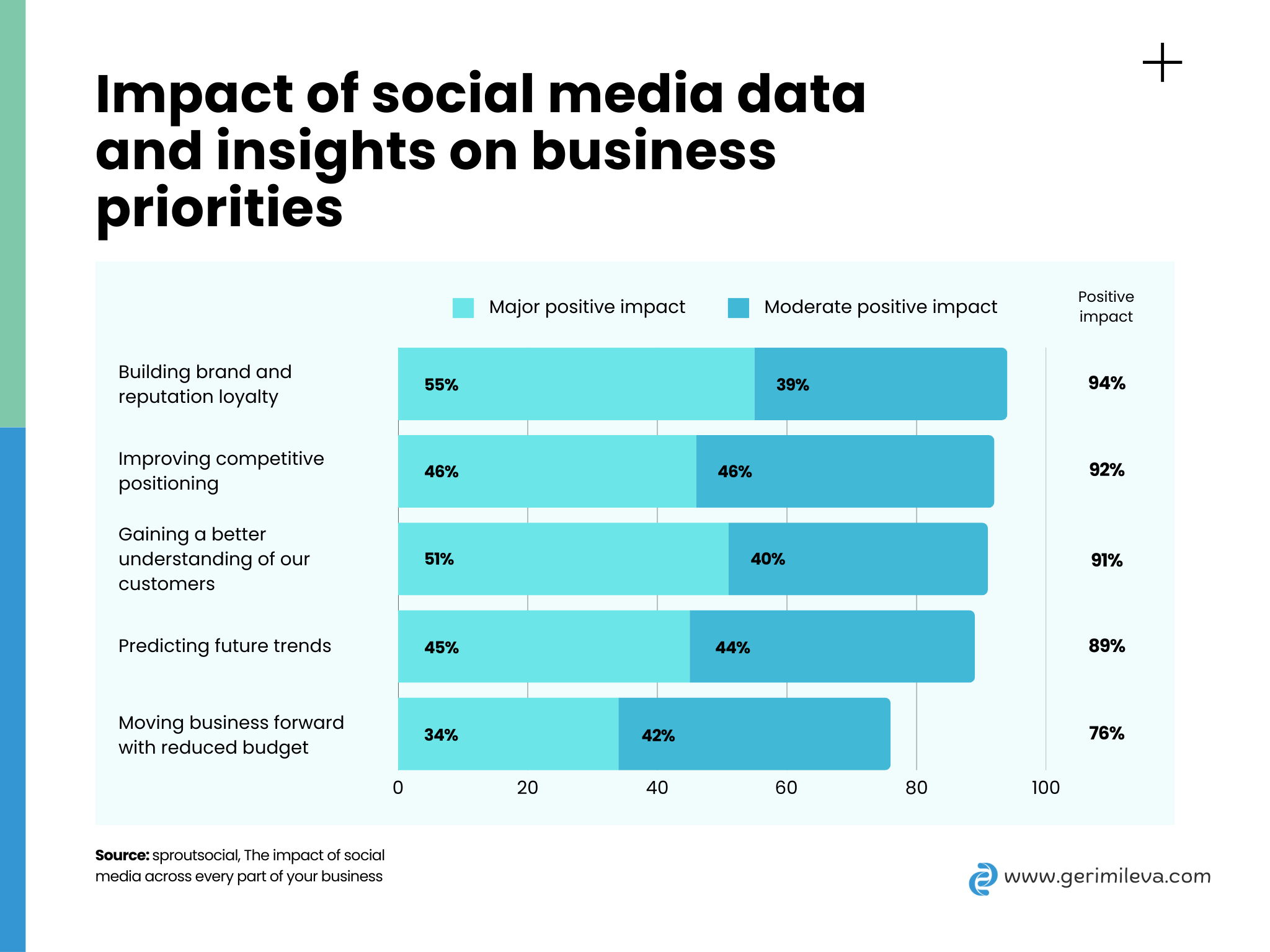
Here’s how you can learn from your competitors. Use these techniques to understand what works well in your industry and differentiate your content.
- Analyze competitor copywriting
First, make a list of your closest competitors. These can be direct competitors who offer the same solutions to the same market, or it can be indirect competitors who offer a substitute product to your target audience.
Visit each competitor’s website, social media pages, and other public profiles. You can check them out on review sites and see how they respond to customer reviews. If you can, subscribe to their email newsletters to receive direct communications to your inbox.
You can also use affordable tools to analyze the performance of your competitor’s content and compare them against your own. I’ve discussed most of these tools earlier in the Define Your Audience chapter, specifically in Strategy 7: Study the Competition.
- Identify strengths and weaknesses
Have you heard of the SWOT analysis? This is a great strategic planning framework that helps you identify how you can differentiate yourself from the competition. It’s mostly used in business planning but can also be applicable for a lot of things, including analyzing your competition.
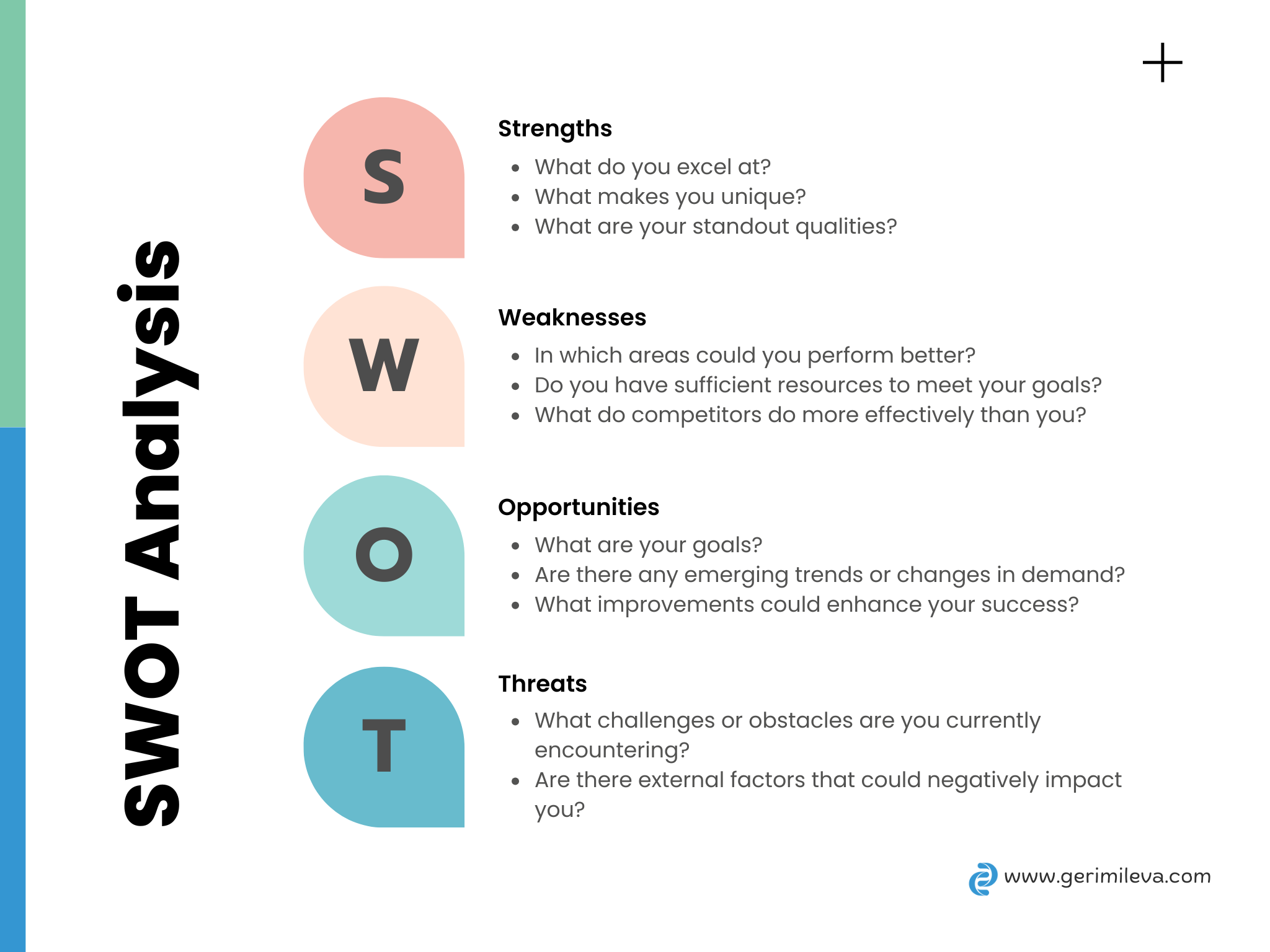
You can use SWOT analysis to determine your competitors:
- Strengths – the things that make their content engaging and successful, e.g., the use of UGC in their social profiles
- Weaknesses – items where their copy fails, e.g., unoptimized blog posts
- Opportunities – areas where you can be better, e.g., a wealth of customer reviews you can feature
- Threats – factors outside your control that can potentially block your business, e.g., the competition launches a great product that draws in customers
Evaluate your competitors tone, messaging, engagement rates, and CTA effectiveness. Be thorough and scrutinize each element. You can divide the task among your team with each one working on 1-2 competitors.
- Benchmark and set goals
Now that you’ve identified and evaluated your competitors, it’s time to set your goals. You can choose the top competitors and use their performance as benchmarks for your copy.
You can do three kinds of benchmarking:
- Performance benchmarking
This is easy to do with the help of the right tools. You simply measure and compare the performance of your social media posts, blog posts, customer reviews, etc. with your competitors.
For example, you can use Semrush to check your competitor’s backlinks and monitor changes in their page ranking. This will help you evaluate whose web content reaches the audience better.
Here are tools and metrics you can use to create performance benchmarks:
| Copy | Metrics | Tools |
| Web copy and blogs | Page ranking Domain authority | Semrush, Ahrefs, MozBar, Ubersuggest, Google Search Console, Keywords Everywhere |
| Social media | Engagement metrics (likes, follows, shares) | SproutSocial, SocialBlade, Hootsuite |
| Emails | Email frequency | Owletter, Mailcharts |
| Ads | Ad spend Ad reach | iSpionage Facebook Ads Library |
If you can’t afford any of the tools above, a cursory glance at your competitor’s content will suffice. For example, you can compare two social media profiles side-by-side to determine which competitor does a better job.
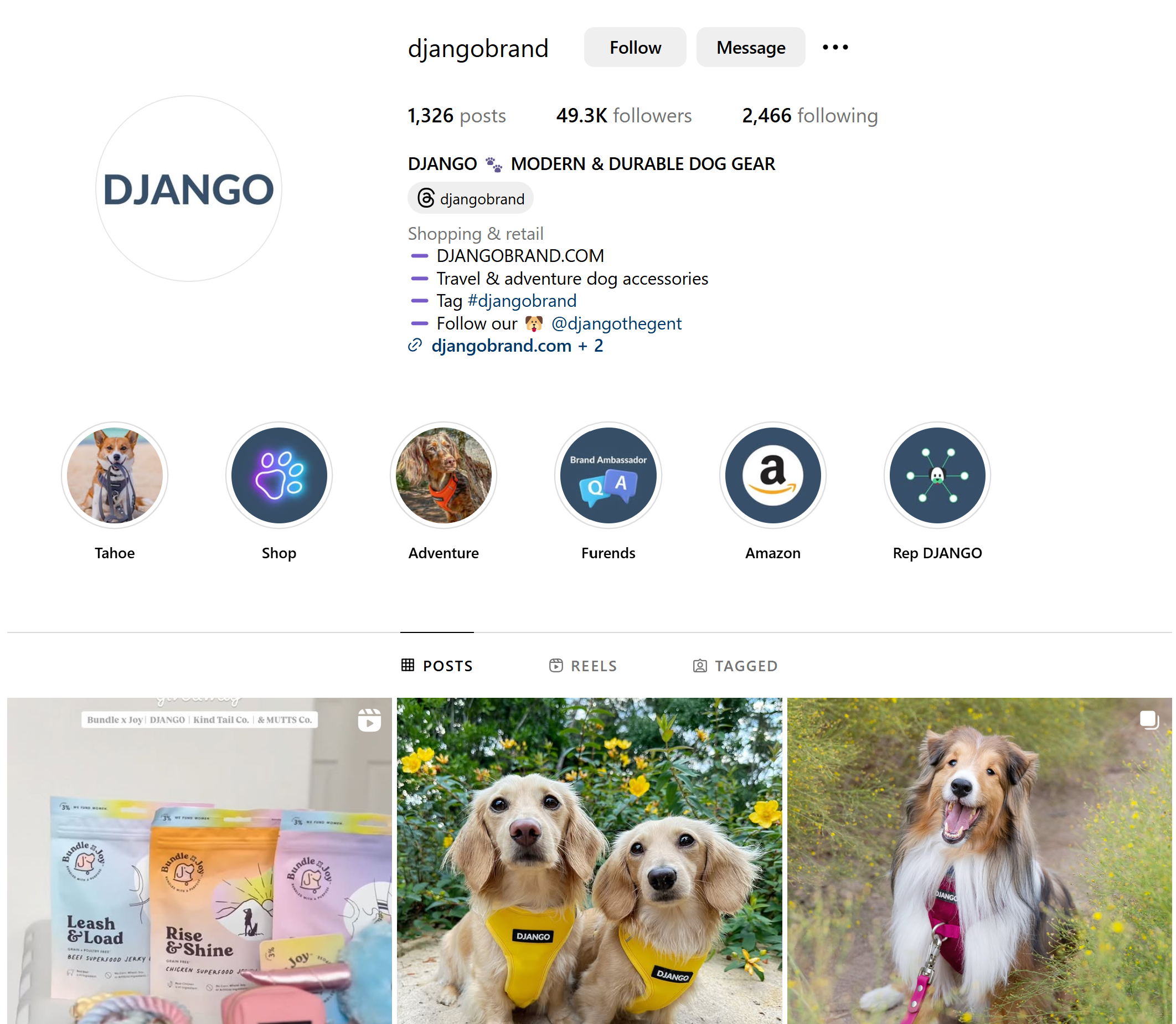
Source: https://www.instagram.com/djangobrand/
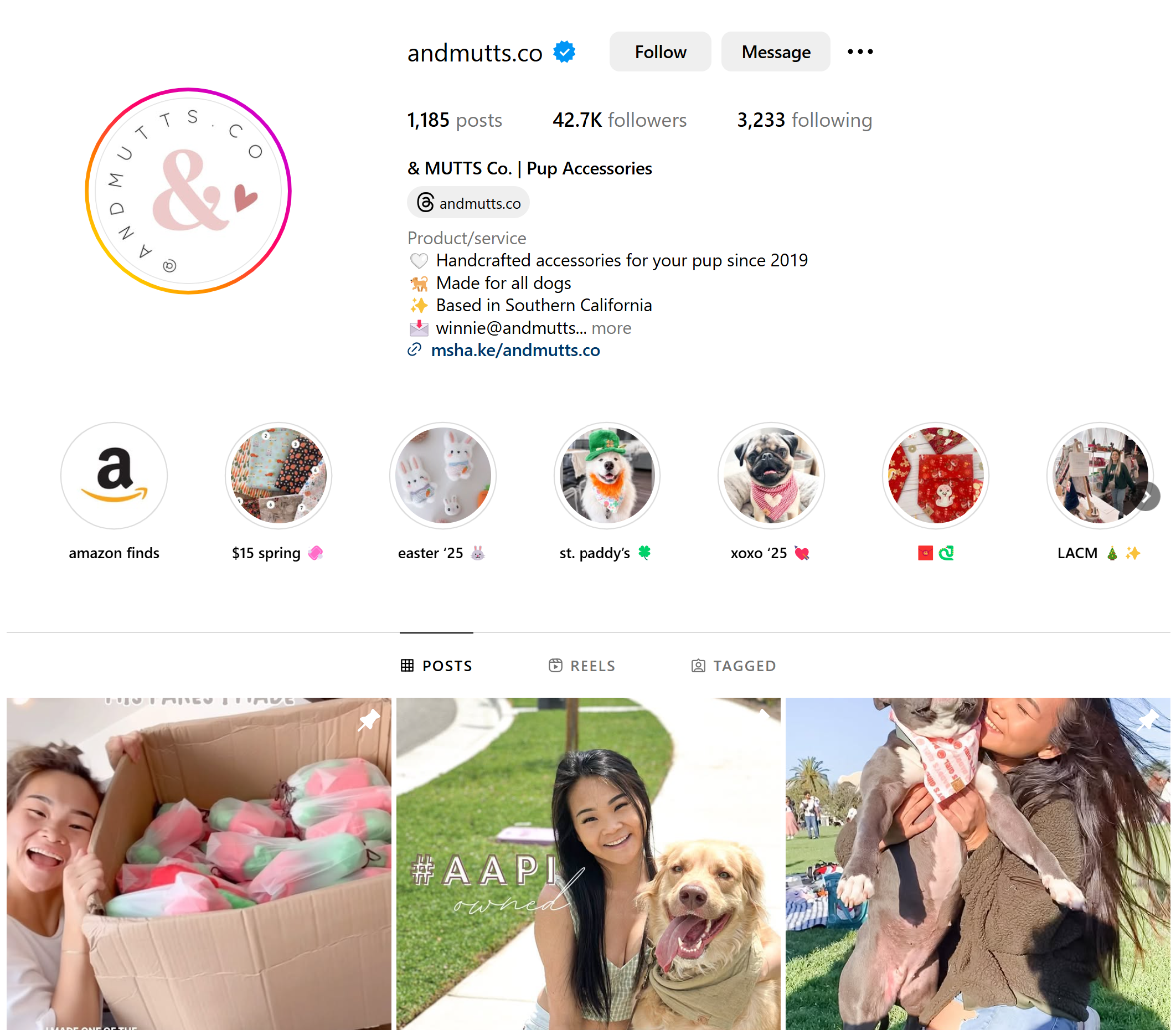
Source: https://www.instagram.com/andmutts.co/
Django and & Mutts Co. are both dog accessories brands with active Instagram profiles. You can see in the screenshots above who has more followers, more posts, and more likes. Keywords Everywhere (free version) also gives a summary of the profile’s average likes, average comments, and engagement rates.
Place your competitors side-by-side with your own profile to see how you can improve to reach the same numbers.
- Process benchmarking
This benchmarking type involves directly observing your competitors actions online. For example, you can check if they regularly respond to comments on social media. Or if they reply to both positive and negative reviews on Google.
You can also note how frequently they release content or send emails. This will give you a clue about their process as a company, which you can use as a benchmark for improving your own.
Monica Vinader and Mejuri are both small businesses making exquisite jewelry. While both offer the same gorgeous products, Mejuri enjoys highly engaged customers because they do their part in establishing a connection. Check out how they respond to positive and negative comments compared to Monica Vinader.
- Strategic benchmarking
At this point, you’re already analyzing your competitor’s digital marketing strategy. You’re checking their brand voice, visual marketing, types of content produced, influencers used, etc.
Looking at these elements, you’d get a sense of your competitor’s strategy which you can compare to your own. Combined with the metrics you’ve measured and judging by their copy’s performance, you can infer if their strategy works or not.
Live Well Outdoors and Branch Out Landscape both cater to customers wanting a beautiful backyard. Live Well Outdoors uses an educational and informative tone while Branch Out Landscape adopts a friendly and casual vibe. Judging by their social media engagements, casual and friendly is doing better.
Taking everything you’ve observed, you can now set your goals. Again, set realistic goals that you’re confident you can achieve. It’s alright to create smaller goals that eventually build up to a higher target. This will keep your team and efforts grounded.
- Find gaps and opportunities
When benchmarking and analyzing the competition, identify any gaps and opportunities where you can add additional value to your customers.
For example, in the case of the landscaping brands mentioned above, you can explore a blend of educational and friendly tone. You can still share trivia and facts about various landscaping materials and practices while using a casual and more engaging tone.
Look beyond the obvious and explore any untapped themes. You can identify topics that are often overlooked or underrepresented in your niche. You can also monitor trends in related industries and discover how they might apply to your audience.
Practical tips to maintain originality while taking inspiration from other brands
- Always adapt to your brand voice and ensure your adaptation aligns with your core values
- Emphasize what makes your brand unique
- Adapt the strategy to fit your audience’s culture and context
- Add a fresh twist by taking the core idea and introducing an unexpected angle or an innovative twist
- Avoid direct imitation and respect intellectual rights
While it’s great to draw inspiration from your competitors, remember that success looks different for everyone. Study what works for them and use it to create a unique strategy that works for your brand.
Content formats for various digital platforms
Small business copywriting is used across almost all digital platforms, from social media sites to landing pages to video channels. Every time you write about your business and its unique offer—whether it’s part of a script or translated into an infographic—you’re creating copy.
Here are the various content formats you can create for different platforms:
- Blogs
If you already own a website, you should definitely build a blog. These are articles that build your domain authority and increase traffic to your website. It’s also a great way to help your customers and demonstrate your expertise.
You can directly address their pain points by providing educational content like how-to guides, comparison guides, and informative articles.
Blogs are also great for boosting your SEO since you can create a lot of keyword-rich evergreen content which will keep attracting visitors as long as the content remains relevant.
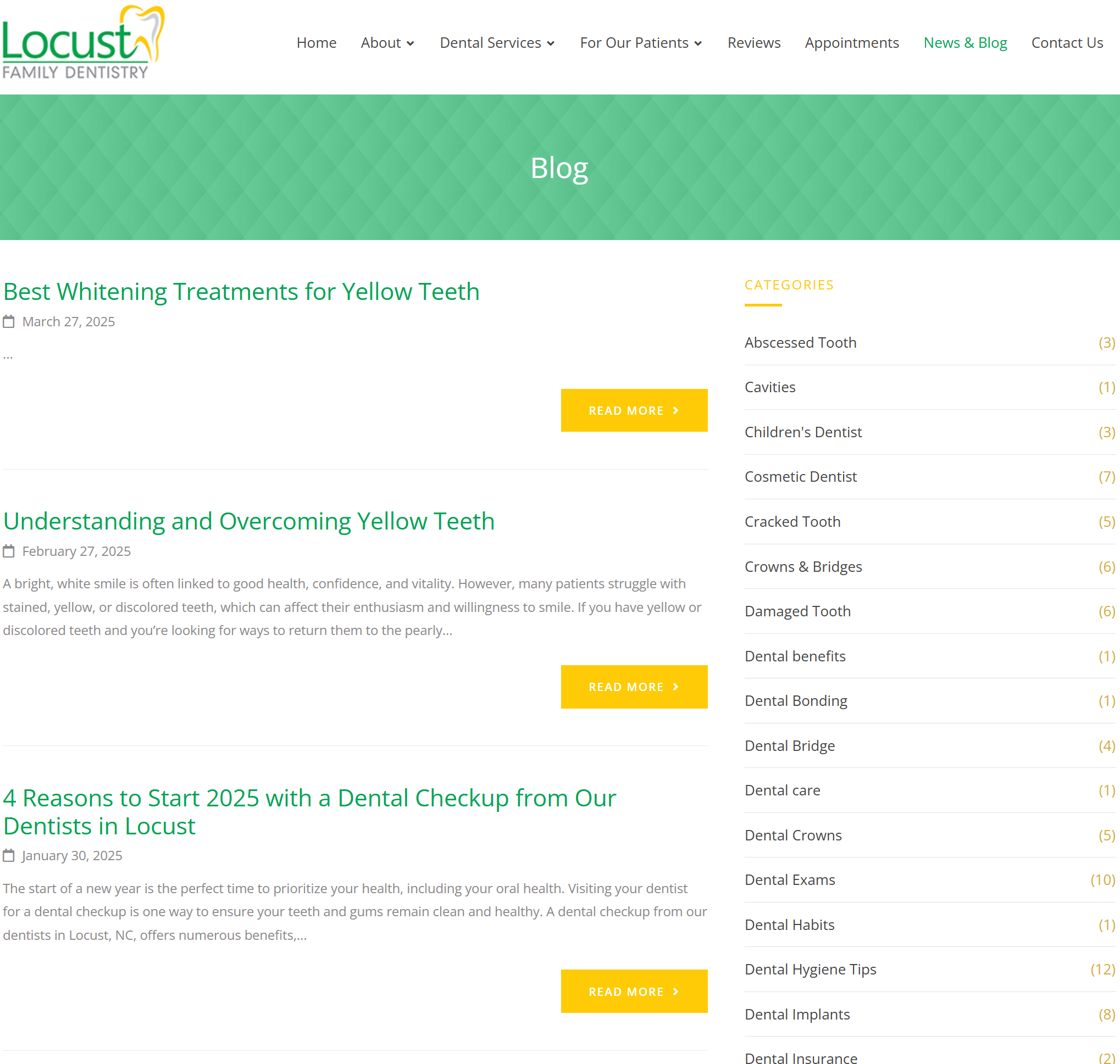
Source: https://locustfamilydentistry.com/blog/
Locust Family Dentistry regularly posts blogs answering common questions their patients may have about oral health. By educating their patients, they attract more customers who see them as a credible dental practice.
- Case studies and success stories
Case studies and success stories make powerful conversion copy, highly effective for customers in the decision stage of their buying journey. By showcasing other customers who’ve successfully implemented your solution, you give your customers ideas of how your solution works.
It also gives them confidence that your solution works.
Source: https://www.hermanmiller.com/
Herman Miller is known for sleek and utilitarian furniture, and they showcased how their brand helped a hospital in Dubai with this case study. To further improve the content, they also included a client testimonial video on the page showcasing the impact of the brand.
You can also do something similar by doing an in-depth interview of the clients who’ve expressed their satisfaction with your products and services. Simply ask them how your offer changed their lives and convert it to a case study.
- Social media posts
Social media is a non-negotiable digital platform that every small business owner must be familiar with. You don’t have to be an expert with all of them, but you have to be present in the major ones your audience frequently uses.
Social media is also a free channel where you can build and grow your audience. You accomplish this by mastering the popular content types for each platform.
I’ve covered social media copywriting in detail in a separate section.
- Videos
Videos rely on a script to guide them and ensure they resonate with audiences. You can’t produce a great video without an expertly written script.
Airbnb creates amazing brand videos with inspiring and moving scripts. From their brand video introducing the concept nine years ago to a recent short video inspiring hosts to open their homes, you can see the consistency in Airbnb’s brand voice resulting in amazing videos through the years.
Here’s a video they released documenting the growth of the company:
- Email newsletters
Email copywriting is an art because you must capture your audience’s interest and deliver your message with a few words. The subject line has to be compelling enough for recipients to click on it and short enough so it doesn’t get truncated.
The email body itself must be thoughtfully written so customers read it completely, take the desired action, and look forward to your future emails.
I cover email copywriting in detail in a separate section.
Keyword optimization
Keyword optimization is the holy grail when it comes to ranking your content across search engines. It’s not enough that you find and choose the right keywords (keyword research), you must insert them properly in the right places.
This is an ongoing process and there will always be opportunities for improvement. High-quality content demands that you learn to balance inserting keywords with writing copy that’s valuable to your audience.
How to optimize keywords
- Start with keyword research
Start with broad topics within your niche and use keyword research tools to discover the keywords relevant to your audience. You can also check the keywords where your competitors are ranking to find opportunities or gaps you can address.
Look for keywords that have less competition but higher conversion. This can be question-based keywords or long-tail keywords that are specific to your niche. Also, make sure the keyword has a decent search volume and can generate real traffic.
You can also analyze Google Trends to discover the popularity of keywords over time and identify any seasonal trends.
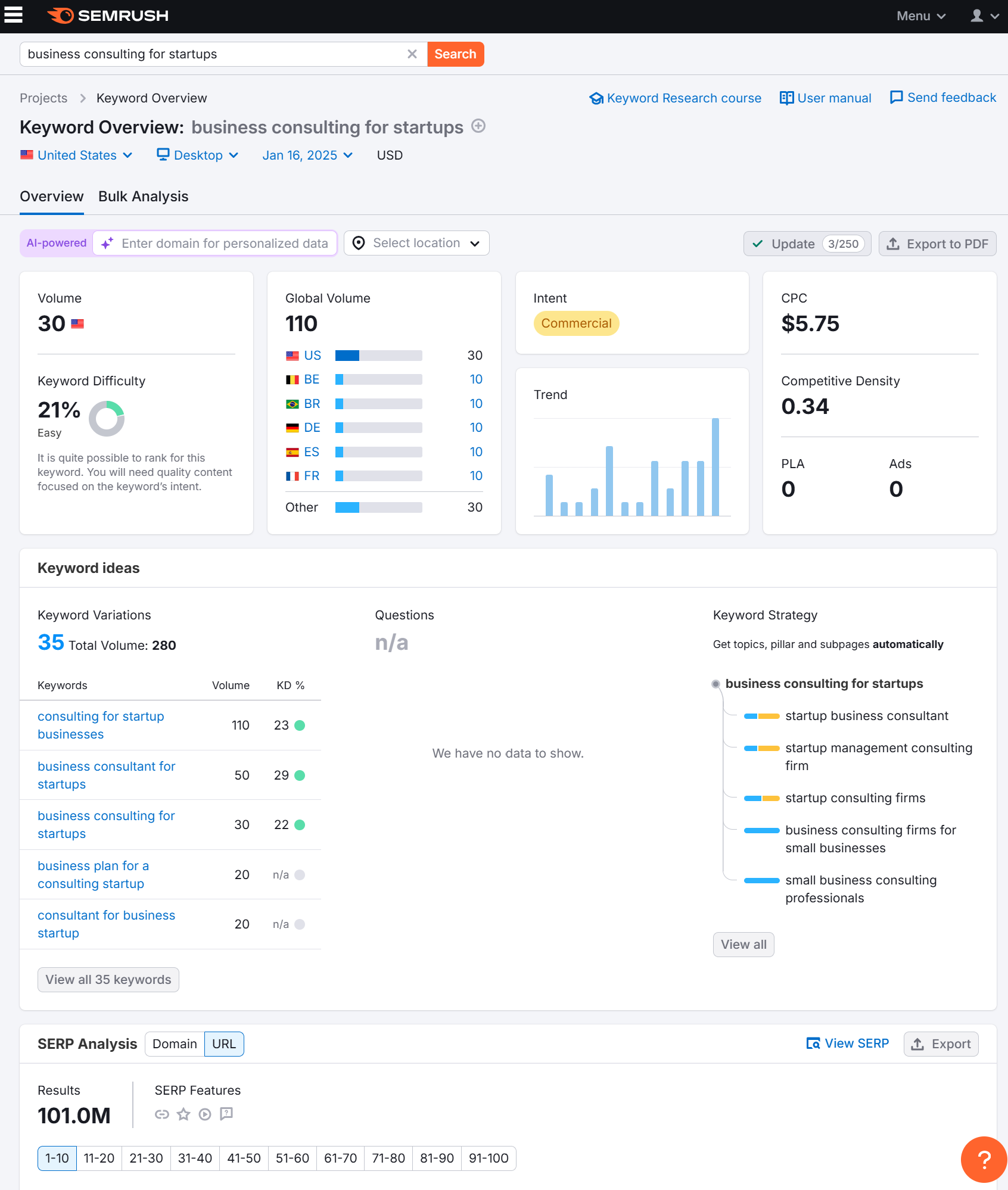
- Group similar terms (keyword clustering)
Once you’ve identified the keywords you want to target with your copy, it’s time to group similar terms.
This helps you target a user group on a single page, as people may search for the same information in different ways

By incorporating several keywords into a single piece of copy, you’re increasing the chances of it appearing in more search results. This leads to higher traffic.
- Assign a keyword for each web page (keyword mapping)
Keyword mapping is a technique where you assign a main keyword to each web page. This helps optimize your site content and structure since you’re telling search engines what each page is about.
Using the same keyword for several pages leads to keyword cannibalization, which occurs when search engines are confused about which pages deliver the best value for the same term. This harms your ranking potential.
Semrush offers a keyword mapping template where you can list your pillar pages and subpages and the main keywords for each. You can organize them by topics and subtopics and assign a keyword difficulty score (KD%). The KD% is a measure of how difficult it is to rank for the given term.
The keyword mapping template is a live document that changes over time. It helps you identify opportunity gaps in your content and refine existing pages.
- Match content with search intent
Users will find your content valuable if it addresses their search intent or the reason they typed the keyword in the first place. For example, if someone searches for “best eco-friendly laundry detergents”, they’re likely researching products before purchasing and would appreciate comparison reviews.
On the other hand, if they typed “benefits of eco-friendly detergents”, then they’re looking for a specific answer and it’s an opportunity to educate them.
There are four common types of search intent:
- Informational – looking for specific information or answers (e.g., “how to air fry chicken”)
- Navigational – looking for a specific web page or direction (e.g., “Panasonic refund policy”)
- Commercial – conducting research before making a purchase (e.g., “best digital air fryers”)
- Transactional – ready to complete a specific action, typically a purchase (e.g., “buy Panasonic air fryer online”)
Search intent also matches the user journey. Customers in the awareness stage use informational keywords while those in the consideration stage use commercial keywords. Customers who are ready to make a decision either use transactional or navigational keywords.
- Insert keywords naturally
No one wants to read copy smothered with keywords. Search engines now understand search intent better so you can insert keywords naturally and still rank for search terms that don’t exactly match your target keywords.
Your main keywords should also be included in the title tag and meta description of your web pages. These are the details that search engines use to understand your page and are the ones they display in SERPs.
Here’s how Google displays title tags and meta descriptions. Notice that for the top three results, they’ve incorporated the keywords “best air fryers.”
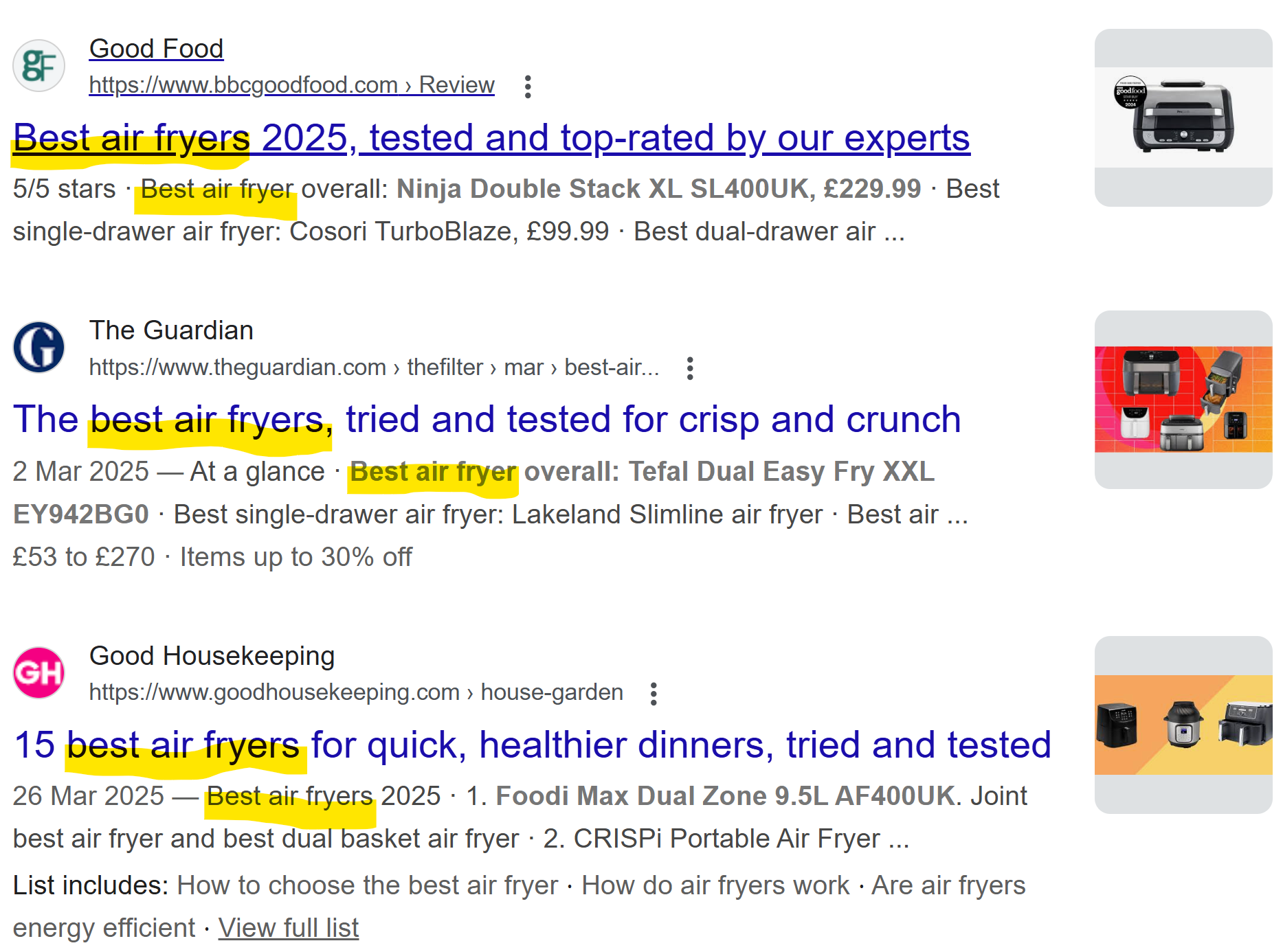
Source: Google search
Your headings and subheadings should also naturally incorporate your selected keywords. There’s no strict rule for the spacing between keywords. However, as a general good practice, you should avoid placing keywords too close to each other.
Always aim for copy that sounds natural, similar to how you speak. Below is an infographic illustrating how to create a logical hierarchy for your content by strategically placing keywords in subheadings.
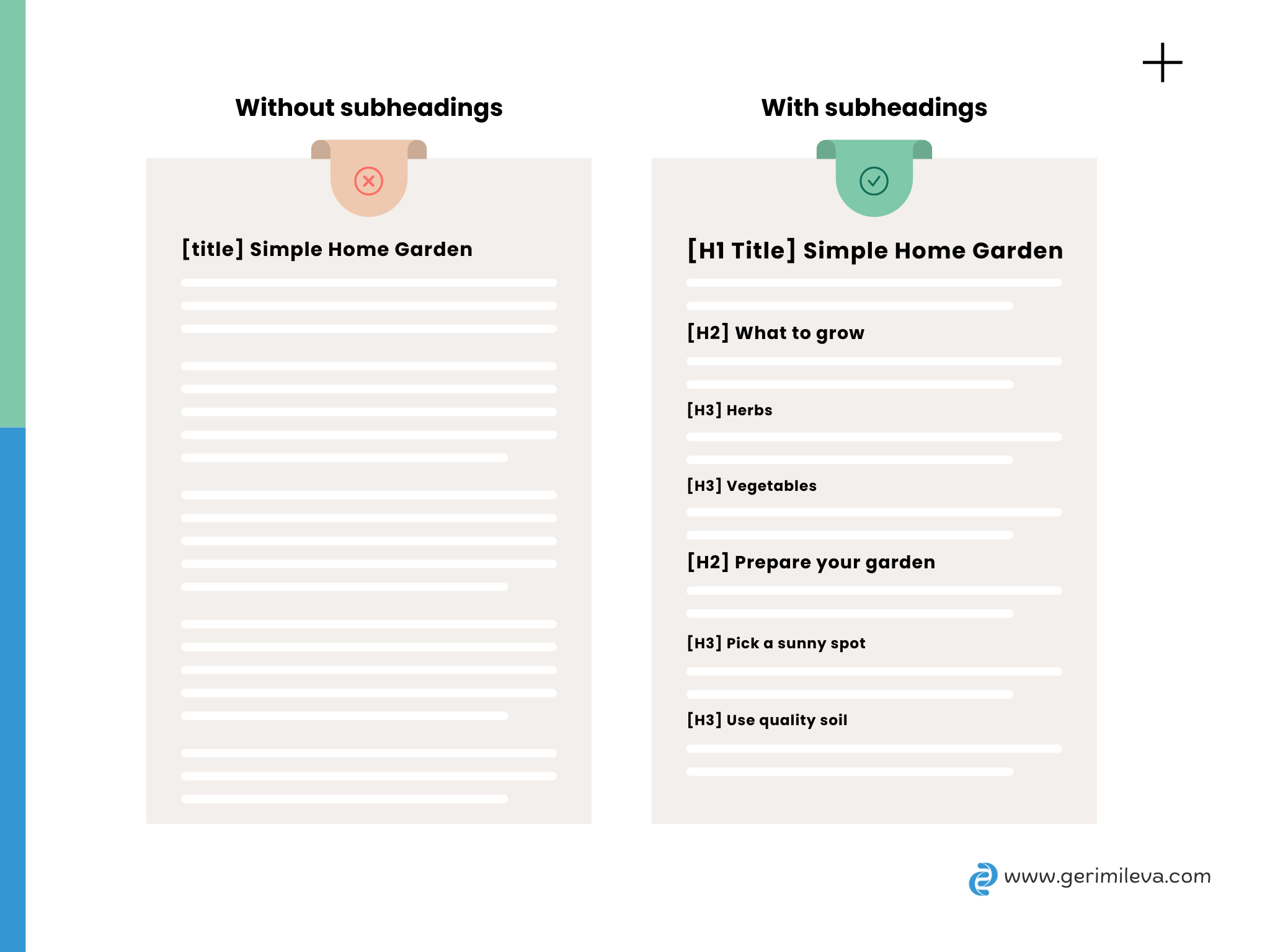
Finally, don’t forget to insert your keywords into your site URL. Your URLs should be user- and search-engine-friendly by including a descriptive keyword that matches the page’s content.
- Optimize images by inserting keywords
Search engines also consider your website’s images when ranking your site. Besides ensuring they are the right size, it’s important to give images descriptive file names and alt text (alternative text). These provide opportunities to insert relevant keywords and even help your images rank in search results.
If you’re using WordPress to manage your blog, you can go to the settings of each image and check that the Alt Text field contains a short but meaningful description. Double-check that the filename also includes relevant keywords.
Here’s an example of an image from one of my blogs.
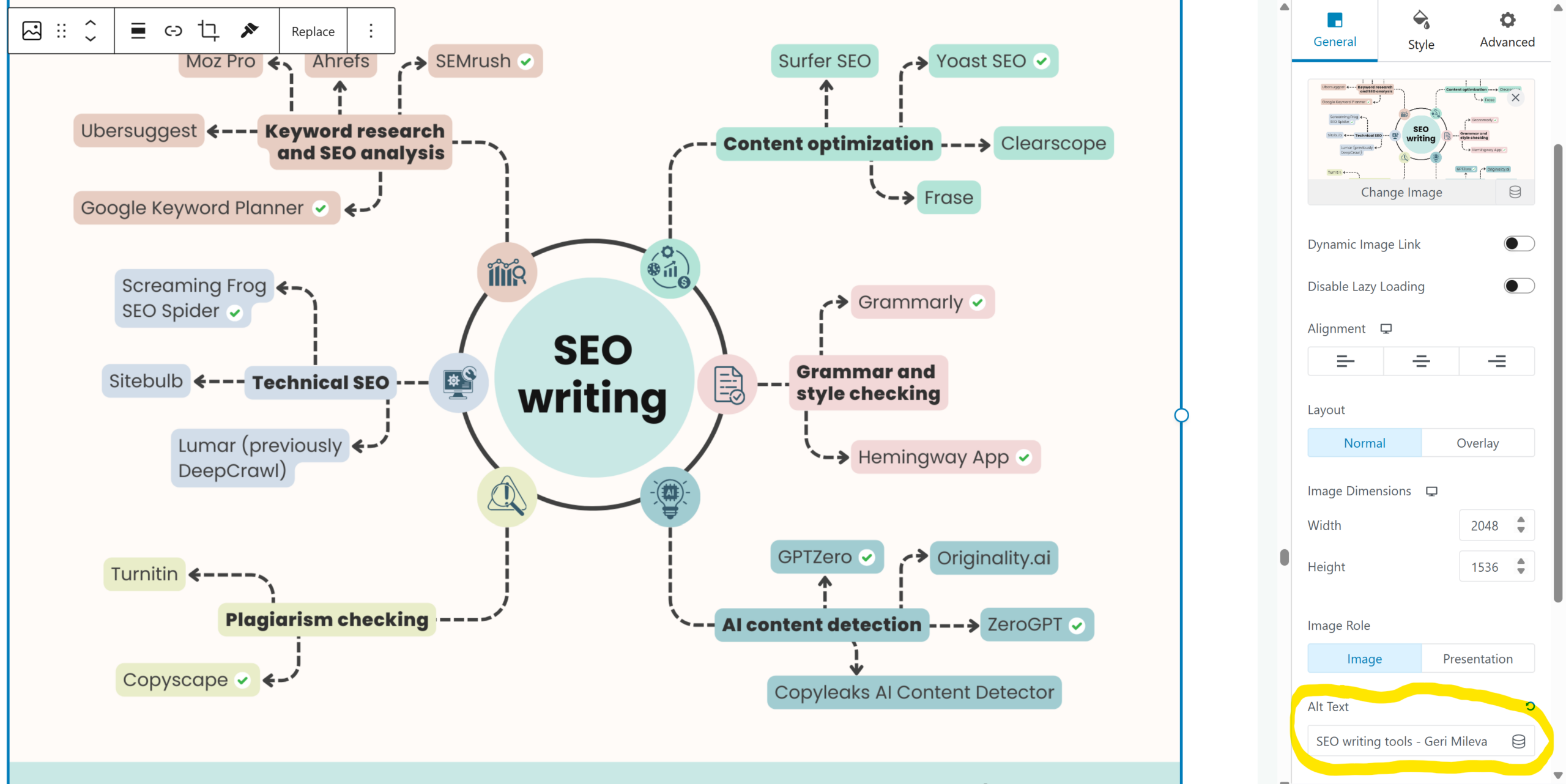
- Monitor keyword performance
Even after optimizing your copy for the right keywords, your rankings can still change due to various factors. Google might introduce algorithm updates or new competitors may write better copy. Or your customers could change their behaviors.
Constantly monitoring keyword performance will help you identify drops in site performance so you can revisit your content and optimize it again.
SEO tools typically include a feature where you can track your ranking for important keywords and send alerts for any critical changes.
Types of keyword optimization
There are three main types of keyword optimization techniques and it’s important to incorporate each one of them for a holistic keyword strategy.
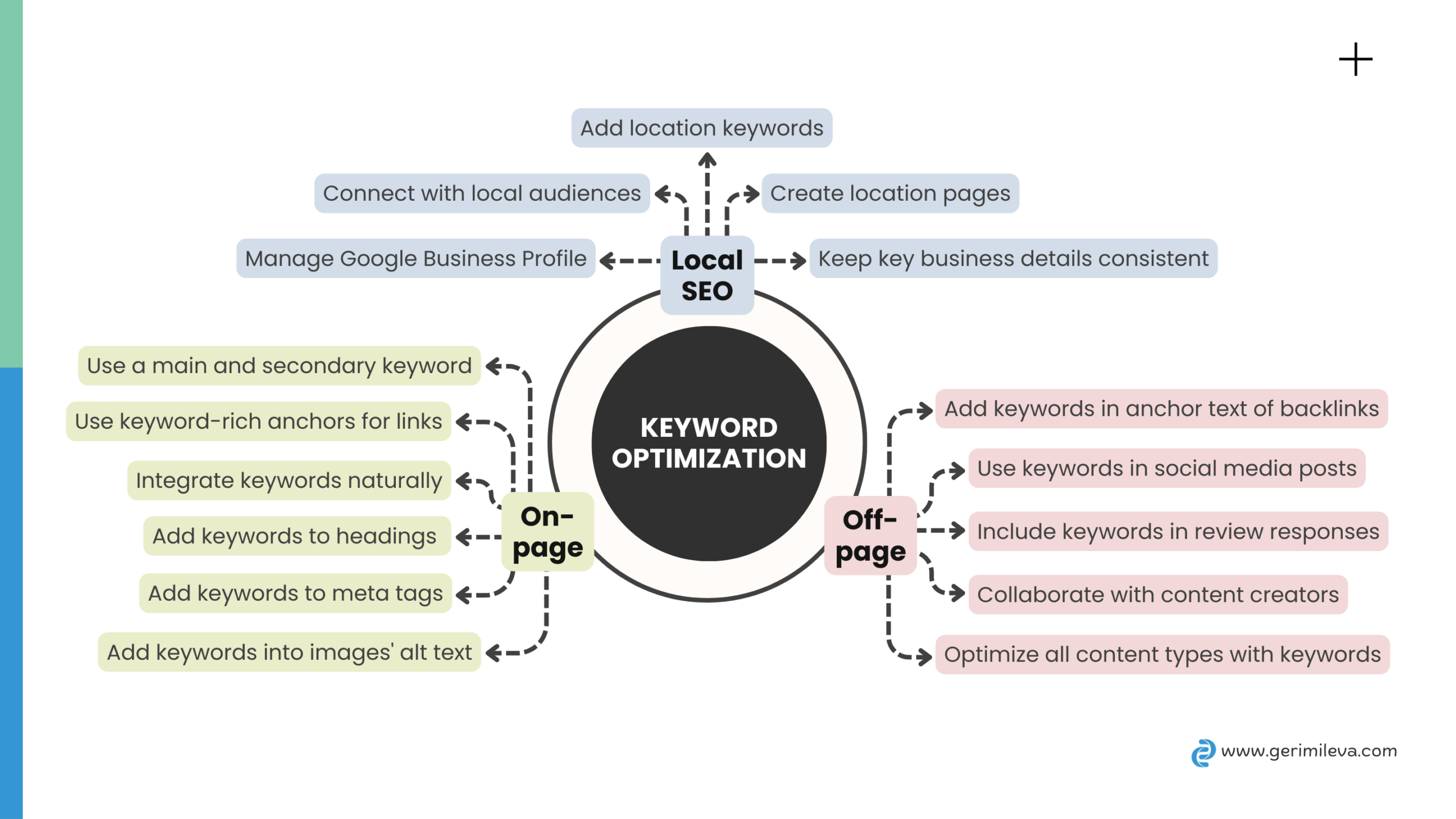
- On-page keyword optimization
This technique involves strategically placing keywords across different parts of your website, i.e., homepage, product pages, about us pages, blog posts, images, etc.
To succeed in this technique, remember to:
- Integrate keywords naturally
- Use a main and secondary keyword while maintaining optimal keyword frequency (between 1-2% per word)
- Include internal and external links with a keyword-rich anchor text
- Use keywords in the pages’ meta details (title tag, meta description, URL slug)
- Optimize images’ alt text with relevant keywords
- Organize content with headings and subheadings containing chosen keywords
Effective on-page optimization requires commitment because it’s an ongoing process that can be tedious at first. However, when these techniques become a habit, you’ll discover that it’s second nature to naturally insert keywords into your copy.
- Off-page keyword optimization
As opposed to the on-page technique, which focuses on internal web pages, off-page keyword optimization focuses on external content that you publish in other areas of the web. This can be other higher-domain websites like industry publications, or your social media channels.
Here are techniques under this strategy:
- Incorporate keywords in the anchor text of backlinks from reputable websites
- Use keywords in your social media posts, especially when sharing content from your site
- Encourage customers to review your products and services in detail on third-party review sites and respond to these reviews, while naturally inserting your keywords
- Use different content marketing initiatives like email marketing, white papers, ebooks, etc., and optimize them with your keywords
- Collaborate with content creators and ask them to incorporate keywords into branded content
With these techniques, your website’s ranking will further improve as you strengthen your off-page content with relevant keywords.
- Local SEO keyword optimization
As a small business owner with a local presence, you can’t ignore local SEO. It’s a crucial strategy to appear in local search results, especially since almost everyone searches for local company information online.
Optimizing for local SEO requires you to:
- Claim, verify, update, and maintain your Google Business Profile
- Ensure critical business details (like your name, address, phone number) are consistent across the web
- Include location-based keywords to your copy
- Create location pages on your website
- Connect with local audiences on social media
The next section covers in greater detail how local SEO complements small business copywriting.
Reminder: Beware of over-optimizing your site. This happens when you overuse keywords by simply adding them for the sake of more keywords or using keywords poorly in links, title tags, etc. Fluffy content without any real information can hurt your site and lower your rankings.
Tools for keyword optimization
The following tools will help you optimize your keywords.
| Tool | Description |
| Google Keyword Planner | A free tool that you can access from your Google Ads account |
| Ahrefs Keyword Generator | Offers a free keyword generator tool and lets you discover questions related to your keyword |
| Semrush Keyword Research Toolkit | A paid SEO tool that offers comprehensive tools like Keyword Overview, Keyword Magic, and Keyword Manager |
| Moz Keyword Explorer | Offers three searches per day to help you analyze keywords |
| AlsoAsked | Useful for creating topic clusters so you can understand the search intent behind keywords |
Incorporating local SEO in copywriting
A BritghtLocal consumer survey discovered that 98% of respondents used the internet at least once per month to find information on local businesses.
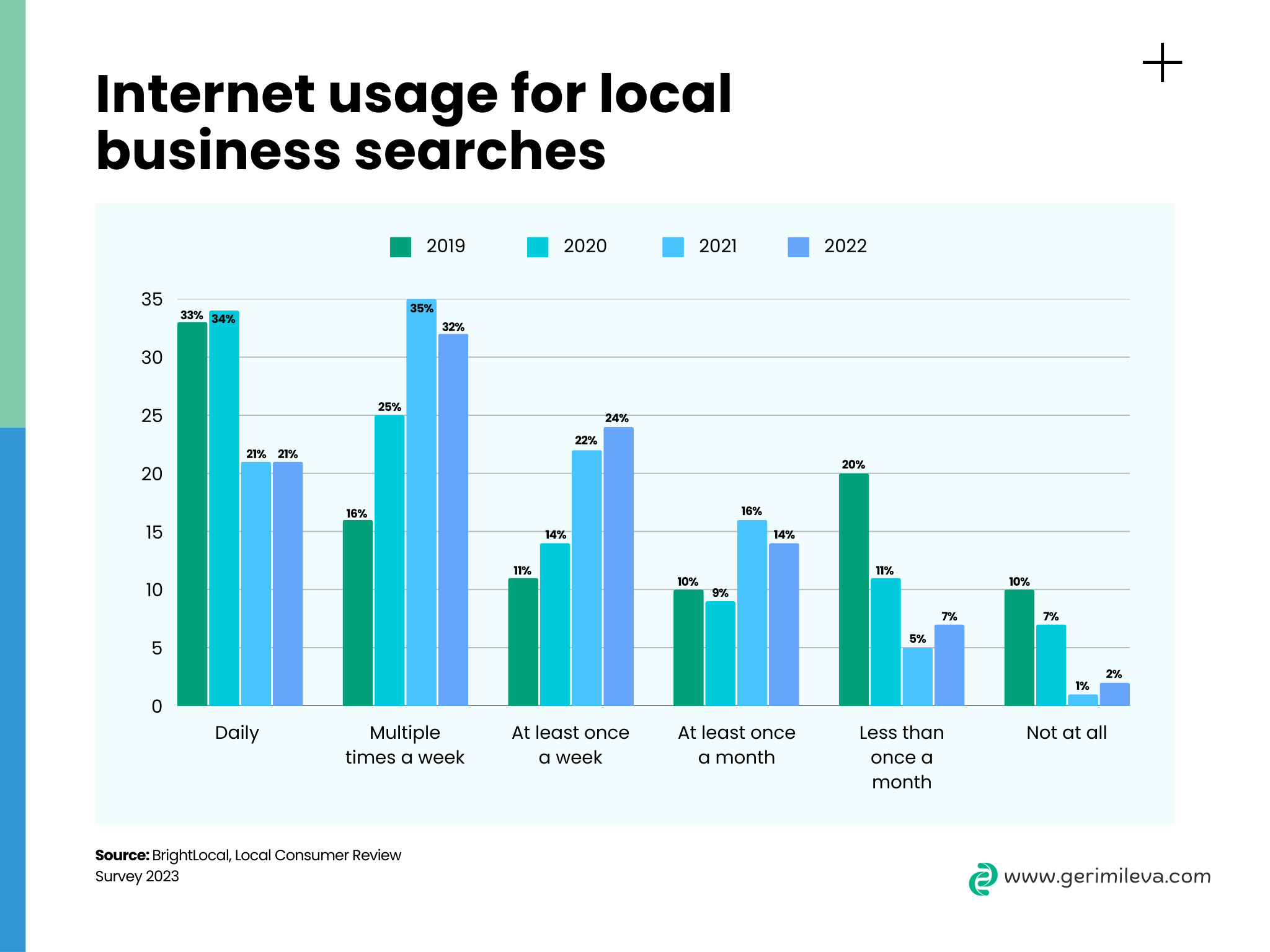
Incorporating local SEO techniques into small business copywriting is a crucial strategy for local businesses because it improves your brand’s visibility in local search results. It involves using relevant local keywords and optimizing your Google Business Profile to attract more customers in your local area.
Here are specific strategies you can follow:
1. Optimize for local keywords
Research local keywords and incorporate them naturally into your website copy. You can use tools like Google Keyword Planner or the free versions of Ahrefs and Semrush.
Often, these keywords aren’t much different from the common ones already associated with your business. You just need to add your location, since customers looking for a local business often begin by searching for a business with the city or town’s name.
Sample home page copy:
“Welcome to Sweet Haven Bakery, the best bakery in Manchester. We offer a wide range of delicious baked goods, from artisan bread to custom cakes, all made fresh daily.”
Keyword: bakery in Manchester
Pro Tip: Use Google Suggest as a nifty tool to find the most searched local keywords related to your business. Just type your offer and the first few letters of your location, then choose from the list.
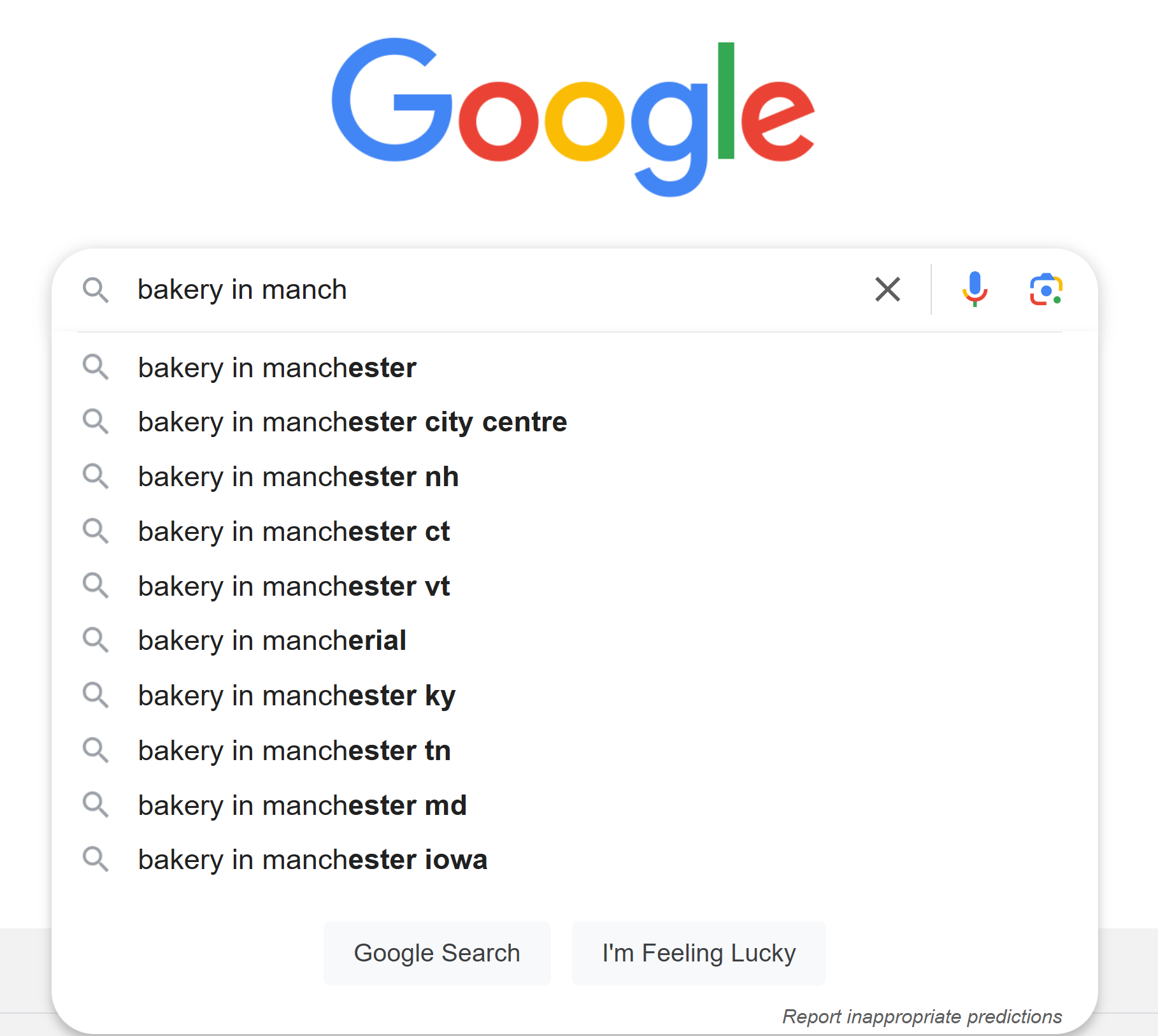
Source: Google search
2. Create location-specific pages.
If your business serves multiple areas, you can create dedicated pages for each location. These pages must contain basic information like the address, opening times, products/services offered, and other store features.
Each page should have tailored content with specific local references. You can highlight local attractions and mention how your business fits within the local community.
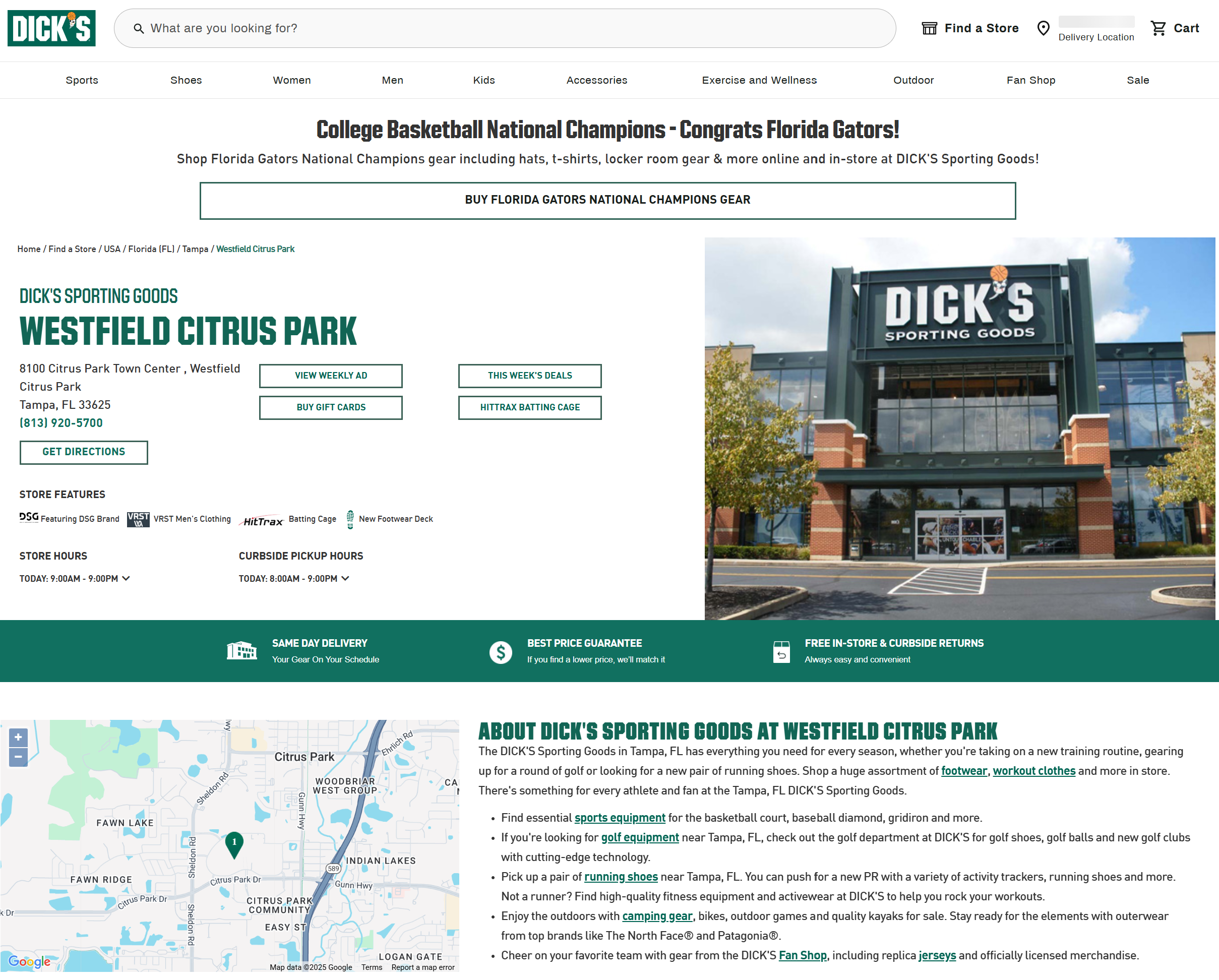
Source: https://stores.dickssportinggoods.com/fl/tampa/288/
You can also enhance the usefulness of your location-specific pages by embedding a Google map, just like what Dick’s Sporting Good does above.
Pro Tip: Use phrases like “near [local area]” or “in [local area]” in your web copy. This increases the likelihood of your page being picked up by search engines.
3. Leverage local reviews and testimonials
Feature testimonials and reviews from customers within the local community. If possible, include their location so potential customers know they are from the area.
Another alternative is to include testimonials that specifically mention your branch, so customers (and search engines) know right away which location is being reviewed.
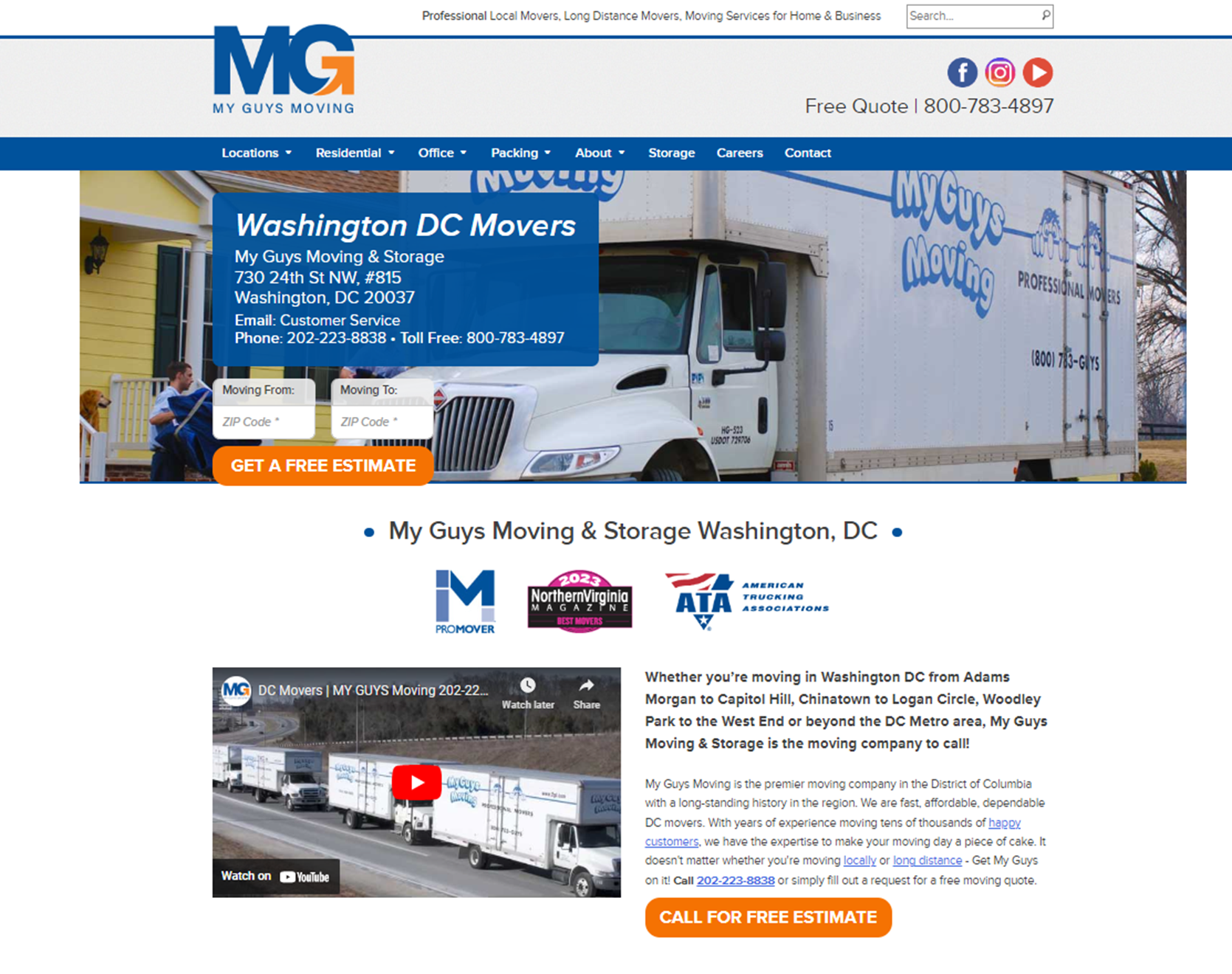
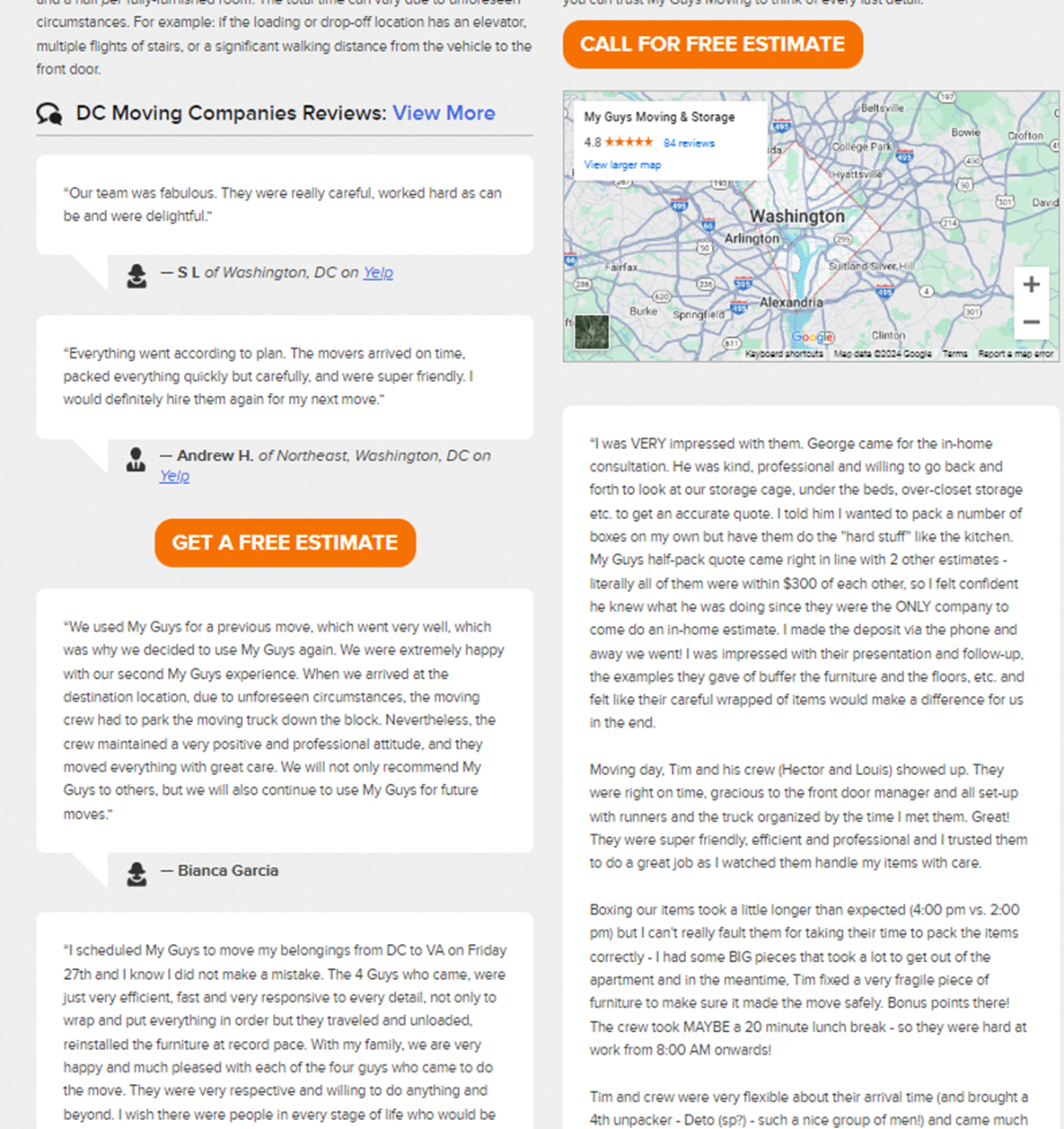
Source: https://www.myguysmoving.com/
You can also use the review schema markup, which is a structured data markup that search engines use to gather details about reviews and ratings. This further boosts your site for local searches.
Sample copy introducing the testimonials section:
“See what our customers in Manchester are saying about Sweet Haven Bakery:”
Pro Tip: Encourage your customers to leave reviews, especially on review sites like Yelp and your Google Business profile. These listings are directly tied to your local business, so you can use them directly on your website.
4. Write local content.
One quick way to insert local keywords naturally in your web copy is to write about local events. You can create blog posts or social media posts promoting events in your area or discussing relevant local community topics.
You should also highlight your involvement and contribution to these events, if any.
Dom’s Sausage Company excels in this area by running a contest to encourage customers who are fans of local football to engage with their content.
Pro Tip: Be genuinely involved in your local community so that talking about them online comes across as authentic. This strategy is good not only for small business copywriting but also for forming real connections with locals.
5. Observe local SEO best practices.
Aside from writing great copy, you must also observe local SEO best practices to get your content on the front page. Here are several of those techniques:
- Add the right metadata. Include local keywords in your title tags and meta descriptions.
- Insert business information in key areas like your site’s footer. Make sure it follows the NAP (name, address, phone number) format and is consistent with your Google Business profile.
- Create a mobile-friendly and responsive website since the majority of local searches are made on mobile devices. Optimize your site loading speed and ensure a great mobile user experience.
- Build backlinks, especially from local directories and business listings. You can also source backlinks from other complementary local businesses.
Copywriting for mobile audiences
Statista estimates that 96% of the global digital population in mid-2023 used a mobile device to connect to the internet. From 2013 to 2021, Statista also revealed that US consumers increased their use of mobile devices for organic search from 27% to 63%.
The data shows that we now have mobile-first markets where mobile internet traffic drives a larger share of web page views.
With the majority of your customers predominantly using smartphones to connect with your business, you can’t afford to miss them due to poor design and unresponsive pages.
Here’s why you need to optimize for mobile:
- Enjoy increased traffic and higher conversions by attracting visitors from mobile searches and keeping them engaged.
- Rank higher in mobile searches, as search engines prioritize mobile-optimized websites in search results.
- Provide users with an enjoyable browsing experience, which encourages them to stay on your site longer
- Reach more audiences by ensuring your content is accessible on all devices.
- Boost your brand reputation with a professional and user-centric website.
How to write great copy for mobile audiences
Even with responsive design, your website needs great copy for it to appeal to mobile audiences. Here are techniques to guide you in writing for mobile:
- Write short sentences. Long sentences are difficult to read, especially on mobile due to the smaller screen space.
- Use subheadings liberally. Mobile users often skim texts and subheadings making your content easier to digest.
- Insert sufficient white space so your text can breathe. Huge chunks of text can make your content look cramped.
- Take advantage of lists. Mobile readers love lists, both ordered and unordered, since they are succinct and easy to read.
- Focus on strong introductions and compelling summaries. Avoid “setting the stage” in your introduction or jumping around a topic.
- Create attention-grabbing, short titles. Long titles of more than 65-70 characters get truncated, so you need to be as concise and efficient as possible in your titles.
- Make every word count. Provide maximum information with as few words as possible.
- Use multimedia on your site. That includes images, shorts, reels, and any high-quality visuals that support your message. However, make sure they’re easy to load.
The golden rule with mobile copywriting is to create content that’s short and sweet. If you have longer content that your readers would benefit from, you can always link to more comprehensive texts.
Multichannel copywriting integration
Your customers are everywhere, and being present in only one channel is no longer ideal. To meet your customers at the moment they need you most, you have to be present in two or three channels. This includes a mix of social media platforms, email marketing, direct mail, and paid and organic search results.
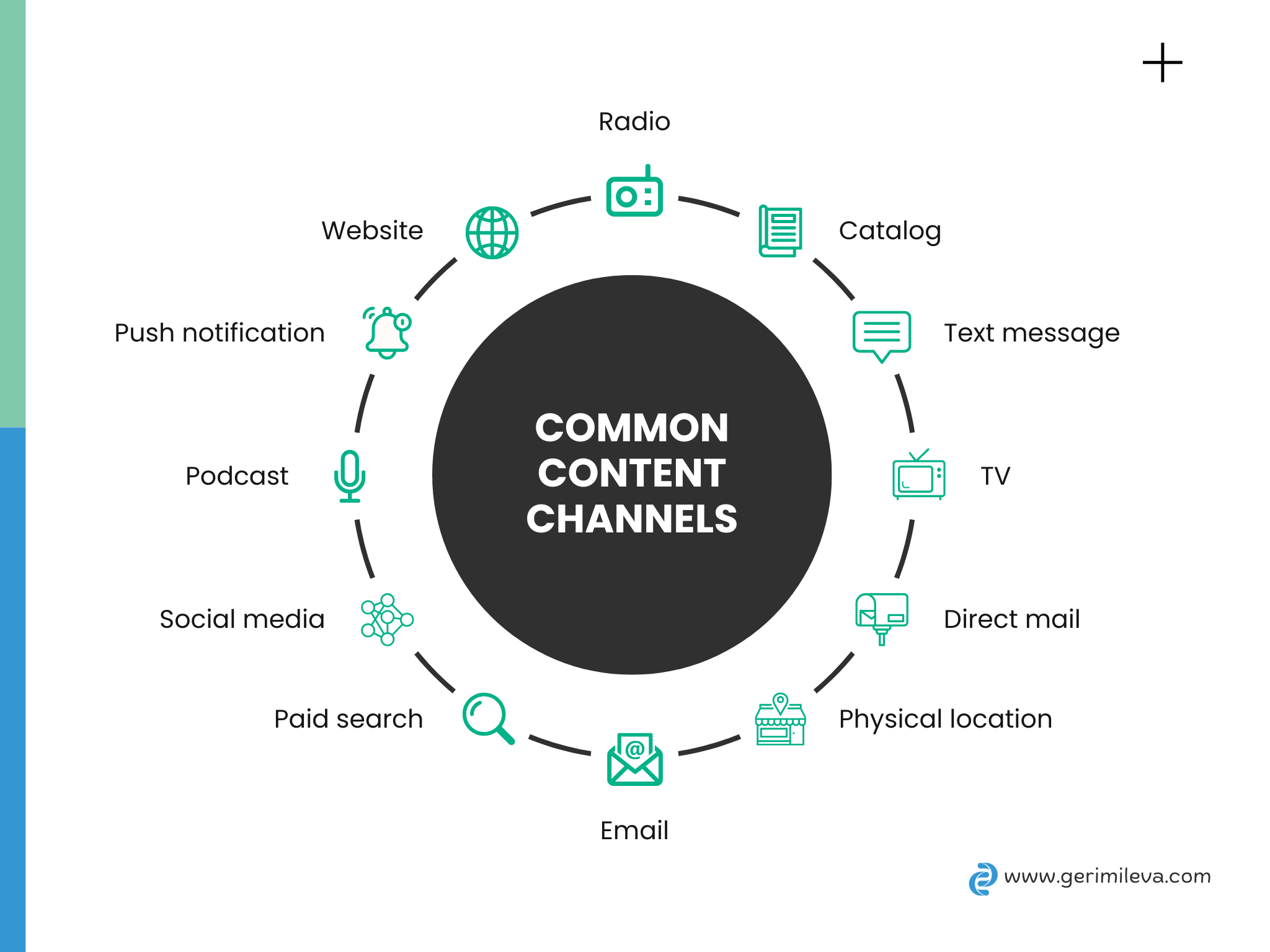
Multichannel marketing benefits your business in several ways:
- It gets your brand more attention since it increases brand recognition by ensuring your posts receive multiple views
- It gives your customers different options for interacting with your business and allows them to use their favorite mediums
- It allows you to collect more data about your customers so you can understand them better
- It establishes your brand reputation across all areas since you control the narrative
A McKinsey article revealed that 60% to 70% of consumers research and shop both in-store and online, reinforcing the importance of communicating your brand message across different marketing channels.
Even with a small team, you can capitalize on a multichannel marketing presence with the right strategies.
Here are proven techniques my clients have used to create a cohesive copywriting approach for their small businesses.
- Establish a clear brand voice and messaging.
Your audience should be able to identify your brand regardless of where they encounter it. Their experience on social media should be similar to their experience on your website or at your physical store. Having a clear brand voice accomplishes this.
You need to reflect your business values in a way that resonates with your customers. I can’t stress enough the importance of knowing your audience, as it’s the key to achieving an engaging brand voice.
When you have a deep knowledge of your audience, you’ll create the perfect copy to catch their attention regardless of the marketing channel.

Source: https://www.starbucks.com/
Starbucks offers small businesses a prime example of consistent and clear brand messaging across all channels. It doesn’t waste words in conveying its message, instead using appropriate images.
To achieve the same success as Starbucks, document your brand voice, preferred terminology, and messaging points in an accessible and updated brand style guide. Include guidelines for grammar, punctuation, and visual elements like logos and color.
Check out the techniques I’ve shared above on defining your audience and developing your brand voice so it resonates with them.
- Centralize content planning with content calendars and content pillars.
Decide which major channels you want to be present on, focusing your efforts on the channels where your audience is highly concentrated. This can include a mix of general and niche-specific platforms, as well as digital and offline channels.
Once you’ve identified your platforms, develop a content calendar that includes all of these channels, and then decide on the content and frequency of posting on each. Looking at everything from a central perspective helps ensure consistent messaging and timing.
To streamline your copy, identify key themes or topics that align with your brand and customer interests. You can turn these into content pillars that will guide your content creation across channels.
| Content pillar | Pillar 1: Startup growth & strategy | Pillar 2: Financial planning & funding | Pillar 3: Marketing & branding for startups |
| Main Topic 1 | How to set up your startup for scalable growth | Funding options for startups: Which one is right for you? | How to build a strong brand identity for your startup |
| Subtopic 1.1 | The lean startup approach: How to validate your business idea | Bootstrapping vs. venture capital: Pros and cons | Branding for startups: The essential guide |
| Subtopic 1.2 | The most common startup mistakes & how to avoid them | Financial metrics every startup founder should track | How to craft a unique brand voice that connects with your audience |
| Subtopic 1.3 | How to develop a sustainable business model | Business credit & loan options for startups | The role of storytelling in startup success |
| Main Topic 2 | Creating a business roadmap for long-term growth | Managing cash flow to prevent startup failure | Content marketing for startups: Where to start? |
| Subtopic 2.1 | Setting SMART goals & milestones for growth | A step-by-step guide to building a startup budget | SEO for startups: How to get found by customers |
| Subtopic 2.2 | Finding the right advisors & business mentors | Understanding financial statements: What every founder must know | Startup copywriting: How to write to sell |
| Subtopic 2.3 | How to know when to pivot your startup | How to extend your startup’s runway and avoid running out of cash | How to create a content plan that attracts and converts customers |
| Main Topic 3 | How to build & lead a high-performing startup team | How to pitch to investors & secure funding | Building customer trust through branding |
| Subtopic 3.1 | Hiring the right people: When & how to expand | What investors look for in a winning startup pitch | Creating a value proposition that stands out |
| Subtopic 3.2 | Productivity & time management for startup founders | How to write a business plan that secures funding | How to use testimonials & social proof to gain customers |
| Subtopic 3.3 | Overcoming common startup challenges in year one | Debt vs. equity financing: Which is best for your startup? | How to create a consistent brand message across all platforms |
Example of a content pillars framework for startups
- Streamline content creation by using templates and content repurposing.
When working across multiple channels, a common time-saving copywriting strategy involves content repurposing. You don’t have to create unique content for each platform. Instead, you can break down or build up an idea and adapt it to different channels.
For example, a blog post can be broken down into social media posts, email newsletters, and infographics. Or, you can build up a trending social media topic into a blog article, YouTube video, and email newsletter.
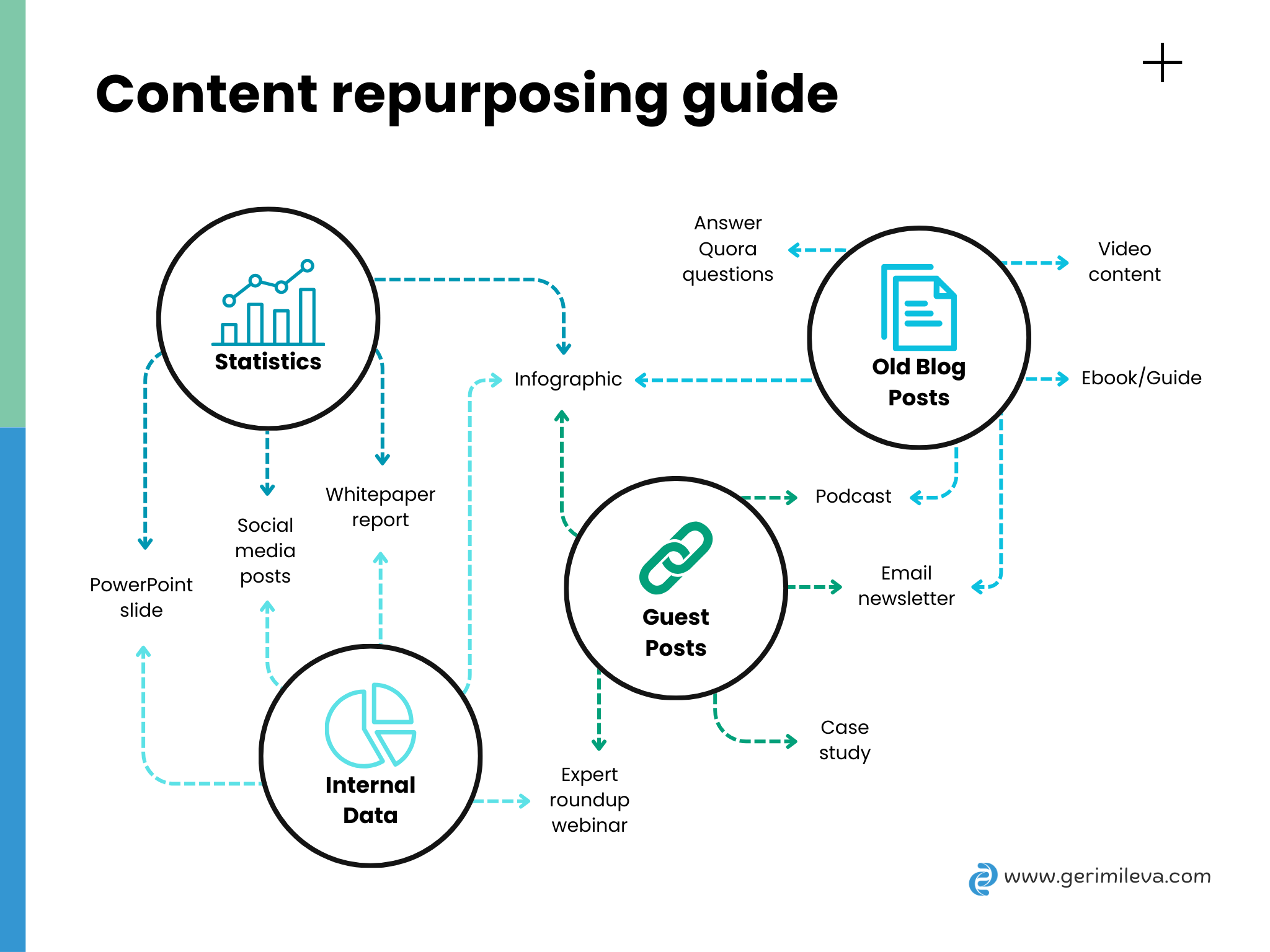
If you have any recurring content, you can build templates to maintain consistency and speed up the creation process. For example, if you’re writing a series of comparison guides, you can create a blog template with the usual product features you’d compare.
- Collaborate and communicate through shared documents and regular meetings.
It takes a team to create consistent multichannel copy. You simply can’t do it alone. Fortunately, collaboration today, even among remote teams, is both possible and easy. You can use shared documents like Google Docs and Google Sheets to collaborate on content creation and editing in real time.
For multimedia assets, you can use tools like Canva, which offer affordable team plans so you can easily access and work together on images and videos.
You can hold regular but brief meetings to align on content strategy and provide updates. You can also assign different team members to handle one or several channels. This helps distribute the workload while empowering each person to own the success of a channel.
- Use affordable tools for management and scheduling.
Consistently creating content across multiple channels can be exhausting without the right tools. Here are several affordable tools you can use to manage and schedule digital content.
| Category | Purpose | Tools |
| Content Management System | Manage and schedule website content such as blog posts and page launches | WordPress Squarespace |
| Social Media Management Tools | Schedule and manage social media posts across multiple platforms | Buffer Hootsuite Later |
| Email Marketing Platforms | Manage and automate email campaigns | Mailchimp SendInBlue |
| Project Management Tools | Track content creation progress and deadlines | Asana Trello Monday.com |
When working with tools, sign up for a free trial first or request a demo. Check that the tool meets your team’s expectations and accomplishes its goals. Look for a tool that offers scalable plans so you only pay for the features you’d actually use.
- Monitor and adjust to optimize your content’s performance.
Track the performance of your content using analytics tools so you can improve your copy and adjust your strategy as necessary. You can use the native tools for each platform, but it’s better to use a tool that consolidates analytics from different channels in a centralized area.
This will show at a glance which channels are performing and which ones need your attention.
Continue to test different approaches and learn from your results. Some content might work well on certain platforms but receive less engagement in others. Be patient as you discover the formula that works for your audience. You should also monitor industry trends and adapt your copy accordingly.
Pro Tip: The majority of cross-marketing analytic tools are developed for enterprises and might be costly for small businesses on a budget. One alternative you can explore is to track your important metrics on a Google Sheet and review them regularly against your targets.
You can set metrics for each channel, such as the number of likes, comments, and shares for social media, page views for web content, and the number of opens for email newsletters. Consolidate all these metrics on a Google Sheet and commit to monitor them daily, weekly, or monthly.
Creating a content calendar
The best way to ensure consistency across your copy is by using a content calendar. It’s a tool that coordinates your marketing content and ensures the workload is effectively divided across your staff. It also helps your team avoid the dreaded incident of creative block.
With a content calendar, you can:
- Organize your marketing activities and ensure everyone’s on the same page
- Enhance team collaboration, especially if you’ll use a cloud-based calendar
- Ensure consistency across your past, present, and future marketing activities
- Create a long-term plan that can span several months in advance
- Manage your social media posts across various platforms and automate their posting
- Track the performance of your marketing activities
In this section, I go into detail about what you need to build your content calendar. At the end of the section, you should feel confident that you can sustain your publishing schedules with the help of an efficient content calendar.
Where to build your content calendar
Basically, a content calendar keeps track of when and where you publish content online. It can be a combination of a traditional calendar, a project management platform, and a scheduling app, which are all designed to track your content creation.
Every item on your content calendar must include:
- What you want to post
- Where you want to post it
- When you want to post it
As a small business owner, you can build a great content calendar using Google Calendar or Google Sheets, both of which are free tools. They work best when you have simple and straightforward marketing activities to plot.
However, if your marketing plans become more complex, then you can consider dedicated content calendar tools.
How to make a content calendar
Creating a content calendar is not a one-time event. It’s a recurring activity that you and your team can complete every quarter and review monthly. Here are steps you can follow.
- Define your goals
Your content calendar should support your goals. Do you want to gain more visibility for the brand? Do you want to acquire new leads or increase the number of your YouTube subscribers?
Your goals will determine the channels, content, and posting frequency that you’ll plot on your calendar. Without a clear goal, you’re only wasting your time creating copy or publishing content. It’s like driving around without a clear destination.
- Choose a calendar tool
There are plenty of templates and tools available, but the best one is the one that your team can implement quickly. Don’t waste time learning complicated tools, which can be time-consuming to learn and difficult to adapt.
Stick to simple ones first, like a Google Sheet Calendar Template, then incorporate or migrate to other tools when your needs grow.

Source: https://docs.google.com/spreadsheets/d/1PIxVQKuidWUl9z4t8VRp578Runl8993z02KikRspnsg/edit
Above is a basic monthly template by Social Media Examiner where you can plot content daily, while below is a more complex calendar by Hootsuite that ties up each piece of content to your content pillars and marketing campaigns.
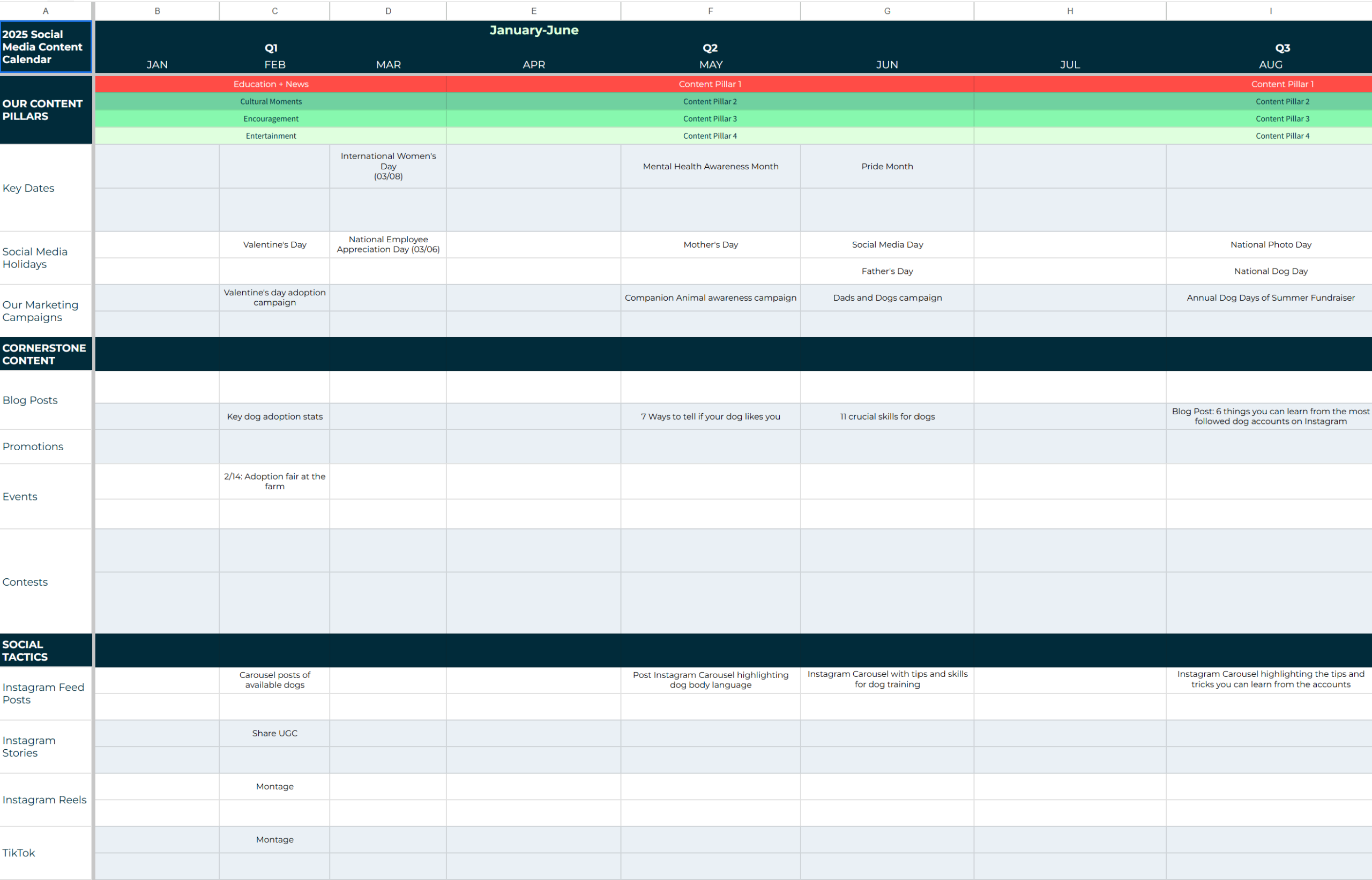
Source: https://docs.google.com/spreadsheets/d/1GADxvHGQIsDDDugJ5ij8L43JYlXMcxSX-h5PA0ZyQnc/edit
Make sure that you choose a tool that enables collaboration features. Everyone on your team must see real-time updates to ensure they’re on the same page. For this purpose, cloud-based tools work better than those that only live on your computer.
- Plan your content theme and types
List all of your communication channels, prioritizing your most important ones. Develop high-quality content for these channels first by deciding on key themes that speak to your audience’s interests. As I’ve mentioned above, you can create content pillars which will guide the topics you’d write about for each channel.
A study by Becker and Gijsenberg, published in Science Direct, showed that small brands benefit from consistently creating advertising content similar to that of their competitors.
As a small business, you should be regularly posting different content types to keep your audience interested.
Your content calendar should see a mix of:
- Social media posts
- Press releases
- Guest blogs
- Internal blogs
- Expert articles
- Short- and long-form videos
Once you’ve plotted your themes and topics, look for cross-posting opportunities. For instance, you can adapt a blog’s infographic into a Facebook post or create a shorter LinkedIn Expert Article from an in-depth blog post.
If you’re producing videos, you can always cut snippets of long-form videos to generate content for both YouTube and TikTok.
- Set a posting schedule
Determine how often you’ll have to post on each channel, i.e., daily social media posts, weekly blog posts, and monthly email newsletters. You should also identify the best times to post for maximum engagement based on your audience’s behavior.
Plot any holidays or important events such as a product launch on your calendar. You’d want to build up content leading to these key moments and plan in advance for any increased workload due to seasonal events.
Most social media platforms let you schedule content in advance. Canva, a cloud-based visual editing platform, also lets you schedule posts to integrated social media networks. You can also use social media scheduling tools like Buffer and Hootsuite to schedule content in advance.
- Populate your calendar with timely and evergreen content
When plotting content on your calendar, you should balance evergreen and time-sensitive posts. Evergreen content remains relevant to readers over a long period and will continue to engage them beyond the first publication date.
Examples of evergreen content are how-to guides, FAQs, case studies, and best practices. They must be non-promotional and well-optimized for search engines.
Meanwhile, time-sensitive content is tied to specific events and designed to capitalize on the urgency of a topic. It only has a limited period during which it’s highly engaging but can drive massive traffic when done right.
Examples of time-sensitive content are news articles, event promotions, seasonal and trend-based content, and product launches.
| Evergreen content | Time-sensitive content |
| Relevant over a long period | Relevant only for a short period |
| Focuses on providing value and information | Focuses on recent developments, announcements, and trending topics |
Benefits:
| Benefits:
|
How to maintain:
| How to create effectively:
|
| Examples include case studies, how-to guides, FAQs, best practices and tips, product reviews | Examples include seasonal content (holiday gift guides, summer travel tips), trend-based content, product launches, limited-time offers, event promotions, and news articles |
By publishing evergreen and time-sensitive content, you’ll consistently attract and engage your audience. Evergreen content will provide lasting value that supports your long-term marketing goals, while time-sensitive content will help you maintain a dynamic and responsive brand presence.
Best methods for creating a content calendar
To further make your content calendar creation seamless, you can check out the following best practices.
- Plan ahead
For best results, plan your content a quarter in advance. At any given period, you should have three months’ worth of content already mapped out. This gives everyone involved enough time to research the topic, write copy, design visuals, and record videos.
Match your content calendar with the marketing calendar so you’ll know how to support upcoming campaigns and promotions. Establish realistic deadlines to ensure the team meets publication targets. You should also identify busy seasons and plan around these periods to ensure you can consistently publish content regardless of other commitments.
- Automate scheduling
Take advantage of automation tools to do things quickly and efficiently. Once you’ve mapped out your content calendar and the materials are ready, go ahead and auto-schedule them. This ensures you don’t miss a publishing deadline and you can cross out these posting tasks from your to-do list.
Pro Tip: Choose a day each week or month to auto-schedule all upcoming posts. This creates a streamlined process and ensures there are no missed posts.
- Collaborate with your team
One of the primary purposes of a content calendar is to ensure everyone’s on the same page regarding any published content. You want your team to be coordinated, so posts are published on time and without a hitch.
When creating a content calendar, ensure it’s a collaborative process that accounts for everyone’s workload. There should be a consensus within the team that the designated posting schedules are achievable.
- Stay inspired
Regularly gather inspiration from industry trends, competitors, and audience feedback to keep your content fresh and engaging. It’s easy to feel overwhelmed when looking at an empty calendar, wondering how to fill it with relevant content.
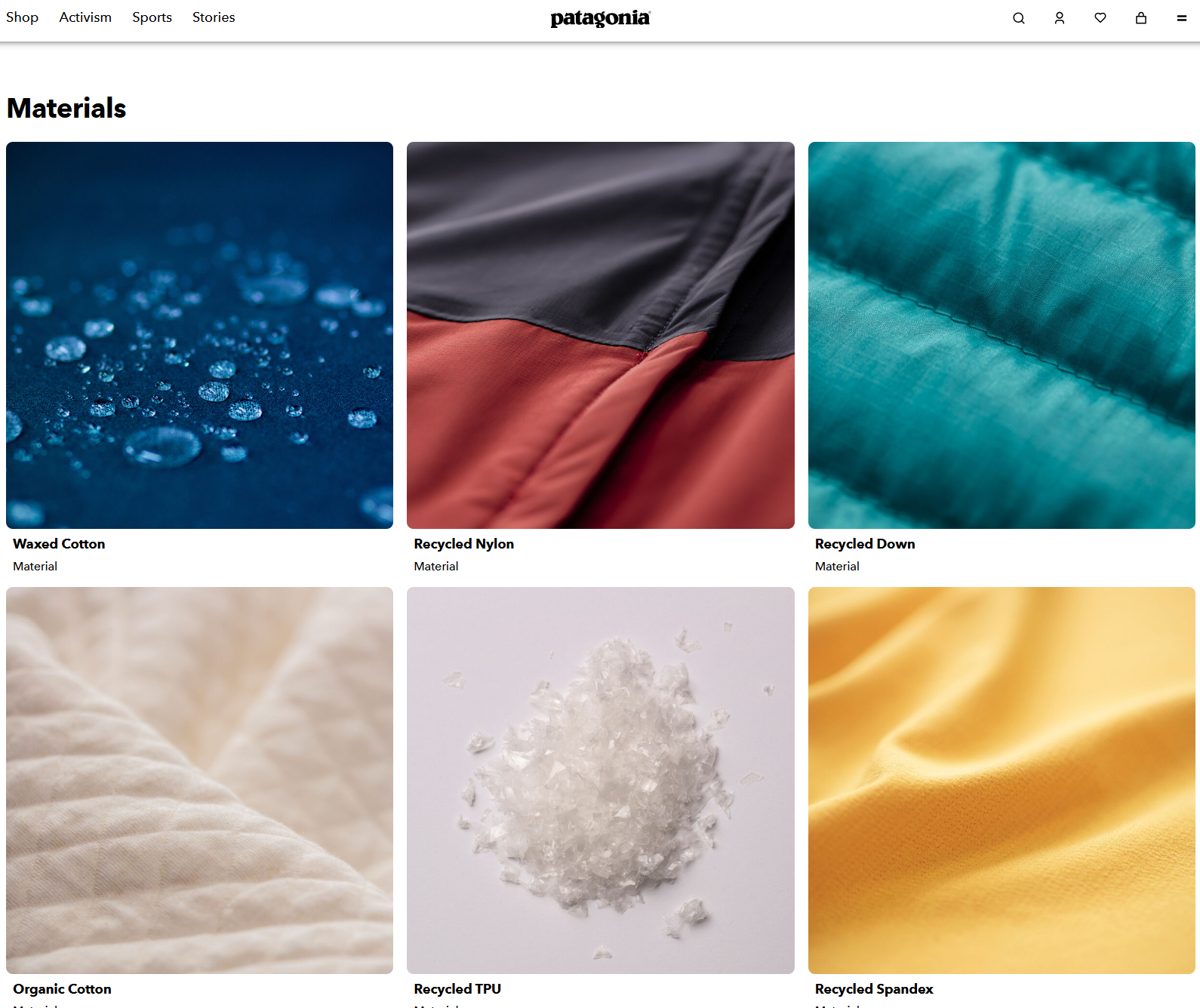
Source: https://www.patagonia.com/
Patagonia maintains a well-balanced content strategy by combining evergreen educational materials on sustainability with timely, trend-driven campaigns addressing current environmental issues. This mix keeps their audience engaged while reinforcing their core values.
- Remain flexible
Always be ready to adjust your calendar for timely events and unexpected opportunities. While you can plan and schedule everything in advance, there should be enough room for any urgent events.
For example, when athletes started winning medals during the Paris 2024 Olympics, a lot of brands used the opportunity to send congratulatory posts on their social media profiles. It’s a great opportunity to stay relevant, although it requires teams to be flexible and timely with their content.


Examples of congratulatory posts from local brands in the athletes’ home countries
Visual elements in copywriting
Have you ever heard of the cliché, ‘a picture is worth a thousand words‘? In an era where people have short attention spans and would rather scan than read for information, visual elements act as a great hook that keeps your readers engaged for prolonged periods.
According to Wyzowl, 82% of marketers reported that videos keep visitors on their sites longer. Readers aren’t attracted to chunks of text. A visual element, like a video, is essential to keep them engaged.
Images and videos break the lengthy monotony of long articles. Furthermore, they help readers comprehend your message better and retain the information.
Role of visual elements in copywriting
Here’s how specific visual elements improve small business copywriting:
- Infographics simplify complex information
In HubSpot’s research on the top marketing trends for 2024, 88% of marketers plan to increase or maintain their investments in using infographics.
Infographics present complex data in a simple manner. It’s a great way to highlight key points and condense your text so it tells a compelling story. As a bonus, infographics are easy to share across social media, giving your content an extra boost.
If you produce great infographics, other websites would also link to your work, giving you a good source of backlinks, which is great for SEO.
Chair Office incorporated a clever infographic into their blog encouraging readers to destress during the pandemic while promoting their office chairs for home office setups. It was a witty idea that helped site visitors consume their content and liven their blog.
- Videos capture attention in the blink of an eye
Wyzowl’s recent video marketing survey revealed that 94% of marketers admitted that videos helped provide context and in-depth information for products and services.
Videos convey messages quickly and effectively. If you open it with an exciting hook and keep it entertaining, readers are bound to watch it till the end. It will encourage them to stay longer on your page, which sends off positive signals to search engines that your content is valuable.
As a result, your page ranks higher and more people get to see it.
Example of videos you can create include:
- Explainer videos
- Tutorial videos
- Customer video testimonials
- Walkthrough videos
- Behind-the-scenes videos
Furthermore, you can easily repurpose long-form videos into short videos and cross-post them on TikTok, Instagram, and Facebook. This further drives traffic to your website.
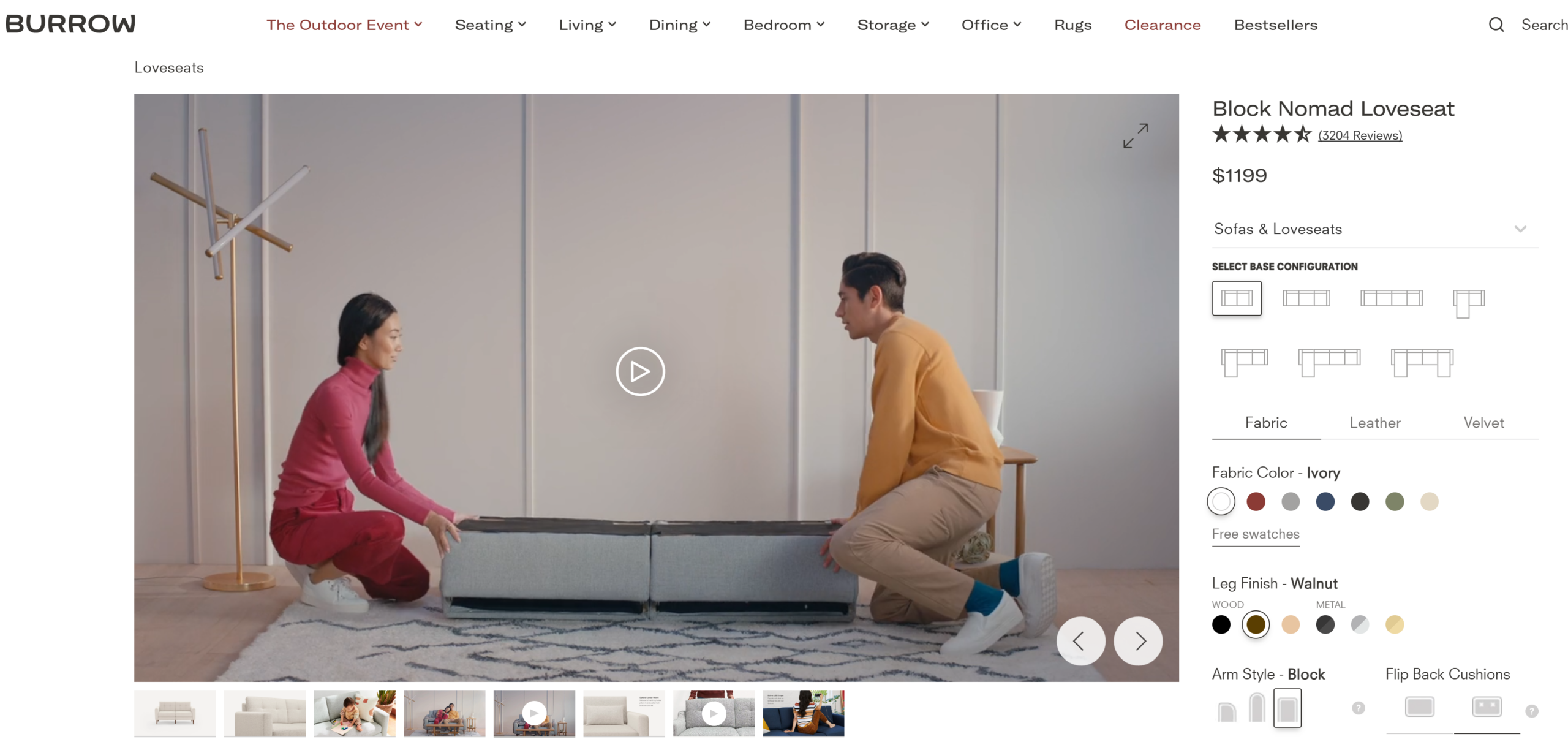
Source: https://burrow.com/nomad-fabric/loveseat
Burrow helps customers envision how their furniture can easily be set up and enjoyed at home by using attractive videos. This is a great way to use videos to convert buyers since the videos tackle concerns of DIY setup while demonstrating the comfort and ease of their products.
Pro Tip: Consider GIFs as another attention-grabbing animated alternative to videos. They’re great at demonstrating simple processes and features, yet are lightweight enough so they load quickly.
- Typography enhances readability and aesthetic appeal
Typography refers to the choice of fonts for your web content. While you can’t change fonts on social media platforms, your website offers an opportunity to use various typefaces, font colors, sizes, and more.
Source: https://www.anchorandden.com/about-anchor-den-restaurant/
Anchor & Den communicates its promise of authentic dining experiences, fit for connoisseurs, using a minimalist website that relies on clever font choices and sufficient white space.
In contrast, Hi-Pointe uses bold fonts paired with dramatic colors to highlight its fun and cool vibe.
Source: https://hipointedrivein.com/catering/
Typography impacts your message’s perception. You can also use it to emphasize key points and break the monotony of your text. Furthermore, you can reinforce your brand identity by using fonts that make your content instantly recognizable.
However, avoid excessive use of typefaces by sticking to two or three fonts per page. Use sans serif fonts for the body of your content and only use script fonts for special situations. Always aim for readability and check that your content is readable across different devices.
- Interactive elements deepen the user engagement
Another great way to encourage readers to spend more time reading your copy is to use interactive elements. These are polls, surveys, quizzes, and interactive infographics, which enhance your content. They also help them process the information better than static content.
Pro Tip: When relevant, use embedded surveys or online quizzes designed to learn more about your readers. This will help you achieve two things: create engaging content and define your audience better.
- Images increase web traffic
Visual elements offer great opportunities to improve SEO rankings. You just need to ensure that you optimize their alt descriptions and file names with relevant keywords. Search engine bots use these descriptions to “read” your image and determine their relevance to search results.
With another avenue to enhance your SEO efforts, you can increase your site’s visibility and enjoy more traffic.
Best practices for incorporating visuals
Are you ready to insert some amazing visual content to spruce up your copy? Before you start conceptualizing and designing, keep in mind the following tips:
- Be relevant and choose the right images.
Don’t use an image just for the sake of using one. Like every word in your copy, all visual elements must be directly related to the topic and add to the copy’s message. Using irrelevant visuals only confuses readers.
- Use high-quality images and videos
Professionally-designed graphics and high-quality visuals are crucial in a highly competitive landscape. Even if you have a great copy, a poor visual will undermine it. It’s also easy to create top-notch graphics without any fancy equipment or software.
Most mobile phones can capture high-resolution photos and videos, while Canva offers an affordable means to edit them.
Pro Tip: When uploading high-quality images, ensure that their file sizes are optimized for fast loading times. You don’t want to sacrifice page speed for hi-res images that take forever to load. You can use image compression tools or image resizing apps like TinyPNG.
- Keep it simple
Just like writing copy, keep your images simple and avoid any overly complex visuals. Remember that the goal of your copy and its accompanying visuals is to convey information that helps your readers, not impress them with your knowledge.
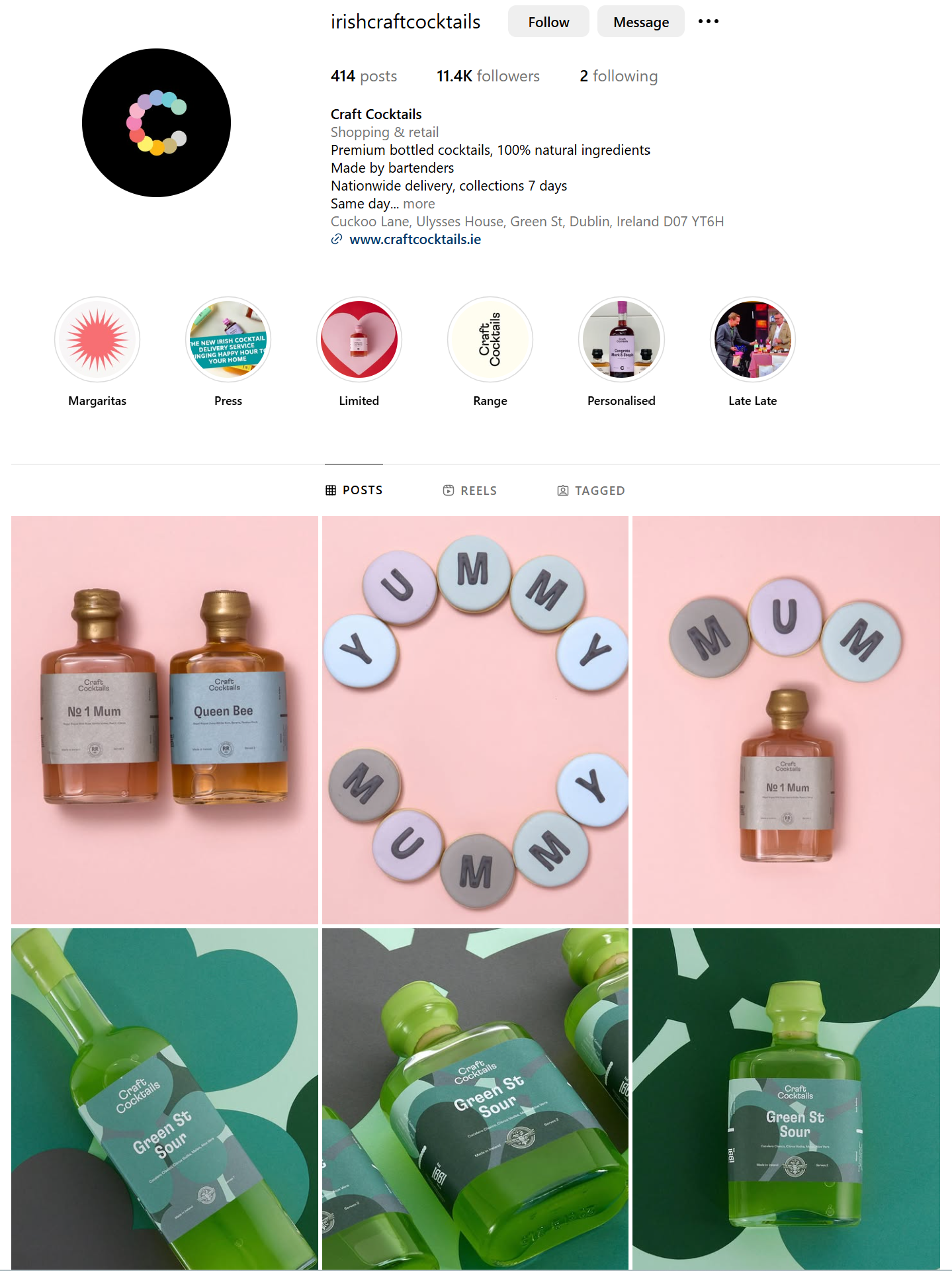
Source: https://www.instagram.com/irishcraftcocktails/
Irish Craft Cocktails proves that you don’t need to be a huge brand to achieve a premium look. This small Irish business, selling premium bottled cocktails, uses clean and carefully designed photos to achieve stunning imagery throughout their Instagram account. The sharp visuals have gained them over 11k Instagram followers since they started in 2020.
- Remain consistent with your branding
Use a consistent visual style across your images, videos, and interactive elements. This reinforces your brand identity and builds credibility. You’d also build brand awareness when readers constantly see your visual style across your content.
- Ensure accessibility
Using alt text isn’t just a good SEO practice, it also makes your content accessible to visually-impaired readers. That’s why your alt descriptions should really describe the image and its purpose and not just be a bunch of loose keywords.
- Engage professionals
As a small business owner, you might be tempted to do everything yourself or assign a team member to double as a graphics artist. However, it’s better if you work with professionals who have experience and expertise in creating web graphics. They have more experience handling the right tools and creating a professional and polished look for your brand.
Plus, they provide a creative perspective that can elevate your brand’s visual identity.
Affordable ways to create amazing visual content
I understand that costs will always be a deciding factor for small business owners, especially when it comes to producing visual content that requires skilled professionals. Some may even argue that you only need visual elements every now and then and so may hesitate to hire a full-time graphics artist.
Here’s how you can create engaging visuals on a budget:
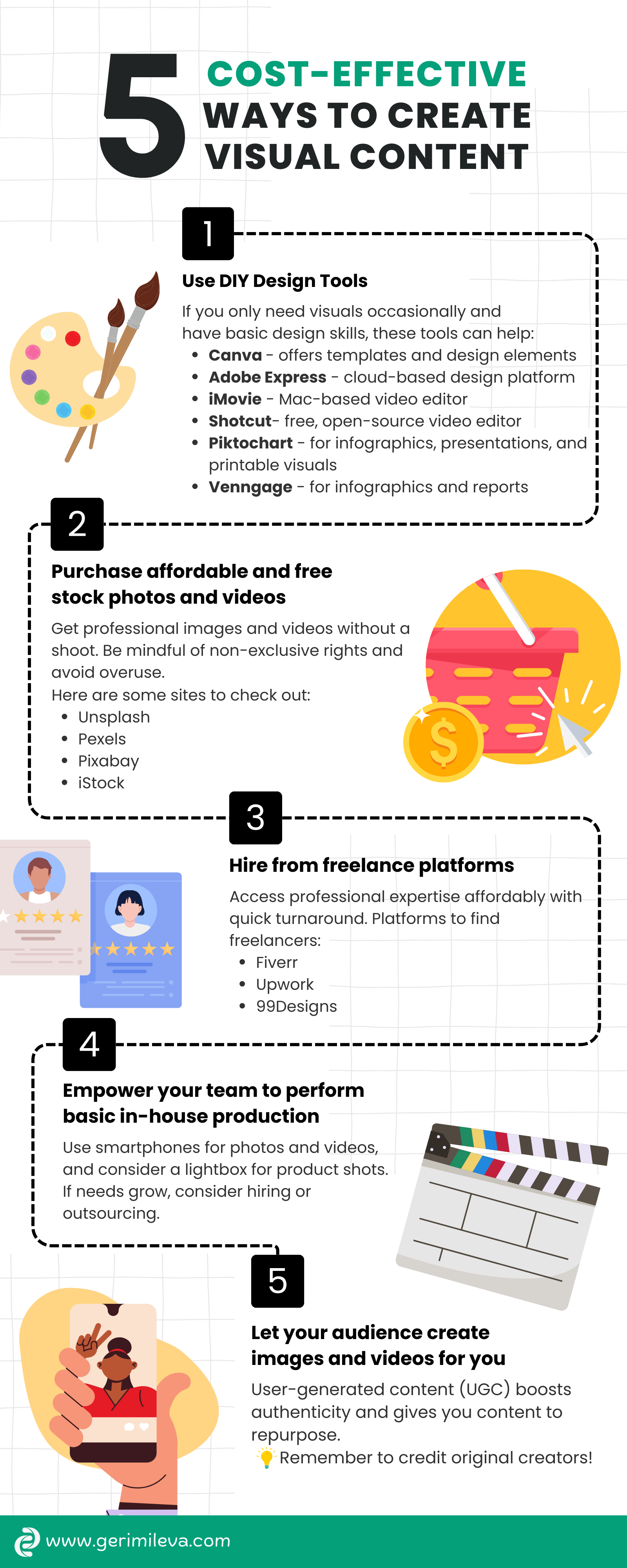
1. Use DIY design tools.
I recommend this only if you need visual elements occasionally and you or someone on your team already has basic design skills. There are plenty of design apps in the market, but as I’ve mentioned above, it takes a creative eye of a professional to build a cohesive and strong brand identity.
Here are tools you can explore:
- Canva – offers templates and design elements to create professional-quality visuals
- Adobe Express – cloud-based design platform made by Adobe and intended for creating videos, web pages, PDF documents, graphics, and other digital assets
- iMovie – Mac-based video editing tool
- Shotcut – free and open-source cross-platform video editor
- Piktochart – specializes in creating infographics, presentations, and printable visuals
- Venngage – also creates infographics and reports
2. Purchase affordable and free stock photos and videos.
This is a quick hack to get professional shots without investing in a photo or video shoot. However, you must be aware that you don’t have exclusive rights to stock photos and videos, so you might see another brand use them. Likewise, excessive use of stock images may come across as inauthentic.
These websites offer free and affordable stock photos and videos:
- Unsplash
- Pexels
- Pixabay
- iStock
3. Hire from freelance platforms.
Working with freelancers is a tried and tested method to help small business owners access professional expertise at a fraction of the usual cost. You’re also assured of fast turnaround and scalability. Just ensure that you communicate your expectations and brand style guide accurately, so your freelance graphic artist can create brand-fit visual elements.
You can access freelancers here:
- Fiverr
- Upwork
- 99Designs
4. Empower your team to perform basic in-house production
It’s true that no one knows your brand like your team. And when it comes to producing authentic visuals quickly, they are your best option. They can use any modern smartphone to take professional-looking images and videos.
For product photography, you can build a simple lightbox, which ensures well-lit products resulting in professional images.
However, be careful of overburdening them and ensure you work with creative individuals. Also, if the visual requirements are frequent or complex, consider hiring an internal person, working with an agency, or outsourcing to qualified freelancers.
5. Let your audience create images and videos for you
I’ve written at length about the power of UGCs in the above section. Aside from bolstering authenticity, UGCs also give your team an unlimited supply of images and videos that can be repurposed for various copy needs. You can insert UGCs in email campaigns, web pages, and social media channels.
However, remember to give credit where credit is due by citing the original owner of the image or video when you post it.
Visual elements are a must in enhancing your copy, and with a little bit of creativity, you can consistently produce engaging visuals even on a tight budget.
Effective email marketing for small enterprises
If you think email is dead, think again. For almost 50 years, email marketing has proven to be effective at reaching targeted audiences.
It’s a cost-effective marketing channel where you can readily measure your ROI. In a survey of over 1000 small business owners, email marketing emerged as the top marketing channel with the highest return on investment.
Plus, email is a fantastic way to build relationships with your customers because it acts as a direct communication tool, especially when they reply to your messages.
Here are several tactics I’ve found to be effective in handling email marketing for small businesses.
- Build and segment your email list.
The first and most important requirement in sending emails is an email list. You can significantly increase open rates when you’re talking to the right people, interested in what you have to say. Think about it, will you open an email from a pet food company if you’re not a fur parent? Probably not.
When you build your email list, you only want interested people in it. A huge list where the majority are disinterested in your products or services is a waste.
So, make sure people opt in to your email list voluntarily. Don’t force them into it.

Source: https://www.barkbox.com/
Including opt-in forms across your website, like the one above from BarkBox ensures you email the right people. Of course, it doesn’t hurt that you incentivize them to sign up by promising exclusive deals and promos. Just be sure to follow up on your promise.
One way to improve the example above is to tell readers about your email sending frequency (more on this later). This sets their expectations and helps them decide if they really want to receive your emails.
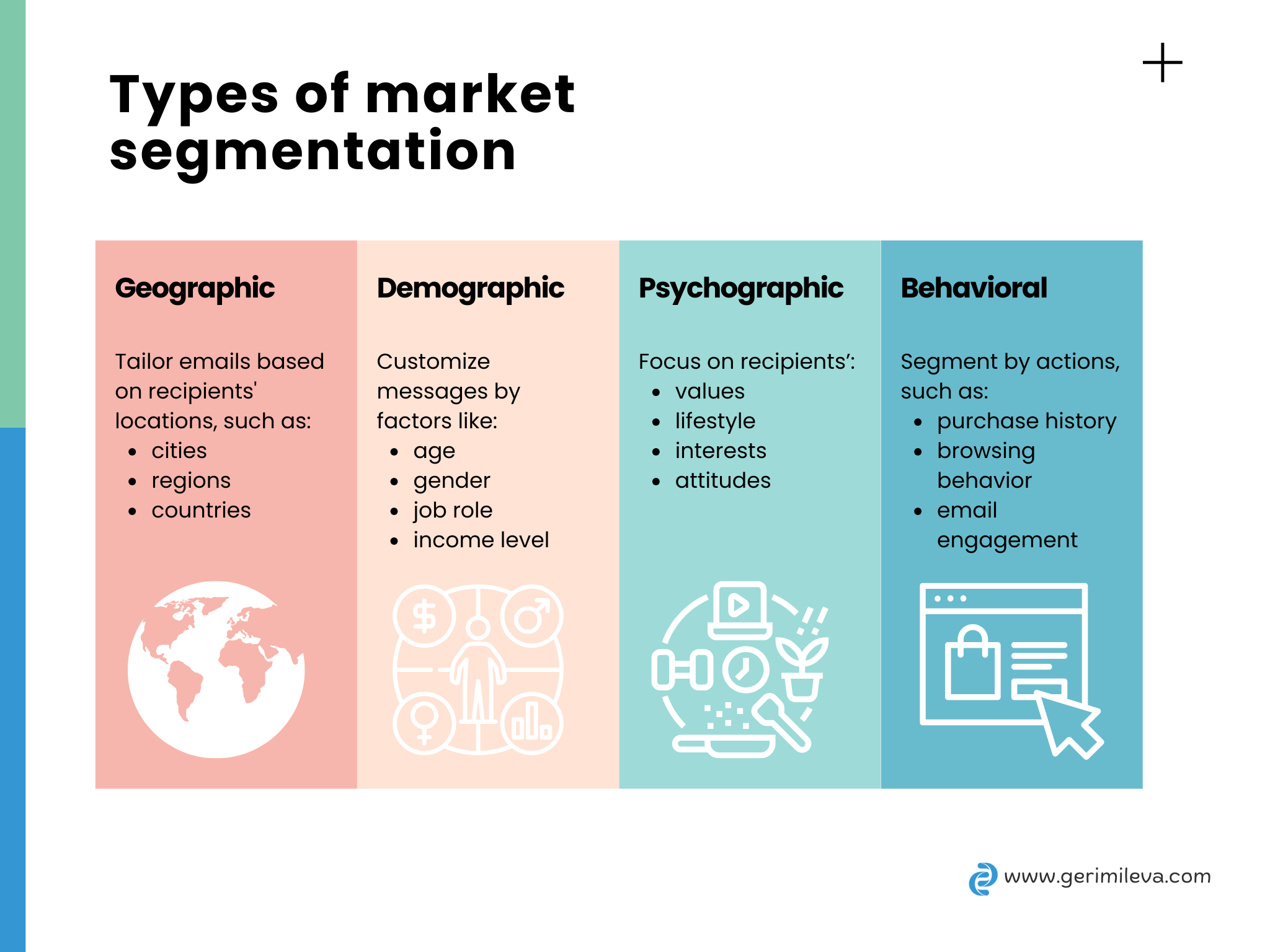
Just like other marketing strategies, you need to segment your email list to match your message to the individual’s circumstances. A guaranteed way to lose subscribers is to blast emails to your entire list regardless of their interests.
For example, a customer living in New York will be irritated to receive an email promoting a store opening in Los Angeles. Meanwhile, someone who browsed your products but left without purchasing will be thrilled to receive a promotional discount.
Most email marketing tools have built-in segmentation features, which gather subscribers’ data such as location, purchase intent, and browsing history, and use them to create email segments. You can also directly ask for other details such as family status, employment, and preferences to help you build better segments.
Another compelling reason for segmenting is email personalization, which I discuss next.
- Send personalized emails.
The fastest way to get your customer to close your email is to address them as ‘Dear Customer’ or ‘Hey there.’ Your customers’ inboxes are inundated with dozens of promotional emails. To stand out, you need to personalize.
Research by Dynamic Yield revealed that 71% of consumers are more likely to interact favorably with emails they believe are personalized. Otherwise, your email is likely to end up in the trash.
Email marketing has come a long way and you can now insert personalization tags so you can address customers by their first, last, or full names. You can also create compelling subject lines that call out the recipient’s name and speak to their interests.
In the past, inserting a recipient’s first name increased open rates by as much as 26%, but a recent study by Defau and Zauner, published in Springer, found that this tactic is no longer enough. You need to be more creative to catch your target audience’s attention.
Ways to personalize email copy
- Send triggered emails based on your subscribers’ actions. This works best for eCommerce companies that can track user behavior on their websites. Examples of triggered emails are welcome emails, abandoned cart emails, and transactional emails.
- Give customers control of what emails they want to receive, including the email frequency. They are more likely to open and respond to your emails if they receive it at the right time.
- Personalize the sender’s name. People pay attention to the “from” section and are more likely to open emails from a real person instead of a company. Consider sending emails from Matt, your CEO, rather than from a generic email like marketing@company.com. You can also include a photo of the sender to humanize your email.
- Speak naturally and directly to the reader. You can be fun and casual in your email so that it feels like receiving communication from a friend rather than a business.
- Use dynamic elements that can be configured depending on the receiver’s data. For example, an abandoned cart email can show images of the intended purchase.
- Create valuable content
Don’t send an email simply for the sake of sending one. You need to ensure that everything you send out adds value to your customers so you can maintain a good open and conversion rate. Also, if you frequently send low-value content, readers will view your email as spam and they’ll either unsubscribe or block your messages.
Some of the common types of emails you can send include:
- Welcome emails to greet new subscribers to the mailing list and set their expectations for how frequently they’ll receive an email. These email types enjoy the highest open rate and are a great opportunity to make a strong impression.
- Newsletters where you can share company news, product launches, interesting insights, and more. You can insert links here to in-depth articles that expound on the ideas presented in the newsletter. These emails follow a regular schedule and can be sent weekly, monthly, semi-monthly, etc.
- Promotional emails which communicate your latest offers and deals. You can include incentives like redeemable coupons to encourage customers to respond immediately.
- Personalized greetings sent during special occasions like birthdays or special holidays. This communicates that you care about your customers and serve as a good avenue to encourage a sale.
- Re-engagement emails where you can check on a customer who hasn’t purchased or interacted with your brand for quite a while.
Here’s one of the birthday emails I’ve received from an eyewear brand. They sent an email early to encourage me to consider their product as a gift to myself. To sweeten the deal, they also included an exclusive code for a “buy one get one” sales promotion.
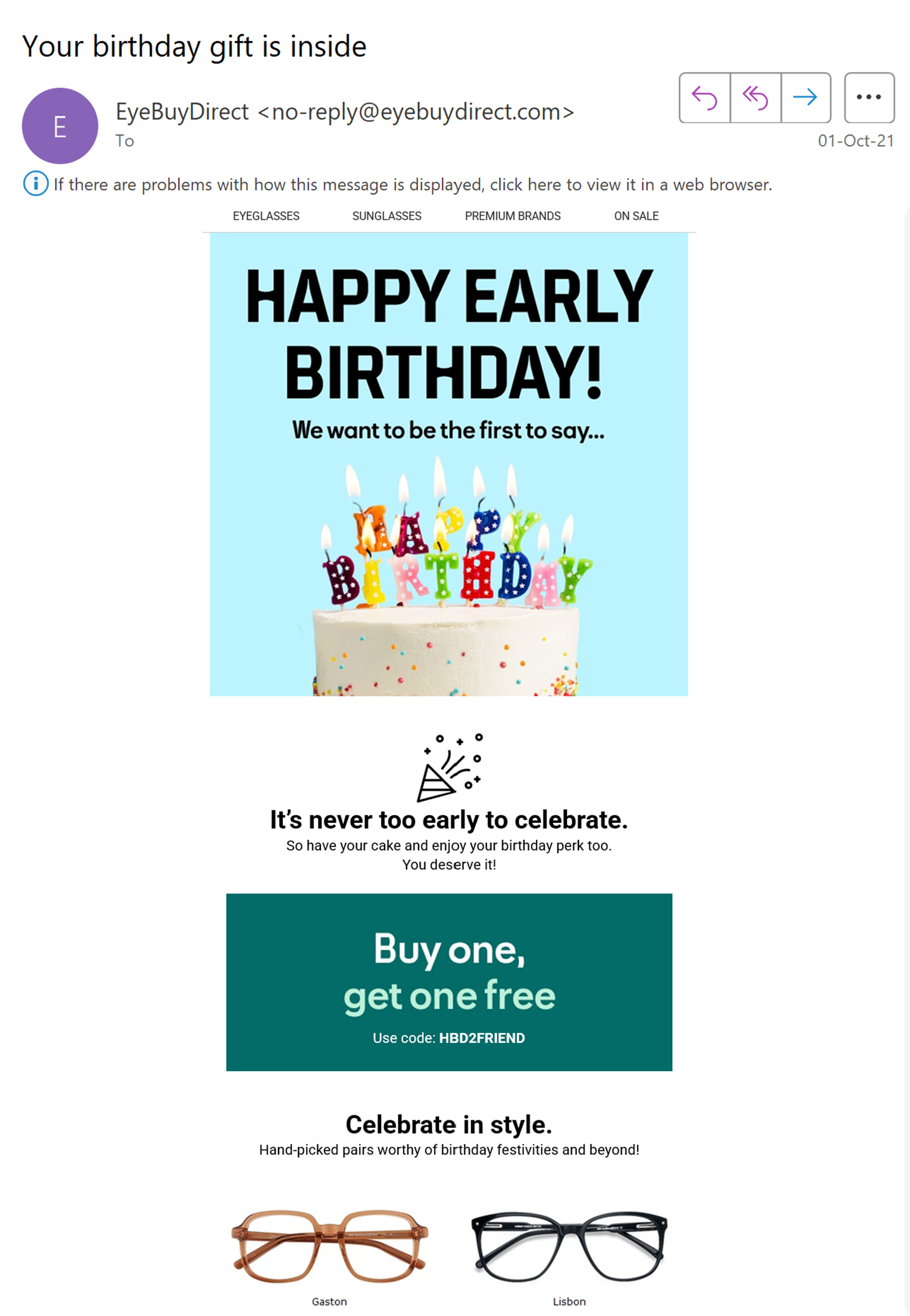
- Test and optimize.
Email marketing offers plenty of data points that you can analyze so you can continually improve your communication strategy. Several important metrics you can measure include:
- Open rate – percentage of recipients who opened your email. This indicates if your subject line and sender name are eye-catching.
- Click-through rate – percentage of recipients who click one or several links in your email. This will measure the effectiveness of your email body.
- Conversion rate – percentage of recipients who completed a desired action. This metric measures the success of your campaign since a conversion usually means a lead or sale.
- Unsubscribe rate – percentage of recipients who opt out of future emails. A high unsubscribe rate means your emails aren’t resonating with your recipients or you’re annoying them by sending too many emails.
- Bounce rate – percentage of emails not delivered to recipients’ inboxes. High bounce rates reflect outdated email lists with lots of invalid email addresses. If this isn’t resolved, it can harm your reputation and deliverability.
By leveraging these data insights, you can perform A/B tests to determine which subject lines, email copy, images, and calls-to-action work best for your market.
Just be sure to test only one element at a time with a representative audience.
- Maintain clean and updated lists.
Remove all inactive subscribers who haven’t engaged with your emails for quite a while. You can make a final effort to reactivate them by sending an email, reminding them that they’ll miss out on future emails unless they respond or click a link.
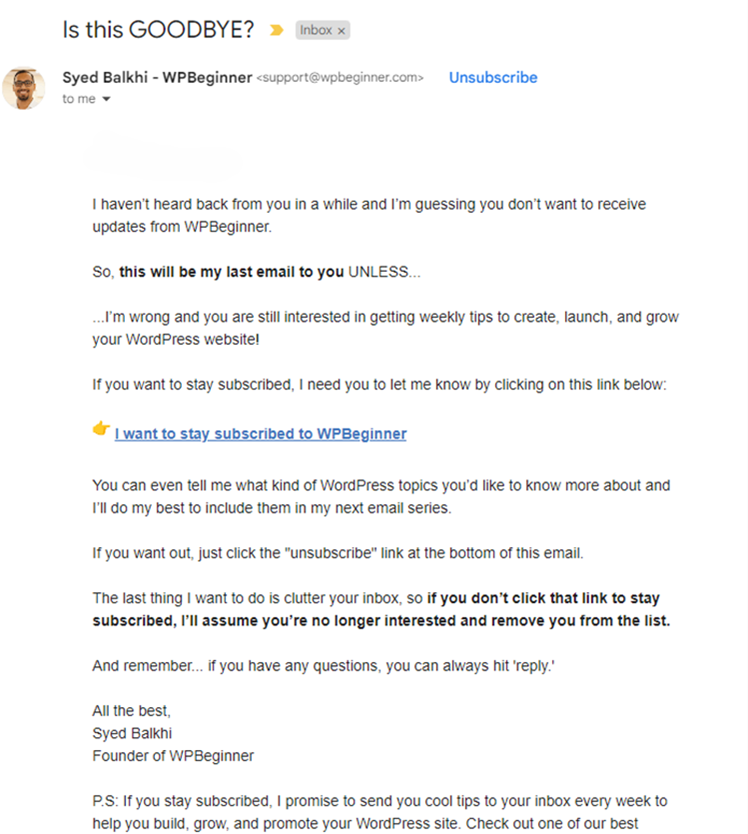
It’s also important to include the Unsubscribe and Update Preferences link at the footer of every email. This will help you remain compliant with email regulations like the CAN-SPAM Act.
- Be mobile-friendly.
Statista reveals that over 80% of emails are now opened on mobile devices. This represents nearly 100% growth over the past 10 years.
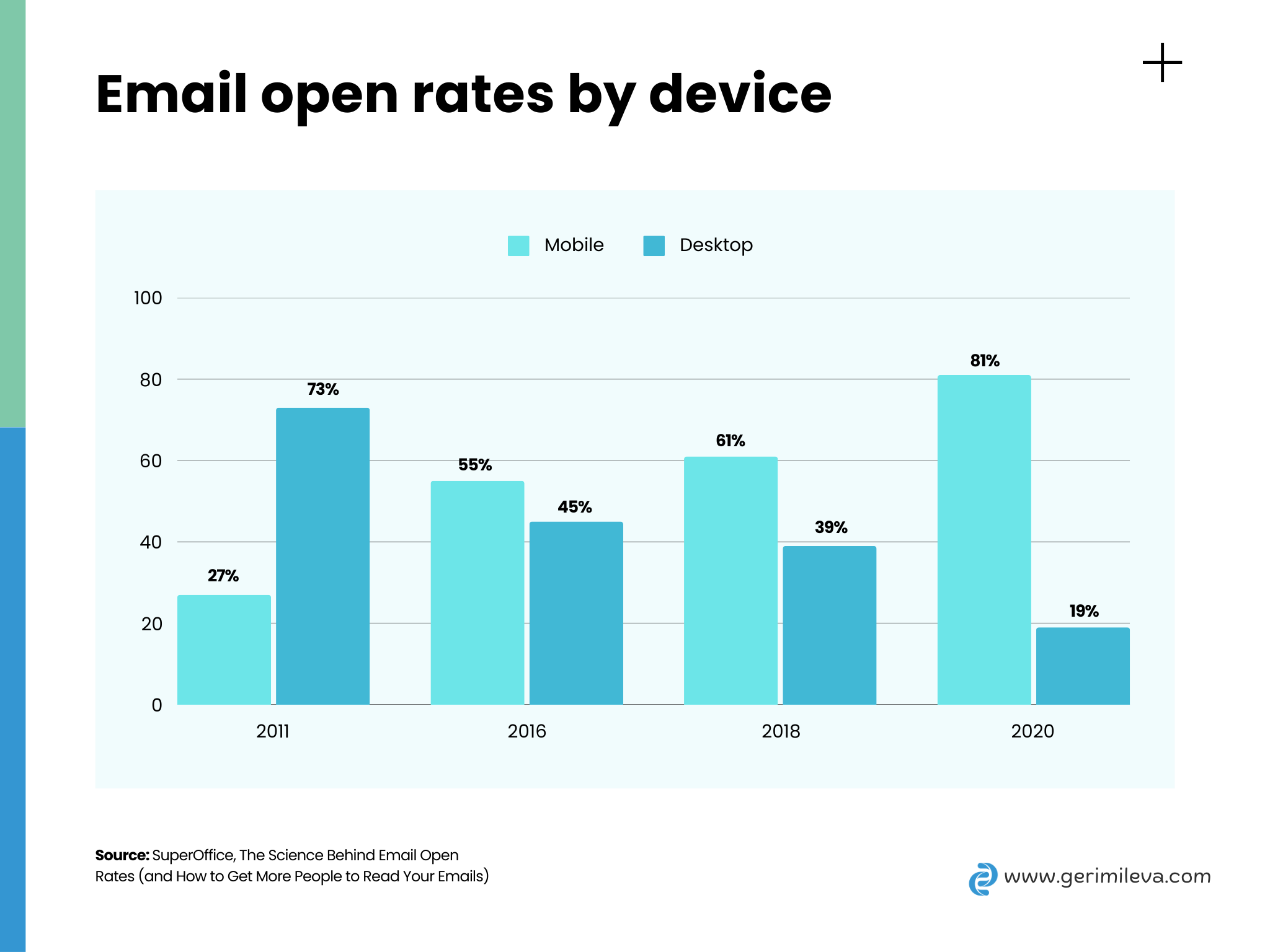
Since the vast majority of people access and read emails on their mobile devices, it’s better if you build your emails mobile first. Use short and scannable text with strategic headings.
Make sure your email looks good regardless of the device’s screen size. This is especially true if you’re inserting images.
For example, a 3 x 3 product grid may look great on your desktop screen, but can look cramped when viewed on a 6-inch smartphone screen.
Most email builders offer responsive layouts to ensure your email body looks great regardless of the device.
Best email marketing platform for small business
Most email marketing platforms charge different rates based on the size of your email list. They also offer a limited free plan, or a short free trial, so you can test their features before investing in the tool.
| Tool | Lowest Paid Plan | Free Plan Inclusions |
| Mailchimp | $13 per month for 500 contacts 10X contacts monthly email send limit 3 user seats | Max of 500 contacts 1,000/month or 500/day monthly email send limit 1 user |
| ConvertKit | $15 per month for 300 subscribers Unlimited visual automation Unlimited email sequence 2 users | Max of 10,000 subscribers 1 basic visual automation 1 user 1 email sequence |
| MailerLite | $9 per month for 500 subscribers Unlimited monthly email sends 3 users | Max of 1,000 subscribers 12,000 monthly email send limit 1 user |
| GetResponse | $19 per month for 1,000 subscribers Unlimited monthly email sends 1 user | Only free trial available |
| MooSend | $9 per month for 500 subscribers Unlimited monthly email sends 5 team members | Only free trial available |
Ultimately, it comes down to preference. Some tools are easier to use than others or have more extensive support channels. I suggest starting with the free plans or free trials to find the best tool for your business.
Social media copywriting strategies for small businesses
As a small business owner with a small team and a limited budget, you have to nail your social media copywriting right from the start. You can’t afford to waste precious time and resources on copy and social media strategies that don’t work for your audience.
Take a deep breath. Here’s your guide for mastering social media copywriting for major platforms today.
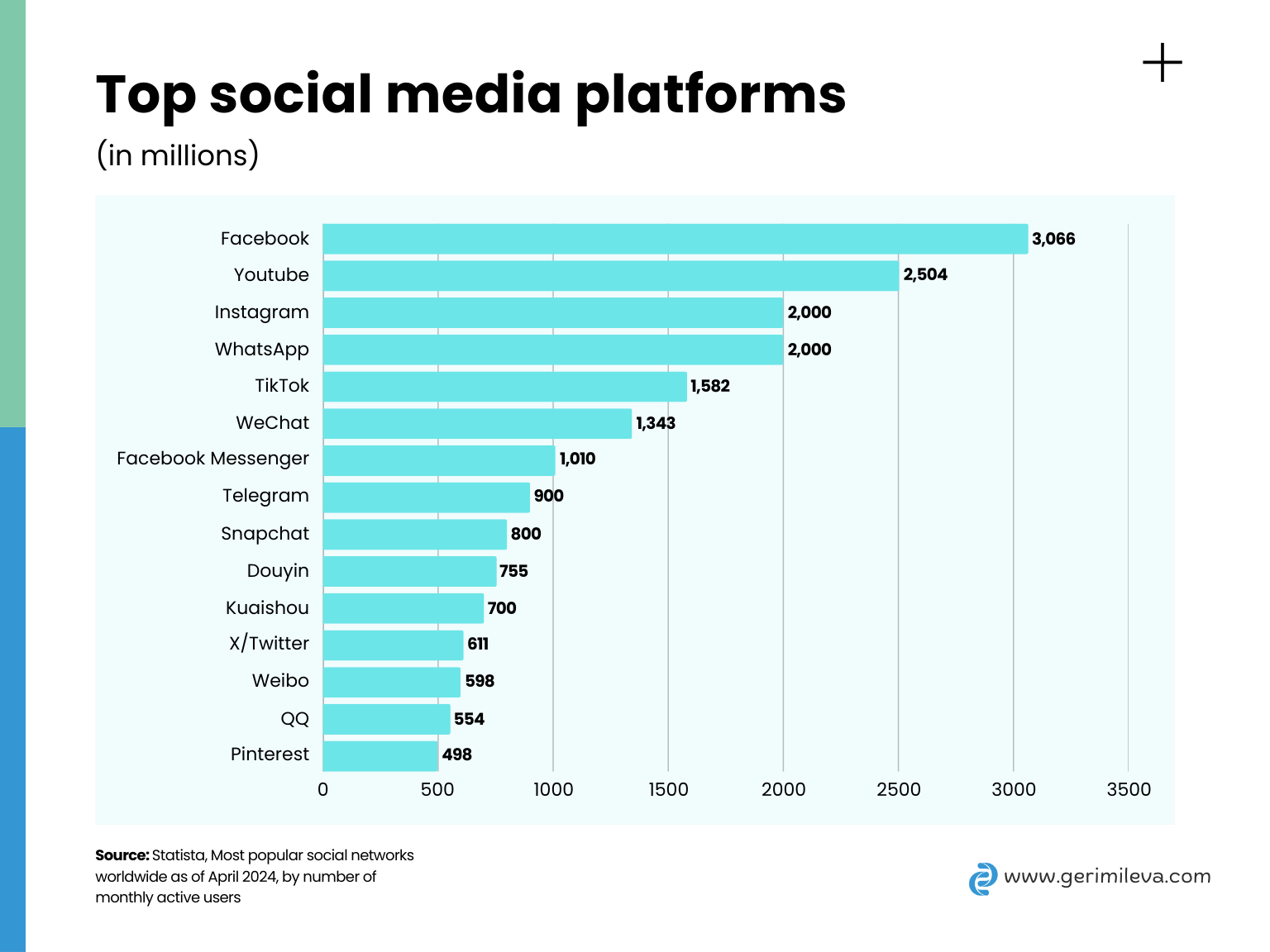
The sites above are the top social media platforms used by millions of people worldwide (source: Statista). You don’t have to be active on all these platforms. Only choose two or three to get started then once you’ve grown your audience and mastered them, then add another platform and build your brand on it.
| Platform | Best content types | How to increase engagement |
| Facebook Active Users: 3+ billion monthly Audience: Broad demographic, mostly Millennials Key Features:
|
|
|
| YouTube Active Users: 2.5+ billion monthly Audience: Diverse user base Key Features:
|
|
|
| WhatsApp Active Users: 2 billion monthly Audience: Global reach, widely used for personal communication Key Features:
|
|
|
| Instagram Active Users: 2 billion monthly Audience: Ages 18-34 Key Features:
|
|
|
| TikTok Active Users: 1.5 billion monthly Audience: Ages 24 and younger Key Features:
|
|
|
| X (formerly Twitter) Active Users: 600 million monthly Audience: Diverse, mostly focusing on news, politics, and real-time discussions Key Features:
|
|
|
| LinkedIn Active Users: 900+ million monthly Audience: Professionals, business owners, recruiters, job seekers Key Features:
|
|
|
| Reddit Active Users: 400+ million monthly Audience: Mostly male ages 18-49 Key Features:
|
|
|
Social media marketing guide by platform: Content types, features, and engagement tactics
Useful tips for small businesses to maintain successful social media presence
- Be consistent.
Regardless of the social media platform, consistency is always the key for continued success. Even if you happen to make one or two posts viral, you can’t stop. You need to post regularly so the algorithm boosts your posts and more users see them.
- Don’t stretch yourself thin.
Focus your efforts on a few strategic platforms and create high-quality posts that match the platform’s requirements. Ensure you can respond to comments and messages and keep the posts consistent. Maintaining an active social media presence is a full-time job which can get overwhelming when you have too many platforms and only a small team.
- Be authentic with your content.
Social media users value authenticity and transparency. If they believe your feeds are too curated or inauthentic, then they’ll skip it and you’ll lose your audience. Don’t be afraid to share both successes and challenges (with lessons learned) so you can build genuine connections with your audience.
- Use the right tools.
You can automate and streamline many social media functions with the help of dedicated tools. Invest in these apps and witness your efficiency, output, and productivity soar.
- Understand the platform by scrolling through its content.
When you know how each platform actually works, you’ll get content inspirations naturally and it’d be easy to create posts for your audience. So scroll through social media and consume content. Just be sure to control your research time so you don’t end up scrolling mindlessly.
Seasonal and holiday copywriting
The holidays and various local seasons are great times to boost sales and get in front of an audience.
Everyone is in good moods, lifted spirits, and more than eager to buy. But with brands doing the same things, a well-thought copy gives you an extra advantage.
Check out these tips to create great holiday and seasonal copy:
- Plan in advance
It’s easy to anticipate holidays since they happen generally in the same months or seasons. As such, there’s no excuse not to plan ahead for them.
You can even create and schedule content in advance so it doesn’t add to the stress of running a small business during a busy season.
When creating your content calendar, plot any upcoming holidays, local festivities, and seasonal trends. Starting early gives you more time to revise and ensure efficient execution when the day comes.
- Understand your goal
The holidays are loud and noisy enough that you shouldn’t add unnecessary clutter just to push a sale. Before writing any holiday copy, determine your goal first. Do you want to inspire, encourage, or educate? Are you driving sales or attracting traffic to your site?
Having a clear goal will help you stay grounded as you write holiday copy. Even with holiday words and themes woven to your copy, they won’t confuse your original message and readers will still know what you want them to do.

The copy above targets readers who waited until the last minute to get a Valentine’s gift. It addresses the pain point of the gift not arriving in time and gives users a final chance to make their special someone happy by promising a timely delivery.
Despite the numerous Valentine’s Day references, the message is clear and anyone who needs last-minute gifts will instantly get it.
- Use a swipe file
If you need a burst of inspiration, especially when writing copy for a holiday event in advance, then a swipe file will jumpstart your memory. A swipe file is a collection of copy you like that inspires you or stimulates ideas.
You can also make a negative swipe file which contains all the examples you don’t want in your copy. You can create a swipe file using note-taking apps, file-sharing folders, or a project management board.
Remember that you’re not supposed to copy a swipe file. You’re supposed to take inspiration from these examples so you don’t stare at a blank page when you’re writing.
- Insert a compelling image and use fewer words
As mentioned previously, visual elements elevate your copy to greater heights. This is particularly true for holiday copy where a single appropriate image can speak more than words. Sometimes, you don’t have to incorporate any holiday-themed words, since the image creates the holiday spirit.

The copy above doesn’t need a lot of words to communicate its message. It cleverly used multiple items, and arranged them as a Christmas tree to tell readers that they offer great gifts.
- Incorporate seasonal keywords
During the holidays, you’ll see a surge in traffic for seasonal keywords. People are looking for “best gifts for husbands” or “top romantic spots for Valentine’s date” and so forth. Using these keywords on your copy will help your brand climb the search results.
For social media posts, you can incorporate holiday-themed hashtags and any trending or official event hashtags so your posts reach a broader audience.
- Build a theme or atmosphere
When writing holiday copy, you want to build an atmosphere and immerse your readers in the occasion. Storytelling plays a huge part in creating this atmosphere, and I’ll discuss more of that later.
You can create a festive atmosphere by using words that capture the spirit of the season. For example, incorporating terms like trick-or-treat, mystery, and costume can help set the mood for a spooky Halloween.
- Create a sense of urgency
Holidays offer perfect windows of opportunity to reach your target market because they happen within a fixed period. For instance, you can set a definite deadline for that holiday sale and compel readers to take action before the period ends.
Notice how Whistlefish takes advantage of the Easter season to give out a promotional discount and make it witty by incorporating holiday word references. Since Easter is a fixed season, the promotion also has a clear beginning and end.
The role of storytelling in small business copywriting
Everyone loves a good story. Multiple studies show that buyers make purchase decisions due to emotions, not logic. For instance, a recent study showed the power of emotional advertising in triggering impulsive and irrational buying decisions leading to positive purchase decisions.
Good storytelling elicits a person’s emotions so they are compelled to buy or follow your suggested action.
Why storytelling is powerful
Since childhood, we’ve been conditioned to listen to stories. And as we grow older, stories continue to captivate us. Storytelling is fundamental to human communication, and when it comes to small business copywriting, stories form a bridge between you and your customers.
- Creates emotional connections
Stories bring your brand to life by showcasing the people, values, and emotions behind it. When we tell stories, we invite people into our lives. The same is true for businesses. Stories allow customers to see the human side of your business.
Furthermore, stories create stronger bonds by driving deeper engagement. This happens because great storytelling elicits a person’s emotions, such as happiness, nostalgia, or inspiration.
Coca-Cola’s marketing strategy has always evoked emotions of happiness, nostalgia, and positivity instead of focusing on its beverages. The brand wants people to associate positive emotions with their products, and they achieve this brilliantly with the help of great storytelling techniques.
- Builds trust and credibility
Today’s market values authenticity and transparency in brands. They want a brand that makes honest claims and avoids exaggerating benefits.
Sharing real stories about your brand’s journey, challenges, and successes builds trust and authenticity. When you’re open about your experiences, customers are more likely to trust you.
Furthermore, customers can relate to your brand more easily if they identify themselves in your stories. For example, if you share how you’ve grown your business from the ground up, individuals who have similar experiences will understand your perspective.
- Differentiates the brand
There can be dozens of flower shops in your area or hundreds of online pet food brands, but there can only be one company that went through your unique story. Every company has a unique founding story, mission, or community impact.
Take advantage of these unique traits to differentiate your brand from competitors. Stories are easier to remember than facts or statistics, and a compelling brand story will stick in your customers’ minds long after they’ve encountered your business.
How to use storytelling effectively for small business copywriting
- Share your origin story
Explain the inspiration for starting your business. You can tell them how your grandmother’s recipe inspired you to put up a bakery or how you turned your hobby into an income-generating business.
Source: https://www.drinkhydrant.com/pages/about
In the case of Hydrant, they shared how the founders met and what motivated them to start the business. The About Page goes on to share the customers’ pain points and the answer the brand provides. It also doesn’t miss a beat in encouraging visitors to sign up for a subscription.
Your customers love to hear how you got into business and how you overcame the obstacles along the way. You can highlight the challenges that shaped your business to be where it is now. These kinds of stories demonstrate resilience and determination, which are qualities customers admire.
Source: https://www.thesill.com/pages/about-us
The Sill uses the first-person point of view to share the brand’s story from the founder’s perspective. It appeals to emotions as the copy shares how she discovered plants as a way to cure homesickness and elevate her bleak space.
- Feature customer stories
Customers also love to hear stories from other customers about how your brand has helped improve their lives. You can ask customers to submit UGC or request testimonials and feature them on your website or socials. You can even capture the stories on video for a more compelling narrative.
Source: https://www.eschlandscaping.com/client-testimonials
Esch Landscaping has a dedicated page for customer testimonials where they combine client videos with typed customer testimonials. Meanwhile, construction firm Bluebeam features case studies to convert their audience to customers.
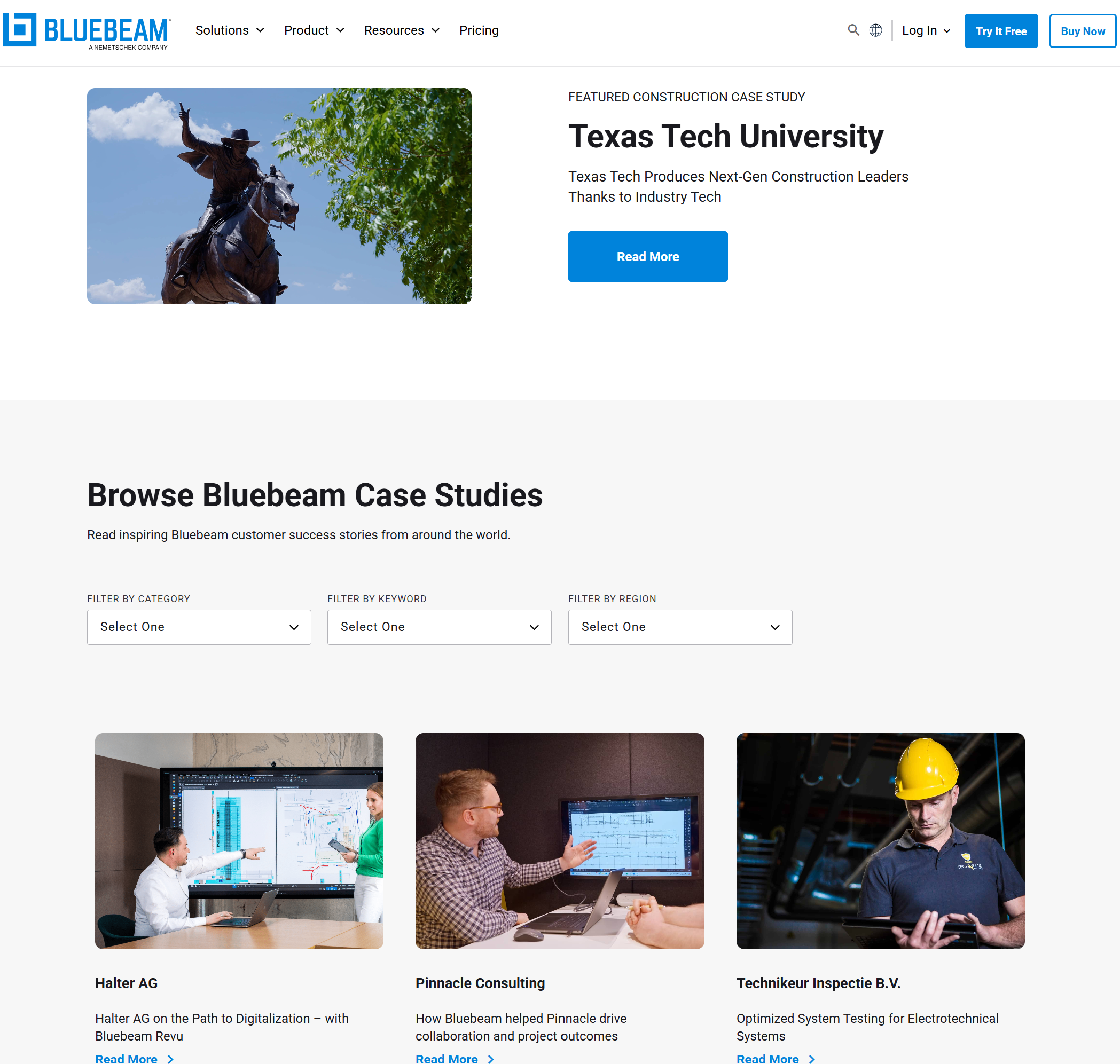
Source: https://www.bluebeam.com/customers/
- Highlight your team
Introducing your team shows the faces behind the company and humanizes the brand. Customers will know that they’re talking to actual people whose backgrounds, likes, and dislikes are something they can relate to.
You can have a short Meet the Team page or post on social media where you highlight the individual’s achievements and mention a random fun fact. You can also create employee spotlights where you regularly feature an employee and talk about their favorite projects, why they joined the company, and what they love about the job.
Source: https://www.cedar.com/about-us/
Cedar showcases its top management with detailed bios for the founders and short descriptions for the other team members.
You can also talk about the company’s culture and include testimonials from employees. Clearcover uses interactive chapter markers to help readers jump to different sections of its origin story. Each chapter is accompanied by quotes from employees about their work experience with the company.
Source: https://clearcover.com/culture/
- Showcase your community impact
If you’re involved in any local cause or committed to sustainable practices, you should tell your customers about it. According to a Sprout Social survey, 72% of consumers want brands to make positive contributions to society.
Talking about how you’re making an impact on the community or environment makes customers feel that they’re also doing their part by patronizing your products.
Source: https://www.puravidabracelets.com/pages/our-impact
Pura Vida shares its story and community impact on a dedicated page on its website. The brand wants customers to know the reason why they do business and how purchasing their products contributes to a better society.
Another brand, Bombas, goes further in sharing how they accomplish their mission of “One Purchase = One Donated” and encourages customers to download an annual impact report.
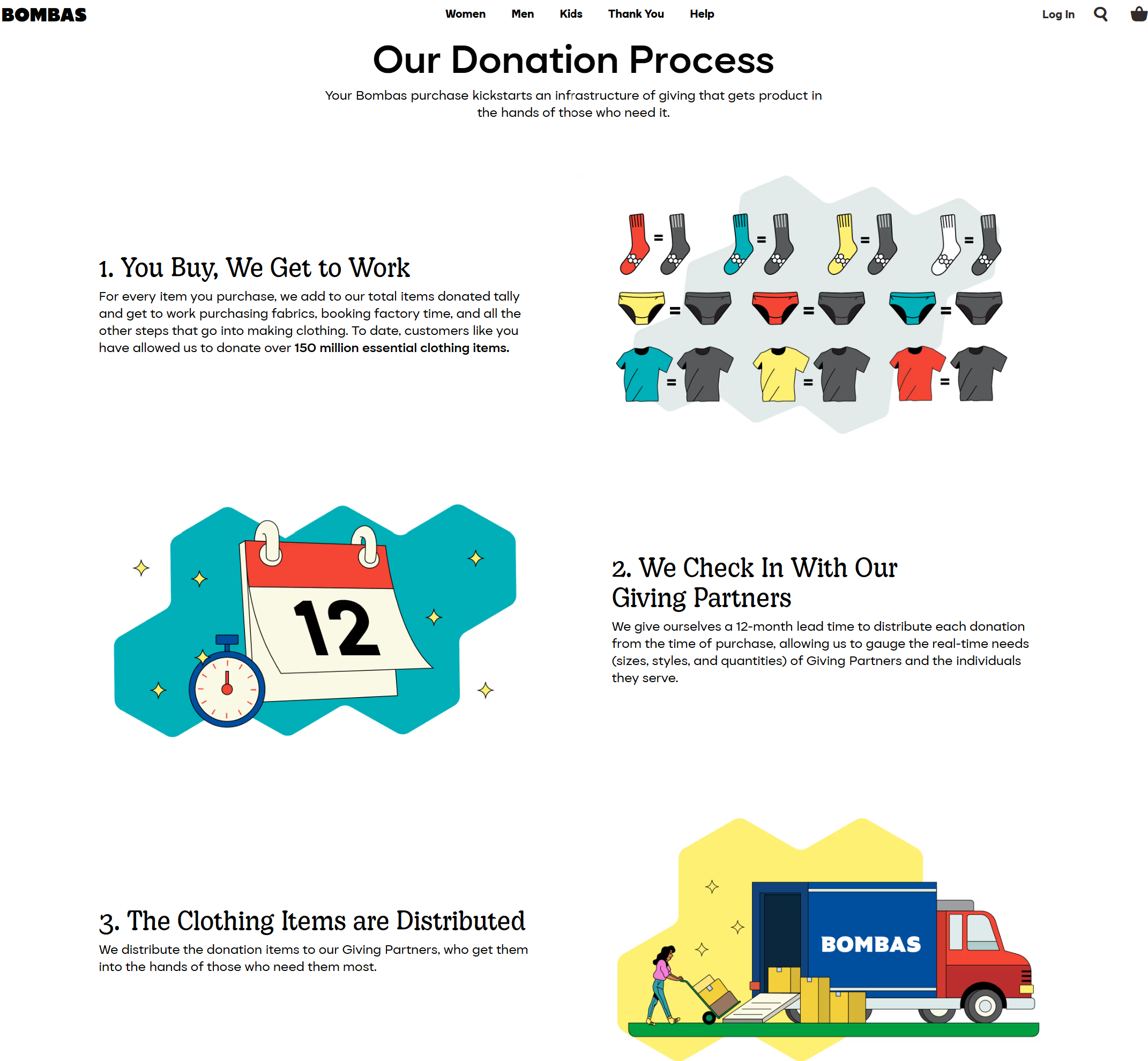
Source: https://shop.bombas.com/pages/giving-back
- Create narratives around your products
You can get more people to buy your products and services if you tell them the story behind them. For instance, you can share how your famous apple pie was created from generations of hand-me-down recipes.
You can also weave a narrative about your products, such as telling customers how your single-origin coffee is the perfect partner to their morning routine.

Source: https://queengarnet.com/research
Queen Garnet educates customers about the benefits of using their plums and creates a narrative about its health benefits backed by scientific studies. This is a great strategy for brands to convince customers of their unconventional products or solutions.
- Use storytelling across channels
You can share bite-sized stories on social media, just make sure to match each platform’s preferred content. For instance, you can create short behind-the-scenes videos on TikTok or a product story image carousel on Instagram.
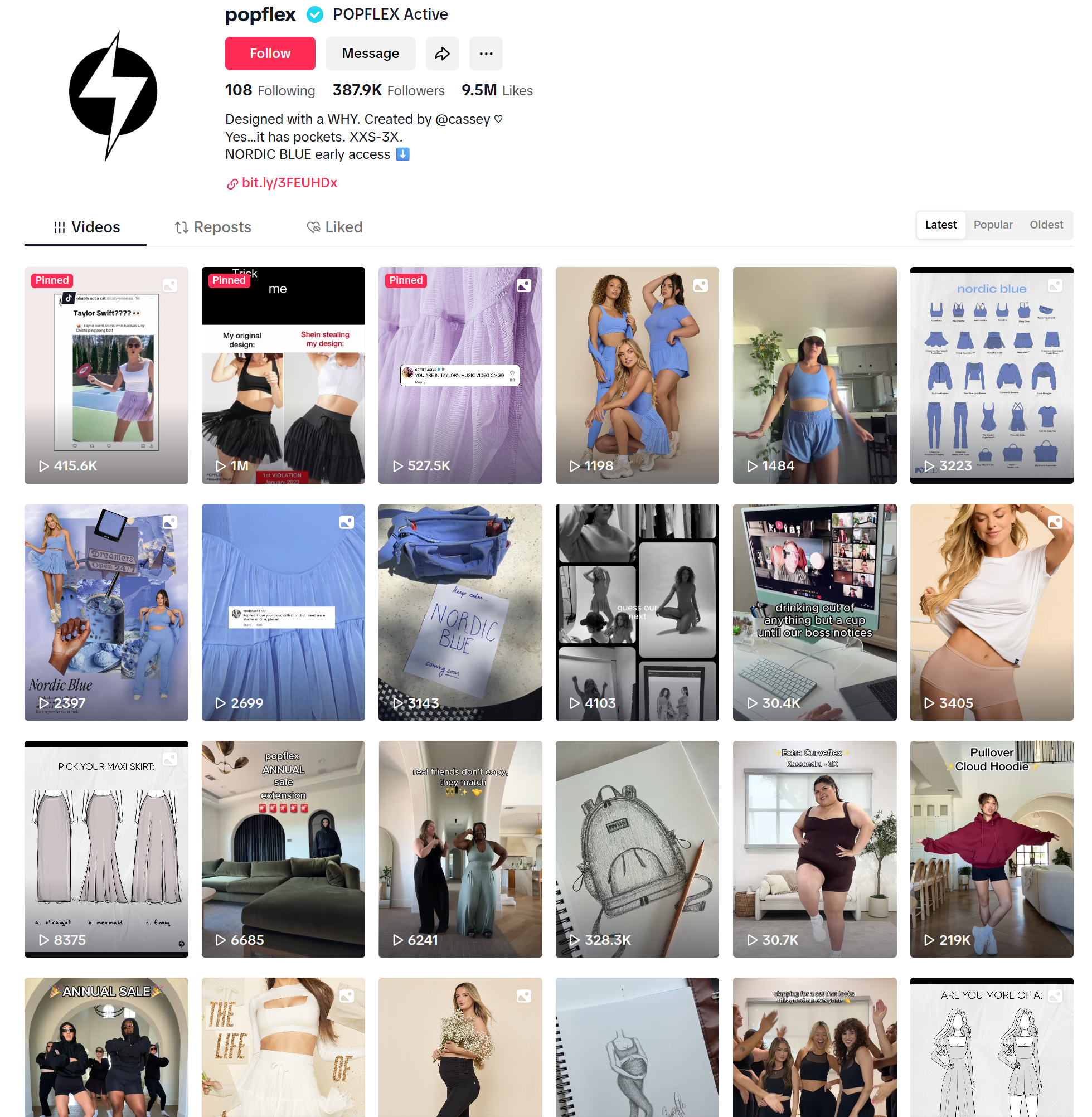
Source: https://www.tiktok.com/@popflexactive
Popflex, an activewear brand, uses creative storytelling to grow its TikTok fanbase. They provide behind-the-scenes insights into their products to show followers how each item is made. The entertaining and highly engaging content boosts follower count and loyalty.
Finding and working with copywriting talent
If you’re a busy small business owner, getting all the help you need to run your business is a lifesaver. That’s why, when it comes to writing great copy, you should work with the best professional copywriters.
In this section, I discuss the different types of copywriters and where you can find them. I also provide a guide to help you decide if you can write copy on your own or hire someone else to do it.
Types of copywriters
Not all copywriters are the same. Copywriting is a broad skill that requires specialization for someone to be effective. When looking for copywriting services for small businesses, you should find the exact copywriter that matches your needs.
B2B vs. B2C copywriter
The main difference between a B2B and B2C copywriter is the type of audience they talk to. A B2B (business-to-business) copywriter has expertise in communicating with business decision makers, while a B2C (business-to-customer) copywriter knows how to talk directly to customers.
Talking to business owners and direct customers requires different skill sets because these two groups have different motivations for purchasing. Regardless, it’s important to remember that there’s a human on the other side, and the general principles of copywriting I shared above apply to both groups.
Direct response/conversion vs. brand messaging/awareness
Copywriters can also differ depending on the goal of your copy. Direct response copywriters are skilled at ensuring your copy converts your readers to take a specific action, like downloading a lead magnet or making a purchase.
They are your go-to person when writing sales letters, time-sensitive promotional offers, and sales pages. They are skilled at persuasion and understand the buying psyche of your target audience.
Meanwhile, brand messaging copywriters write copy that creates brand awareness for your products and services. They are skilled at establishing authority for your brand and building trust with your audience.
Their goal is to educate your customers through blogs, email newsletters, social media posts, videos, case studies, e-books, and more.
SEO copywriters
If your goal is to rank your site, then your online content must be designed to attract organic traffic. SEO copywriters accomplish this by strategically adding the right keywords throughout your landing pages, blog posts, and other online content.
They know how to write persuasive and educational content that can be found online. To scale your content strategy effectively, it’s often smart to hire an SEO writer.
Technical copywriters
Businesses with highly complex and technical products and services need professional copywriting services from technical copywriters to ensure customers can relate to their brands. You need someone who can translate complex concepts into layman’s terms.
For example, you’re a renewable energy systems installer selling solar panels. You want to educate your customers on how solar panels reduce energy bills. If you provide them with technical terms, no matter how accurate your explanation is, it will go over their heads, and you’d fail to educate them.
A technical copywriter will distill this technical information into words your customers will understand without losing accuracy.
Creative copywriters
Some copy, like your About Page or Brand Identity, benefits from creatively crafted stories that evoke emotional responses. Creative copywriters are adept at this copywriting form. They can spin words that elicit the right emotions and create a memorable experience for your customers.
The types of copywriters I mentioned here aren’t mutually exclusive. Depending on your goals, you may need a creative B2C copywriter or a technical B2B copywriter. If you want to increase eBook downloads for your personal insurance agency, you’d need a direct response B2C copywriter.
When deciding which type of copywriter to hire, you should first determine your goal so you can find the right fit.
When to hire or DIY small business copywriting
As a small business owner, you want to maximize your resources as much as possible. You might be wondering, “Is it worth it to hire a copywriter?” After all, you’re the one who knows your brand better than anyone.
When you’re just starting your business and you haven’t discovered your customers yet, writing your own copy might be ideal. It won’t be perfect, but you’ll start somewhere. Eventually, you’ll have to change your copy to fit your discoveries about your audience.
But when is hiring professional copywriting services or doing your own copywriting the right move? Here’s a guide to help you decide:
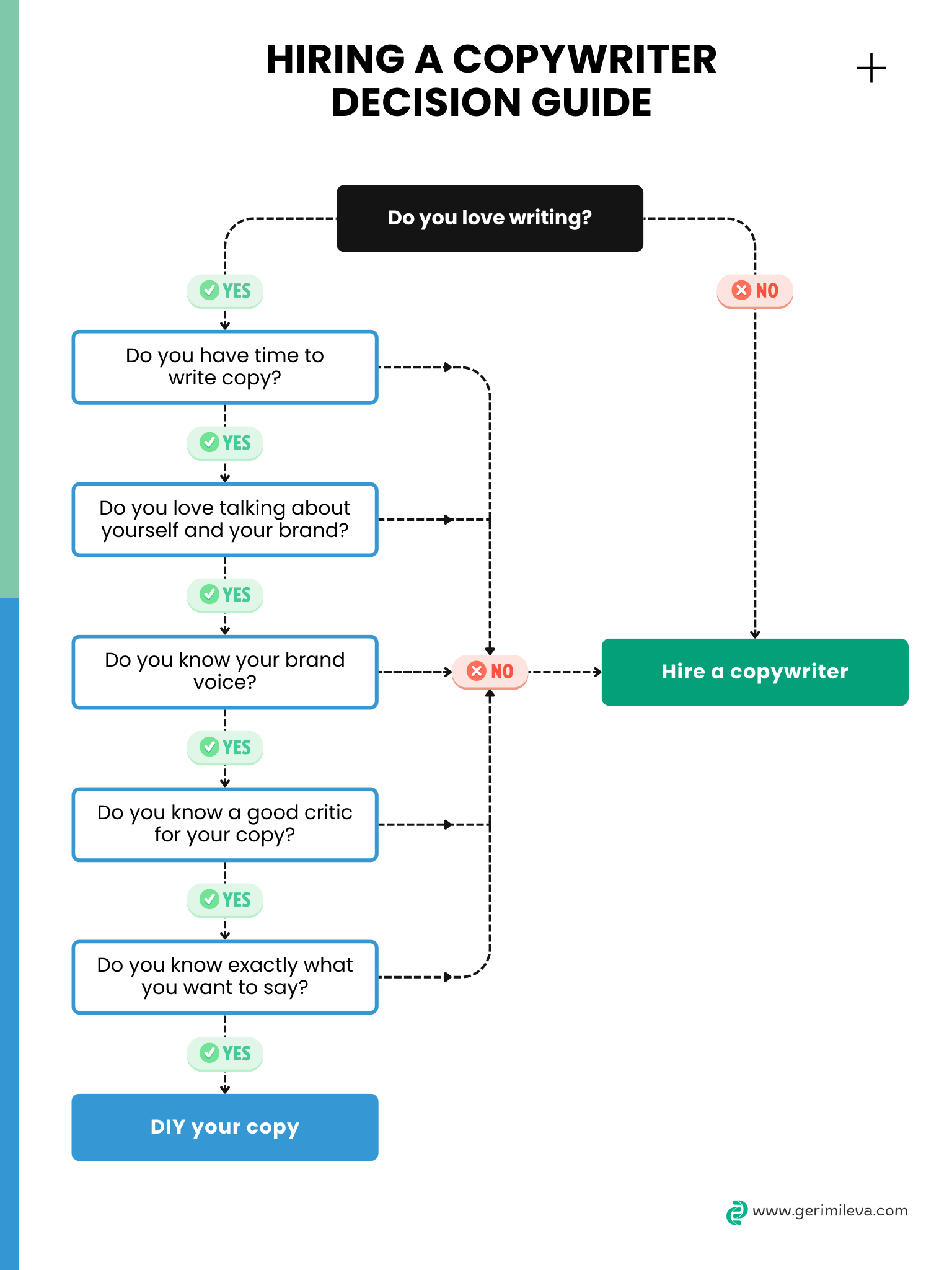
Copywriters are more than just wordsmiths. They can help clarify your brand voice, improve your SEO, and persuade your audience.
They research your audience, determine the best words to convey the right information quickly and accurately, and craft content that will benefit your business for years to come.
Good copywriters will pay for themselves many times over once you start enjoying the results of great copy.
Where to look for great small business copywriters
There are three ways to work with a copywriter:
- Work with a freelancer
- Engage a marketing agency
- Hire an internal copywriter
Here are the pros and cons of these options:
| Pros | Cons | |
| Freelancer Ideal for small businesses with limited budgets or those who need project-based work Find them on:
|
|
|
| Marketing agency Ideal if you need a broader range of marketing services or a more comprehensive marketing strategy Find them on:
|
|
|
| Internal copywriter Ideal if you need consistent work and prefer someone who knows your brand deeply Find them on:
|
|
|
Tips for finding and working with professional copywriting services
- Set clear goals on what you want to achieve with your copy. This will help you find the right copywriter and also help them deliver excellent work.
- Research average copywriting rates to find what’s reasonable within your budget. While it’s important to stay within budget, copywriting is an investment, and getting the cheapest rates might lead to poor results. Learn to balance value and quality.
- If budget is a constraint, you can ask for payment plans, which most freelancers and agencies offer.
- If you’re having difficulties finding or vetting the right copywriters, you can ask for referrals from your network.
- Always check the references or portfolio of a potential copywriter. You can also ask them to complete a test so you can gauge their expertise and brand fit.
- Share your brand guidelines, such as tone of voice, key messaging, and style preferences. The more information you share with your copywriter, the more you ensure they produce a winning output.
- Provide your copywriters with ongoing constructive feedback, especially regarding the results of their copy. This helps them fine-tune their work and consistently deliver output that meets your needs.
- If you find a copywriter who delivers great work, consider offering them more projects or engaging them on a retainer for your business.
Promoting collaborations and partnerships
Brand partnerships and collaborations are proven strategies to increase brand awareness and boost sales. When done right, you’ll tap into a new audience that you wouldn’t reach otherwise.
One of the most celebrated brand partnerships is that of Red Bull and GoPro. Both are brands that appeal to action-packed and adventurous consumers. To tap into each other’s audience, they launched campaigns where GoPro equipped athletes and adventurers with their cameras, while Red Bull hosted events where the cameras could be used.
The co-marketing partnership, which began in 2016, boosted GoPro’s brand credibility and Red Bull’s sales. To promote this collaboration, the brands focused on their synergistic values, which audiences appreciated.
As a small business owner, you can achieve the same success. Here’s what large brands have taught us for successful brand collaborations.
- Find the right partner
There are two ways to work with other brands: co-marketing and co-branding. Co-marketing is similar to what GoPro and Red Bull did. They promoted their own products in a joint marketing campaign that was aimed at each brand’s audience.
Co-branding fuses two brands together. You’d create a new product or service with combined logos, typefaces, colors, and other branding elements. This is what Taco Bell and Doritos achieved when they launched a new taco with a shell made from the same ingredients as Doritos chips.
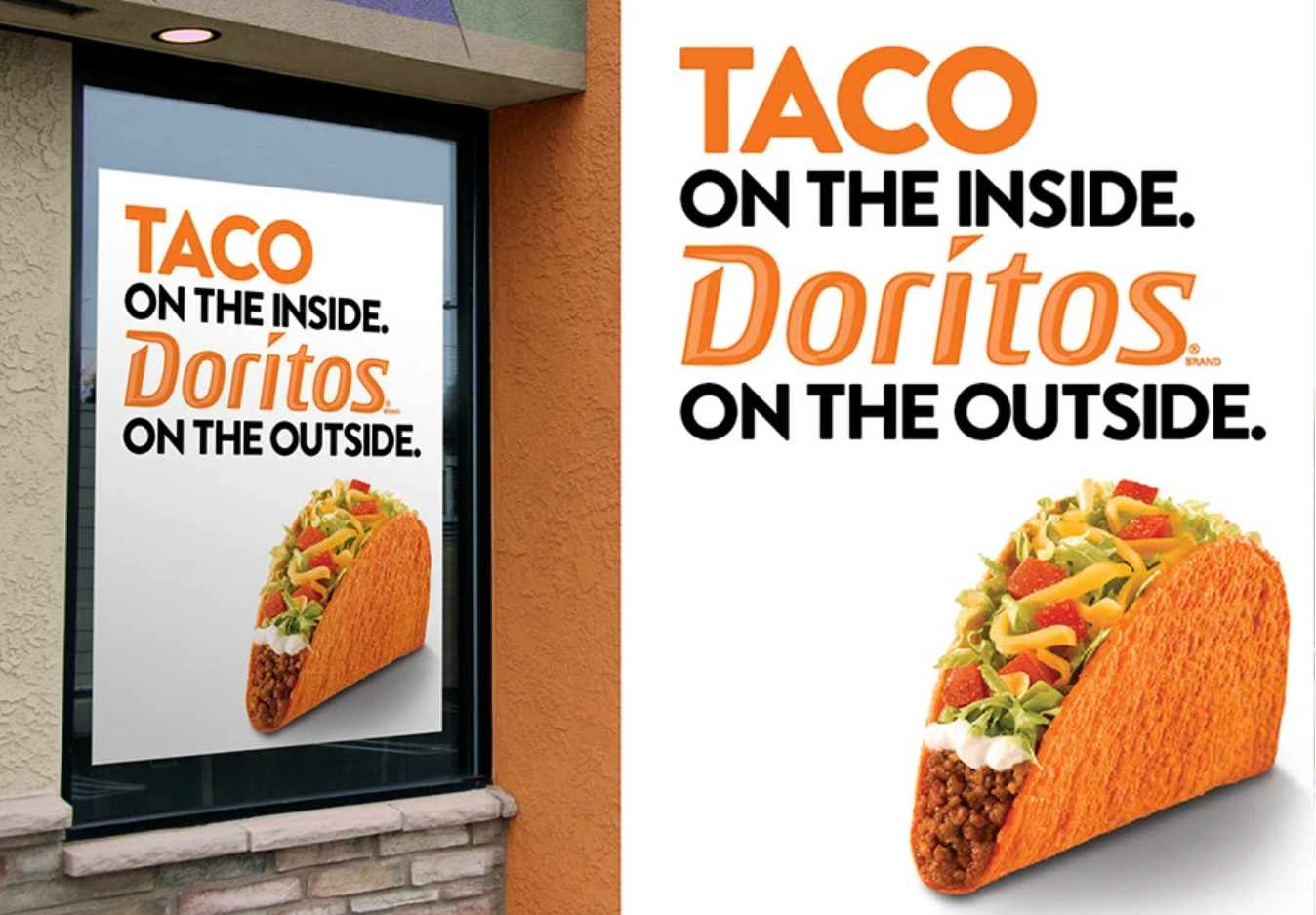
Source: https://www.behance.net/gallery/3755410/Taco-Bells-Doritos-Locos-Tacos-Campaign-Design
It sold more than a billion units in 2012 when it was first introduced, and to this day, Taco Bell keeps a Locos Tacos Supreme ® item made with different Doritos shell flavors on its menu.
When looking for a collaboration partner, you need a brand that complements your existing brand proposition and targets the same customers. For example, if you’re a local bakery, you may partner with a nearby coffee shop or a catering company and create co-branded pastries.
You can find these partners by attending local business networking events, trade shows, or chamber of commerce meetings. You can also check the local business directory, your referral networks, and trade associations.
- Highlight your mutual benefits
Appeal to each other’s audiences by showing them how your brand addresses their needs. Work together on a coordinated and clear communication strategy that each brand will promote on its social media.
As small business owners, this is also a chance to learn from each other. You can combine marketing teams for the launch, with each team championing their brand’s purpose.
Ensure there’s open communication between the teams and both parties are comfortable discussing their expectations and concerns.
Align your goals from the beginning and create a value proposition that shows the strength of both brands. Some of the worst brand partnerships happened because the brands failed to find a synergy that appealed to audiences.
- Plan for a hyped product drop
In order to maximize your brand partnerships, you should craft a product drop that generates excitement and drives anticipation among your customers. Reinforce that this isn’t an ordinary product launch, but a special (and possibly limited edition) launch.
Choose a release date that coincides with your audience’s behavior, such as a holiday. You can tease the product early on social media and email newsletters by revealing just the right information to pique their curiosity.
Take advantage of countdown timers on your website and branded hashtag campaigns that customers can use as they wait for your product.
However, remember to prepare your website and stores for any potential influx of customers due to a successful tease.
When The North Face and Gucci teased their partnership, the teaser video garnered over 5 million views prior to the products’ release. And since the partnership was teased on social media and by prominent influencers, it came as no surprise that the Gucci website where the apparel was exclusively sold crashed during the launch.
Hyping a product drop is a great way to drive interest in your products, but ensure that your systems can support the influx of customers.
- Set a time limit
The most successful brand partnerships use the time element to their advantage. For example, McDonald’s partnered with Travis Scott to launch the Travis Scott Meal and McDonald’s x Cactus Jack limited-edition merchandise.
The promotion ran for less than a month but resulted in a significant sales boost for McDonald’s and Cactus Jack, Travis Scott’s merchandise brand.
The partnership was so popular that McDonald’s experienced a shortage of ingredients, while the merchandise sold out on the website and can now be found on secondary auction sites, commanding higher prices.
Crisis communication and reputation management
We can’t please all of our customers, no matter how hard we try to get everything perfect. There will always be moments when someone posts a bad review or something unexpected happens, leading to a crisis.
But even if we can’t prevent these situations, we can always control how we react. And that includes proper communication using effective small business copywriting. I’ve provided several practical strategies and templates to help you respond appropriately and regain your customers.
How to respond to negative feedback
The collaborative nature of the internet makes it easy for disgruntled customers to share their negative experiences online, especially on social media. As a small business, responding (or not) to these unpleasant reviews can make or break your brand.
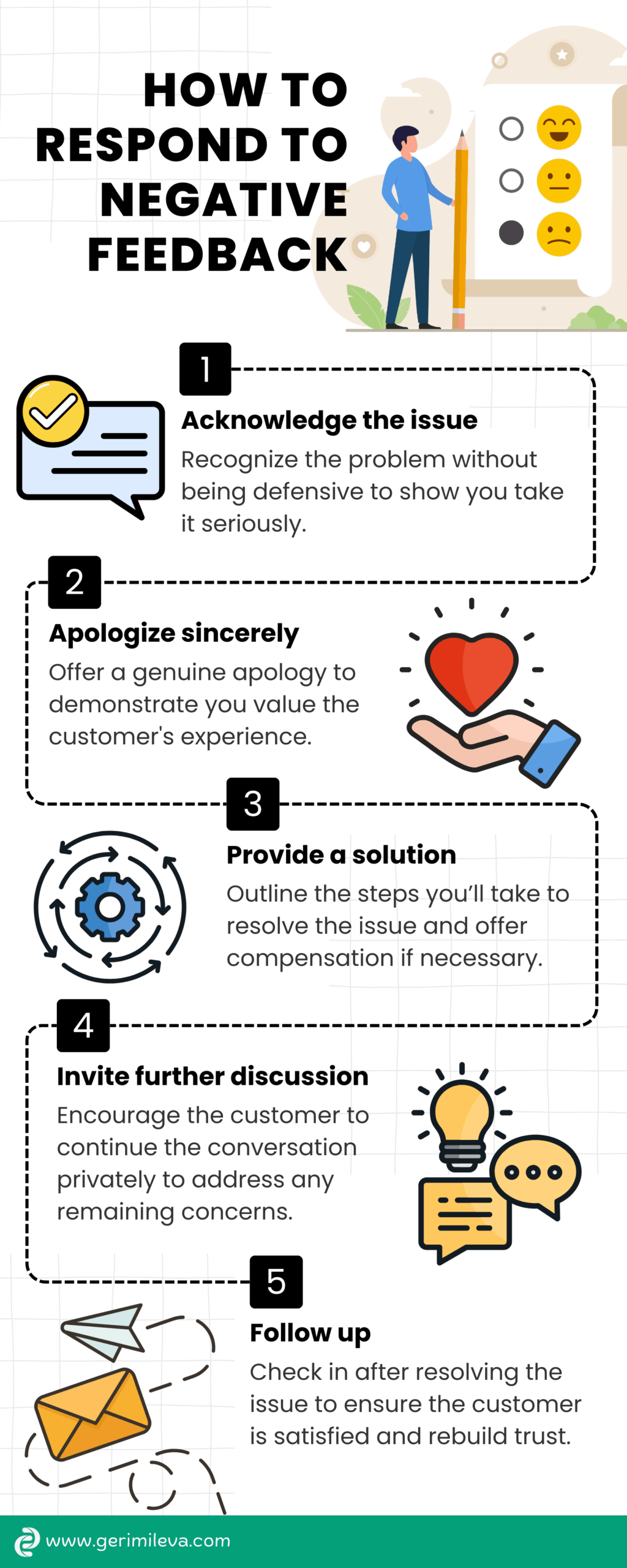
To respond effectively, follow these steps:
- Acknowledge the issue without being defensive. Show that you understand what happened and will take it seriously.
- Apologize sincerely even if you think the issue is minor. A genuine apology shows that you value the customer’s experience and will resolve the situation.
- Provide a solution by outlining the steps you’ll take to address the issue. If applicable, offer compensation such as a discount, refund, or product replacement.
- Invite further discussion by encouraging the customer to continue the conversation privately, especially when more details are needed. This demonstrates your commitment to fully resolving the matter.
- After resolving the issue, follow up to ensure the customer is satisfied. This helps rebuild trust and show ongoing care.
Use the following templates as guides for your responses, but remember to personalize them for your customers and avoid overly generic responses.
| Public response Use in:
| “Hi [Customer Name], thank you for bringing this to our attention. We’re sorry to hear that your experience didn’t meet your expectations. Our goal is to provide excellent service, and we’d like to make it right. Please send us a direct message or email at [Contact Information] so we can resolve this issue as quickly as possible. Thank you for giving us the chance to improve.” |
| Private response Use in:
| “Dear [Customer Name], we sincerely apologize for the inconvenience you’ve experienced with [Product/Service]. We understand how frustrating this must be and are taking immediate steps to address the issue. As a gesture of goodwill, we’d like to offer you [Solution]. Please let us know if there’s anything else we can do to assist you. Thank you for your patience and for allowing us the opportunity to make things right. Best regards, [Your Name/Company Name]” |
How to handle a crisis using effective communication
A crisis can happen at any time, even to the largest brands. It can be the result of uncontrolled events such as a natural disaster, or it can be due to an internal mistake such as a product defect.
While we can’t control a crisis, what’s crucial is that we learn to recognize it and act to resolve it immediately. Here are steps to manage a crisis:
- Act quickly. You need to respond as soon as possible to control the narrative and show that you’re proactive in addressing the situation. Any delays can lead to speculation and further damage.
A message from M&M'S. pic.twitter.com/EMucEBTd9o
— M&M’S (@mmschocolate) January 23, 2023
M&M’s initially ignored the backlash against a simple change in their mascot’s shoes, believing that the change was subtle and the initial feedback too small to affect the brand.
However, ignoring those early pushbacks proved catastrophic when it led to a bigger backlash as the months dragged on and they introduced another mascot. This prompted the brand to issue a public apology and change their spokesperson.
The lesson here is that any kind of feedback, no matter how small, shouldn’t be taken lightly—or silently. Always listen to your customers and address any underlying concerns quickly before they escalate.
- Be transparent. You need to share what you already know about the situation and the actions you’re taking. By being honest, you maintain credibility.
- Empathize with affected parties and acknowledge the impact on their lives and businesses. Be understanding in your communication.
- Ensure your messaging is consistent across all platforms (website, social media, email, etc.) to avoid confusion and ensure everyone receives the same information.
- Provide regular updates to keep your audience informed as the situation evolves. This shows that you’re actively managing the crisis and keeping them in the loop.
- Plan for the post-crisis phase and communicate steps you’re taking to prevent similar issues in the future. This step rebuilds trust in your brand.
You can use the following templates for crisis communication. These are just examples, which you should customize to fit your brand voice.
| Initial statement | We are aware of the recent issue regarding [Crisis Description] and are actively working toward a resolution. Our priority is the safety and satisfaction of our customers, and we deeply regret any inconvenience this may have caused. We will provide updates as soon as more information is available. Thank you for your understanding and patience. Sincerely, [Your Name/Company Name] |
| Update statement | We would like to update you on the ongoing situation regarding [Crisis Description]. Our team has been working around the clock to address the issue, and we have [Details of Actions Taken]. We appreciate your continued patience as we work to fully resolve this matter. Please feel free to reach out to us directly at [Contact Information] if you have any questions or concerns. Thank you, [Your Name/Company Name] |
| Post-crisis statement | We are pleased to inform you that the issue regarding [Crisis Description] has been resolved. We have taken [Preventive Measures] to ensure this does not happen again. We are committed to improving our services and appreciate your support throughout this process. Thank you for your trust in [Company Name]. Please don’t hesitate to reach out if you have any further questions. Best regards, [Your Name/Company Name] |
Practical advice for small businesses on using crisis communication
- Prepare in advance.
Develop your crisis communication plan before any issues arise. This includes draft templates, key contact information, and a clear chain of command for approvals. When you’re prepared, you can act quickly when the unexpected happens.
- Create an internal response protocol.
Ensure that all employees know how to handle negative feedback and what their role is during a crisis. This ensures no one goes rogue and leaks sensitive information you’d rather keep internal.
When a crisis happens, it’s natural for employees to be asked questions. Provide them with a script or a copy-paste message they can share to ensure their response is consistent with the company’s press release.
- Monitor your online presence.
Use tools like Google Alerts and other online monitoring apps to keep track of your brand’s online presence. This allows you to catch and respond to any negative feedback or crises quickly. You should also regularly check review platforms to stay informed about what customers are saying.
If it’s possible, turn public conversations private by using email or direct messages. This reduces the impact on your brand’s public perception.
- Stay calm and professional.
Even if you receive harsh and unfair feedback or become the victim of a catastrophic crisis, you should remain calm. Being emotional will only escalate the situation. Let customers air their grievances and refrain from arguing even if you believe you’re right.
Consider redirecting inquiries to a blog or FAQ page that provides more details about the situation, its cause, the steps being taken to resolve the issue, and any future assurances. Like with any great small business copywriting, avoid jargon and use simple terms.
- Continue to engage positively even after the situation has been resolved.
Share positive stories, customer testimonials, and updates that show how you’ve improved based on the feedback. More than ever, you should work on rebuilding your brand image and customer trust.
Ensure you’ve responded to every message to prevent any customer from feeling overlooked.
How to analyze copywriting performance
As a small business owner, it’s crucial to optimize every aspect of your business to get the most return on your investment. The same applies to copywriting. You can’t simply guess if it’s effective; you have to measure and analyze its performance.
Metrics to measure the success of small business copywriting
You don’t need to be a math genius to measure and analyze the following metrics. All you need is dedication to tracking these crucial metrics and diligence in recording them so you can draw the right insights later on.
| Metrics | Measures | Target |
| Conversion Rate The percentage of people who complete a desired action. Why it matters: This is a direct indicator of how well your copy persuades people to take action. | People who perform a desired action. Example application: Measure the percentage of people who click your CTA to download an ebook, subscribe to a newsletter, or purchase a product. | High conversion rate Measurement tools: Use Google Analytics to track website conversions and email marketing tools to monitor email conversions. |
| Click-through Rate The percentage of people who click a link within your copy. Why it matters: A high CTR indicates that your copy is engaging and compelling enough to prompt users to take the next step. | People who click a link. Example application: Measure the percentage of people who click on your Facebook ad to visit the product page. If there’s a low click-through rate, consider changing the copy or leading image. | High click-through rate Measurement tools: Most email marketing tools and online ad platforms, such as Google Ads, provide CTA data. |
| Bounce Rate The percentage of people who leave your website after viewing only one page. Why it matters: A high bounce rate may suggest that your copy isn’t engaging or relevant enough to retain visitors on your site. | People who leave your website after viewing only one page. Example application: A landing page with a high bounce rate may indicate that the headline or opening copy isn’t compelling enough to encourage further reading. To address this, try experimenting with different headlines and opening copy. | Low bounce rate Measurement tools: Google Analytics and other website analytics tools can help you monitor bounce rate. |
| Open Rate (emails) The percentage of recipients who open your email. Why it matters: A high open rate suggests your subject line is effective and your audience is interested in your content. A low open rate may indicate the need for stronger, more engaging copy. | The percentage of email recipients who open your email. Example application: If you send a promotional email and 30% of the recipients open it, that’s your open rate. Testing different subject lines can help improve this metric. | High open rate Measurement tools: Email marketing platforms typically provide open rate data. |
| Engagement metrics A measure of how users interact with your content. Why it matters: High engagement suggests that your copy resonates with your audience, leading to increased brand awareness and loyalty. | How users interact with your content. Example application: Here are several engagement metrics you can measure:
| High engagement indicators:
|
| Sales revenue The amount of money generated from sales that can be attributed to your copywriting efforts. Why it matters: Sales revenue is the most critical measure of your copywriting’s effectiveness in driving business results. | Sales attributed to your copy. Example application: If updating a product description leads to a significant increase in sales, it’s a clear indicator that the new copy is more effective. | High sales figures Measurement tools: Use your e-commerce platform, CRM, or other analytics tools to track sales data. |
| Cost per acquisition (CPA) The cost of acquiring a new customer through your marketing efforts. Why it matters: Understanding CPA helps you evaluate the ROI of your copywriting in various marketing campaigns. | Cost of acquiring a new customer. Example application: If an email marketing campaign costs $300 and brings in 50 customers, the CPA is $6. | Low CPA Measurement tools: To determine CPA, divide your total marketing costs by the number of new customers acquired. |
How to effectively measure copywriting success
- Set clear goals.
Before you even begin writing, you should know your copy’s goals. This will help you determine which metrics to measure to ensure you reach your goals.
Analytics tools offer hundreds of data points, and it’s easy to get confused if you’re unsure which metrics to focus on.
- Implement A/B testing.
With A/B testing, you can compare two versions of a copy element (like a headline, CTA, or subject line) to see which performs better. To avoid being overwhelmed, test only one element at a time to isolate what drives better results.
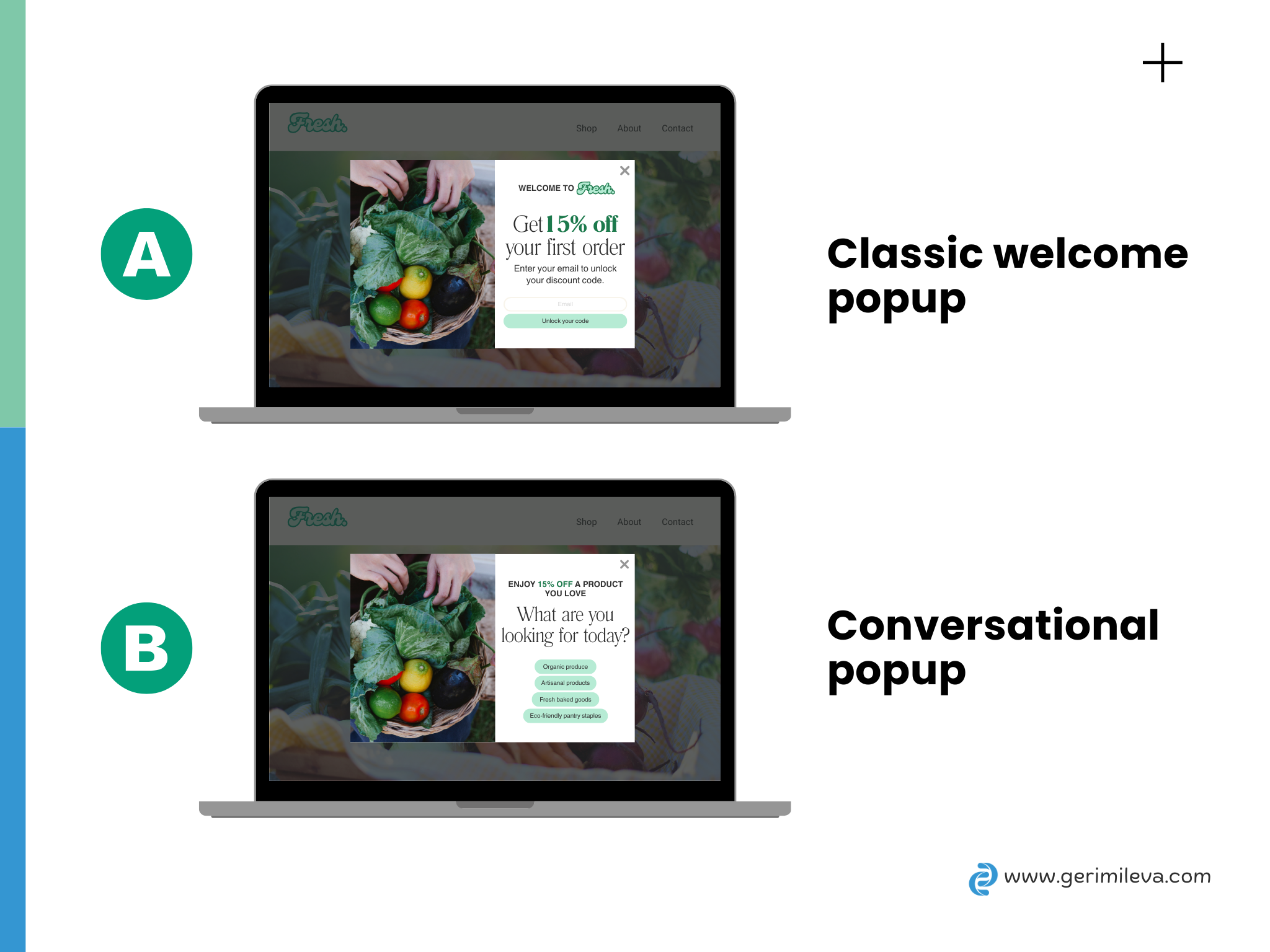
You can conduct A/B tests for your email campaigns, landing pages, social media ads, product descriptions, and other copy elements.
- Use analytics tools.
You don’t need to get bogged down with dozens of analytics tools. To simplify tracking, you can invest in a centralized analytics tool. For example, Hootsuite can consolidate your social media performance, so you don’t need to visit each platform individually.
If this isn’t an option, you can use Google Sheet templates to consolidate important metrics.
- Keep a performance log.
Maintain a log of your copywriting efforts, noting what content was created, the goals, the metrics tracked, and the outcomes. Doing so helps you identify trends and learn from past campaigns.
Periodically review your performance log to assess what’s working and what can be improved. You can use these insights to further refine your future copywriting strategies.
- Use benchmarks.
Compare your metrics to industry benchmarks to see how your performance stacks up. This will help you understand if your results are strong or if there’s an area for improvement.
You can find industry benchmarks on websites like Benchmarks by Databox, SimilarWeb, and Statista.
- Gather direct feedback.
Don’t underestimate the value of asking your audience directly for input. Ask them how helpful they found your content, whether the copy influenced their decision, and what could be improved.
As I’ve mentioned above, incentivizing customers is a reliable way to receive more responses. It doesn’t have to be a grand gift. A small discount or entry into a prize draw is often enough to encourage participation.
Navigating legal and ethical copywriting practices
All copywriters working with small businesses are required to know and adhere to ethical practices concerning writing copy. Having no formal training in copywriting doesn’t excuse your lack of ethical awareness. Ethical considerations guide the balance between creativity and remaining compliant with legal regulations.
Observing ethical practices also increases your credibility with your audience and helps avoid the hefty consequences of violating regulations.
What is ethical copywriting?
Ethical copywriting primarily focuses on being honest and transparent with your audience. Sometimes, because of our overeagerness to convert customers, our words can become manipulative and deceitful, causing more harm than good.
Sometimes, copy can become insensitive when we fail to consider the circumstances of our audience and the overall mission of our brand. For example, Bumble’s recent marketing campaign’s copy, which was criticized by its users as being insensitive to women’s plight.

Source: https://www.nytimes.com/2024/05/14/style/bumble-celibacy-ad-apology.html
Ethical copy should respect your audience’s rights and views, and use inclusive, non-discriminatory language. When done right, ethical copywriting enhances brand reputation and improves conversions. In contrast, a single unethical mistake can erode years of effort spent building customer loyalty and trust.
Copyright laws
Copyright is a legal protection for the intellectual property of a person or company, preventing unauthorized copying or duplication. It covers unique creations like novels, music, photographs, video clips, graphic designs, and website content.
Copyright laws prohibit copywriters from directly copying text or paraphrasing without direct attribution. You also can’t replicate unique concepts that someone else has already published. To avoid violations against copyright laws, focus on creating original content.
However, if you need to use another person’s content, such as when using stock images, always obtain explicit permission from the original creators. Even free image and video sites like Unsplash provide the option to properly attribute photos to the rightful owners.
How to protect your business from copyright infringement:
- Produce original content whenever possible. You can either use in-house talent or hire freelancers and agencies so you retain full rights to use and distribute your materials.
- Only use properly licensed content, such as that obtained from stock libraries or creative commons (CC) licensed works. Check the terms of use so you don’t go beyond what’s allowed in the license.
- If you’re using items in the public domain, which are free to use, always confirm that the material is genuinely public domain.
- Always provide proper attribution when citing sources. CC-licensed works have specific standards for attributing owners.
- Review your content before publishing to check for any potential copyright issues.
- Educate your team on copyright laws and fair use principles.
If you regularly produce significant original content, consider registering it with a copyright office to protect your claims in case of infringement.
Plagiarism
In contrast to copyright infringement, which is illegal, plagiarism doesn’t carry legal penalties but is viewed as a highly unethical practice in copywriting. It involves passing off someone else’s work as your own by not giving credit to the original source.
Plagiarism happens when you:
- Directly copy and paste text from another source without any changes
- Paraphrase ideas or words without citing the original source
- Copy images without obtaining permission
- Fail to properly attribute statistics taken from another source
Plagiarism is hard to detect without the help of plagiarism detection tools like Copyscape and Grammarly. As a small business copywriter, you should use them extensively to ensure you don’t unintentionally copy someone else’s work.
In social media, plagiarism can often go undetected until someone decides to sue for copyright infringement, as happened with Kylie Jenner several years ago. A social media user sued her company for copying the looks of a previous post to promote the brand’s makeup line.
The legal dispute could’ve been avoided had the brand simply credited the original creator in their social media caption.
False advertising
A common unethical practice copywriters are often accused of is advertising misleading claims. There have been countless cases of deceptive advertising that have led to legal ramifications for the brands involved.
One of the largest and most controversial cases of misleading advertising involved the Volkswagen Group of America. The U.S. FTC (Federal Trade Commission) ordered the company to return $10 billion to owners and lessees of VW and Audi 2.0-liter diesel cars because the brand falsely advertised that these cars were environmentally friendly and met emission standards
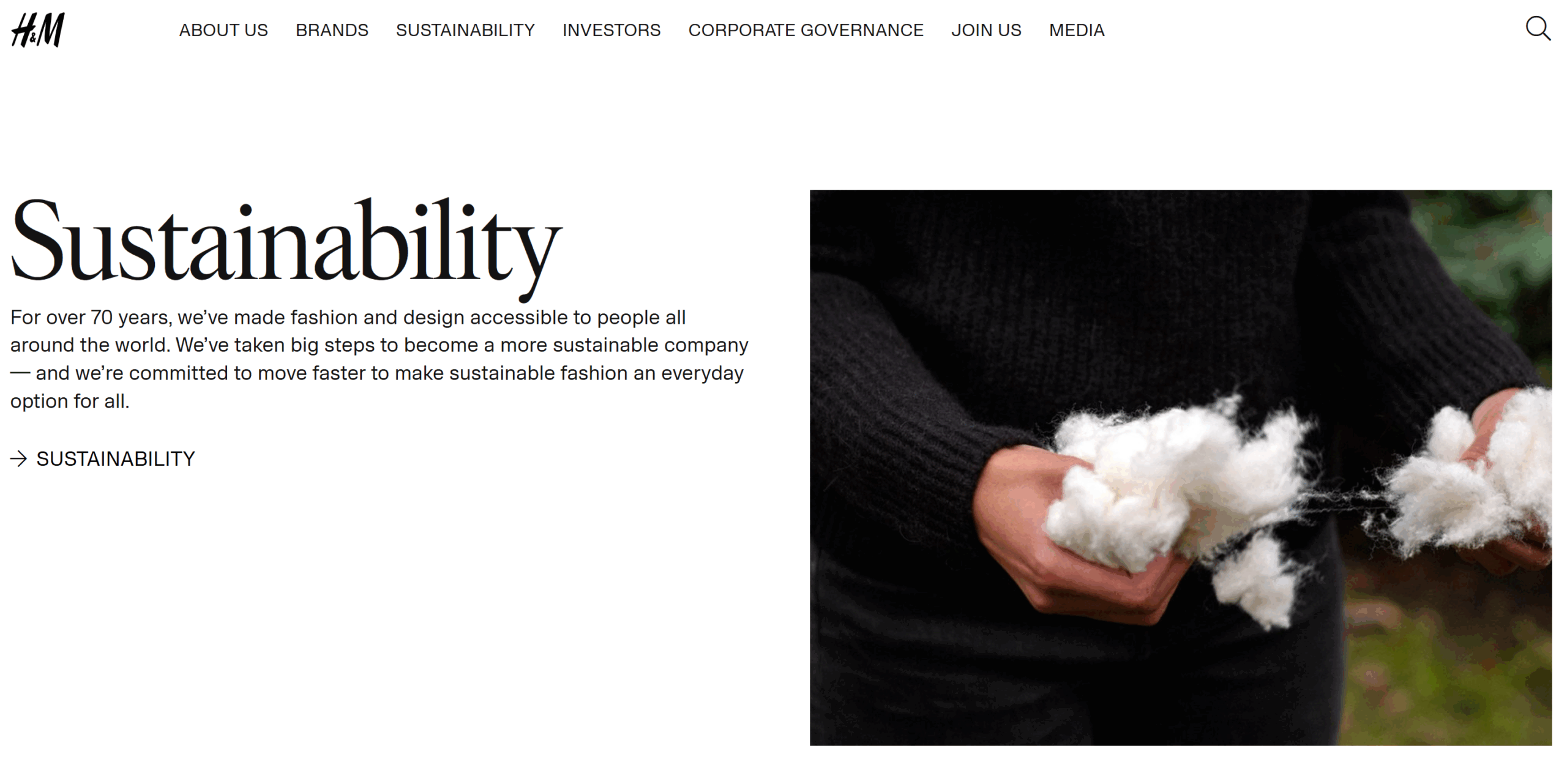
Source: https://hmgroup.com/
A more recent example involved H&M’s greenwashing case, in which it was accused of using misleading sustainability marketing claims. Sustainability is a highly debated concept, and the FTC has strict guidelines on using accurate terms to substantiate environmental claims. While the brand won the legal battle, the FTC cautions companies against making false or misleading sustainability promises.
How to be more truthful in advertising:
- Provide clear and accurate product descriptions, features, and benefits.
- Avoid exaggerating claims or making promises your brand can’t fulfill.
- Use real photos and avoid heavily edited ones that might misled customers.
- Be specific when making claims and provide evidence or context to support your statements.
- Provide full disclosure by stating any limitations and conditions of your products.
- Be transparent about your pricing and include any extra fees or charges.
- Only use real testimonials from real customers who’ve experienced your products and services.
- Disclose any sponsorships or paid endorsements when promoting your products.
- If there’s an error, promptly correct it and apologize for any mistake.
- Be aware and follow FTC advertising guidelines and any industry-specific rules.
- Be fair and objective when comparing your products to competitors, especially if you’re writing comparison guides.
Every time you write copy, remember that you’re building a long-term relationship with your customer. It’s vital to invest in transparency and honesty from the get-go, making it a cornerstone of your entire copywriting strategy.
Inclusive language
Ethical copywriting isn’t only about following legal rules; it’s also about social responsibility. That includes creating a safe and inclusive space where your diverse audience will feel respected and heard. Inclusivity is multifaceted and involves considering race, gender, and accessibility.
A Facebook study revealed that diverse representation in an online ad increased recall by 90%. This data confirms an earlier Microsoft study, which showed a lift in purchase intent among individuals who viewed inclusive ads.
Being inclusive means avoiding stereotypes and derogatory language in your copy. When done right, it will broaden your market reach. However, if your brand becomes tone-deaf, expect backlash from both target and general audiences alike.

Brands like Protein World (above) and Burger King (below) learned the hard way when their copy backfired, leading them to retract the ads and issue public apologies. These campaigns have earned the hall of fame for being some of the worst marketing fails in the past decade.
Meanwhile, brands like Maybelline and Apple, which embrace the diversity around us through their inclusive products and copy, are gaining more customers than ever. Maybelline recognizes diversity in skin color, offering a wide range of foundation shades, while Apple showcases how its products improve the lives of people with disabilities.
How to write inclusive copy:
- Use gender-neutral language by avoiding terms like “he/she” or “businessman/businesswoman.” Instead, use “they” and “business person.
- Avoid stereotypes and ensure your messaging is inclusive of different backgrounds and experiences.
- Be mindful of cultural references, idioms, or slang that may not be universally understood or could be offensive in certain cultures. Assume that everyone in the world is going to read your copy at some point.
- Use straightforward language and descriptive text to create accessible content. Avoid euphemisms and phrases that suggest persons with disabilities as being victims.
- Avoid making assumptions about your audience’s backgrounds, beliefs, or lifestyles. Keep your words general, especially on social media, so it can be understood by more people.
- Ensure that your visuals represent diversity in a meaningful and genuine way. Audiences are quick to detect fake diversity that’s just for the sake of appearances.
Generative AI in copywriting
You’ve probably used ChatGPT, Gemini, or any of the paid generative AI tools to write social media copy or draft an email newsletter. You might have even published one or two (or several) blog posts entirely generated by ChatGPT.
For small business owners struggling with limited time and resources, generative AI tools for copywriting might seem like a lifesaver. It’s convenient, fast, and easy.
But before you rush to embrace this new technology, it’s vital to understand the implications of using generative AI in copywriting.
Is ChatGPT (or any generative AI tool) bad for copywriting?
A recent Pew Research Center survey shows that 70% of Americans don’t trust companies to make the right decisions regarding AI use. Despite its accessibility, using AI excessively and without proper disclaimers has its risks, as shown by the recent Google crackdown on websites that published purely AI-generated blogs.
Google’s March 2024 Core Update led hundreds of websites to experience dramatic declines in their search rankings and visitor traffic after Google deindexed their sites from search results.
Aside from Google’s penalty, using generative AI also erodes trust from readers, as seen with several journalism sites that used AI to create fake journalists and publish AI-generated reports. Sites like CNET and Sports Illustrated were heavily criticized for these quiet experiments leading to a decline in trust rankings.
Understanding the ethical concerns of using generative AI for copywriting
Google’s massive pushback against AI-generated content comes in response to pressure for the search engine to remove low-quality search results. This aligns with Google’s spam policy, which opposes automation to generate low-quality and unoriginal content.
Producing content purely from generative AI tools is no different from article spinning, where you feed software with previous content and ask it to rewrite the article without adding new insights or creating extra value.
The resulting content is unhelpful for readers, which is why Google penalizes. Furthermore, there are several ethical concerns surrounding the excessive use of generative AI tools.
- Plagiarism and copyright issues
Generative AI tools are trained on vast datasets that include copyrighted materials, meaning that you might be publishing copyrighted content. And since AI tools can’t provide the correct source, you could be liable for copyright infringement.
- Bias and discrimination
Even if, in theory, AI developers could strive for objectivity when training AI models, true neutrality becomes elusive. This is especially true when money and politics are involved. There’s a high possibility that these models are fed biased data, whether intentionally or not. As a result, AI can subtly shape public opinion and influence narratives.
It can also embed biases into your copy, potentially reinforcing harmful stereotypes and alienating your audience.
- Lack of accountability
When human writers create content, there is a clear sense of authorship and responsibility. With AI-generated content, accountability becomes unclear. If false or misleading information is published, who is responsible—the AI tool, the business using it, or the developers who trained the model?
Without clear accountability, businesses risk reputational damage and may face legal consequences if misinformation or harmful content is attributed to them.
- Inaccurate information
AI tools are notorious for hallucinating, providing wrong information in response to your queries. This happens when they learn incorrect patterns that lead to inaccurate predictions. As a result, you could be liable for spreading misinformation.
- Lack of originality and creativity
Relying entirely on generative AI for your copy can result in bland and generic content. AI can’t write in your specific brand tone, even if you try to prompt it. It doesn’t have the intimate knowledge of your customers or the unique experiences that shape your brand voice.
- Robotic and impersonal copy
AI content often sounds robotic, lacking the personal touch and emotional depth that human writers produce. Human writing incorporates anecdotes, personal stories, and metaphors that make your copy relatable to your customers.
Since authenticity is crucial in small business copywriting, relying too much on generative AI can alienate your audience, and eventually erode their trust.
Should you use AI tools to generate copy?
Given the dangers and ethical implications of using generative AI, these tools should be approached with caution for copywriting. I know they offer a shortcut for some small business owners, but without the human element, relying on AI does more harm than good.
If you really must turn to AI tools for writing copy, ensure that they are supplemented with original insights and accurate information. You must write not for the sake of pleasing search engines but for the sake of delivering value to your audience.
Your copy must always reflect your brand voice and satisfy the copywriting essentials I’ve thoroughly discussed above.
Furthermore, using AI must be done responsibly. It’s completely unacceptable to use AI to generate fake reviews, formulate misleading ads, or create deep fakes that misrepresent your business.
You should also be aware of the regulations and laws surrounding AI use such, as the EU AI Act, the US AI Bill of Rights, and various proposed bills like US Senate Bill 1047 and Assembly Bill AB 3211. These legislations all aim to increase transparency in disclosing the use of AI tools.
Every time you use AI, whether to generate a blog or a creative ad graphic, you need to disclose it. Depending on your audience’s acceptance of AI, this can impact brand perception.
Ultimately, the choice of using AI or not for copywriting depends on how you balance the risks with the perceived benefits. At the end of the day, remember that you’re writing for your customers, and helpful, genuine content will always win them over.
Empowering small businesses through copywriting
Building strong relationships with your customers is the ultimate secret to long-lasting business success. Small business copywriting is crucial in achieving this goal since it involves accurately communicating your brand promise to your audience.
I have presented numerous strategies and tips on how you can write great copy for your brand. These techniques are used by large enterprises, and there’s no reason why you can’t apply them and make them work for your business.
However, as small business owners, it’s tempting to do everything on our own, either to save resources or control various aspects of our business. Copywriting can be a task you take off your busy plate.
Navigating the intricate world of small business copywriting is challenging without a guiding hand. If you need help fine-tuning your copy or defining your brand voice, I’d be glad to offer bespoke solutions to meet your needs. Reach out for a quick chat through my Contact Page.